
Quick Answer
If a rough patch does not brush away, do not scrape it with a sharp object. Plaque is a soft bacterial film that daily cleaning can disrupt, while tartar is hardened plaque that needs professional removal. Surface stain can collect on enamel or tartar, but a rough edge can also come from a chipped tooth, a damaged filling, or decay. A dental cleaning visit may be appropriate when build-up is widespread; book a dental assessment sooner if one area is sharp, painful, trapping food, or associated with swelling or a broken restoration.
- Plaque is soft; tartar is mineralised build-up that brushing cannot remove.
- Stain can change colour without explaining every rough edge or food trap.
- Do not use metal tools or aggressive scrubbing to remove a hard deposit at home.
- A single sharp or broken area may need a dental examination rather than cleaning alone.
Use location and texture as clues, not a diagnosis
A rough feeling near the gumline or behind the lower front teeth often makes people think of tartar, while a dark rough patch may look like stain. Those clues are useful, but touch and colour cannot confirm what the deposit is. Enamel shape, a chipped filling, decay, or a small fracture can feel rough too.
Notice whether the area is on several teeth or one tooth. Widespread roughness near the gums is more consistent with build-up, especially when gums bleed. One sharp edge after biting something hard may point to a chipped tooth or restoration. Food repeatedly catching in one place deserves assessment even when there is no pain.
A dentist or oral-hygiene professional can inspect the surface, check the gum response, and decide whether cleaning will solve the problem. If the surface is damaged rather than covered by deposits, restorative treatment may be discussed instead.
| What you notice | What the dental team may check |
|---|---|
| Soft film that returns during the day | Plaque control, brushing technique, and cleaning between teeth. |
| Hard rough deposits near the gumline | Tartar build-up and whether the gums are inflamed. |
| Brown or dark surface marks | External stain, tartar, decay, or an old restoration. |
| One sharp edge | A chipped tooth, cracked filling, or broken restoration. |
| Food trapping with sensitivity | Decay, a contact problem, gum irritation, or restoration failure. |
Plaque and tartar are not the same thing
Plaque is a sticky film containing bacteria. It develops on natural teeth and dental work and can collect around the gumline and between teeth. Brushing and interdental cleaning are intended to disrupt plaque before it remains in place long enough to cause problems.
When plaque is not removed, some of it can absorb minerals and harden into calculus, commonly called tartar. Once hardened, it cannot be brushed or flossed away safely. Professional instruments are used to remove it while protecting the tooth and gum tissues.
Tartar can make a surface feel rough and can create a place where more plaque collects. It may sit above or below the gumline. Bleeding, redness, swelling, persistent bad breath, or gums pulling away from teeth can indicate that the concern is not only cosmetic build-up.
Staining can sit on enamel or on build-up
Coffee, tea, tobacco, and strongly coloured foods and drinks can contribute to external staining. Stain may be polished away during a suitable cleaning, but not every dark mark is a removable surface stain. Decay, cracks, internal colour changes, and restoration margins need a different assessment.
Cleaning and whitening also have different jobs. Cleaning removes plaque, tartar, and some surface stain. Whitening aims to change the appearance of suitable natural tooth enamel after oral health has been checked. A cleaning does not guarantee a particular shade, and whitening does not remove tartar.
If one tooth becomes darker, a spot grows, or the area is sensitive, do not assume a stronger whitening product is the answer. Diagnosis should come before cosmetic treatment so that active disease or damage is not hidden behind the colour concern.
Why home scraping is risky
A hard deposit can be tempting to pick at, especially when a small piece breaks away. Household and online scraping tools can slip, cut the gum, scratch a restoration, or damage the root surface. Removing the visible edge also does not show whether more build-up is present below the gumline.
Aggressive brushing is not a safer substitute. Heavy pressure can irritate gums and contribute to wear without removing mineralised tartar. Use gentle brushing with fluoride toothpaste and clean between teeth with a method you can control until the area is assessed.
If a rough fragment came from a tooth or filling rather than tartar, scraping can make the damage worse. Keep any piece that came out, avoid chewing hard foods on that side, and arrange a dental assessment if the tooth feels sharp, weak, or sensitive.
- Do not use metal scalers, pins, blades, or sharp household objects
- Do not scrub harder to compensate for a deposit that will not move
- Continue gentle twice-daily brushing with fluoride toothpaste
- Clean between teeth without forcing floss into painful gums
- Book an assessment for a sharp edge, broken filling, pain, or swelling
What happens at a cleaning assessment
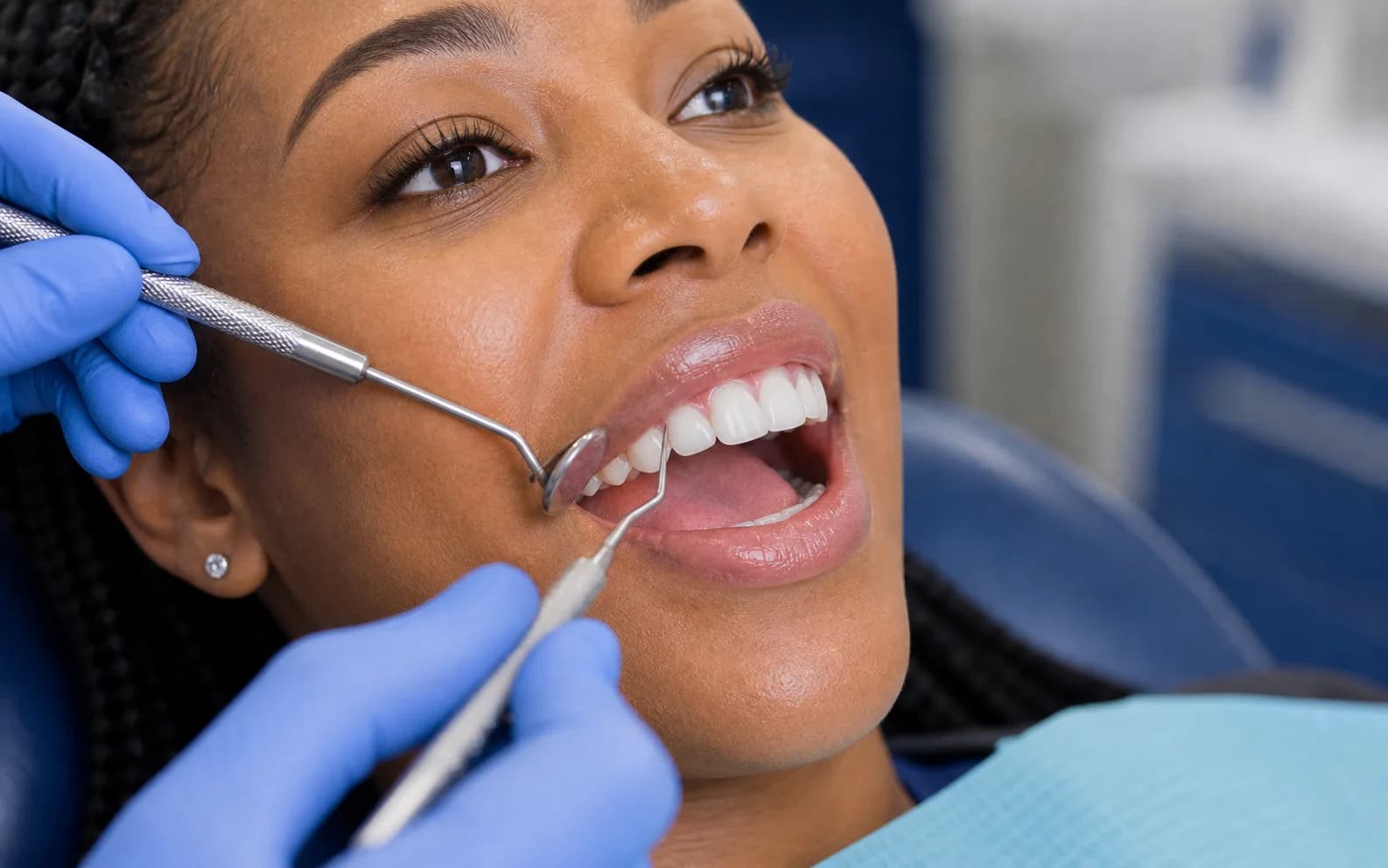
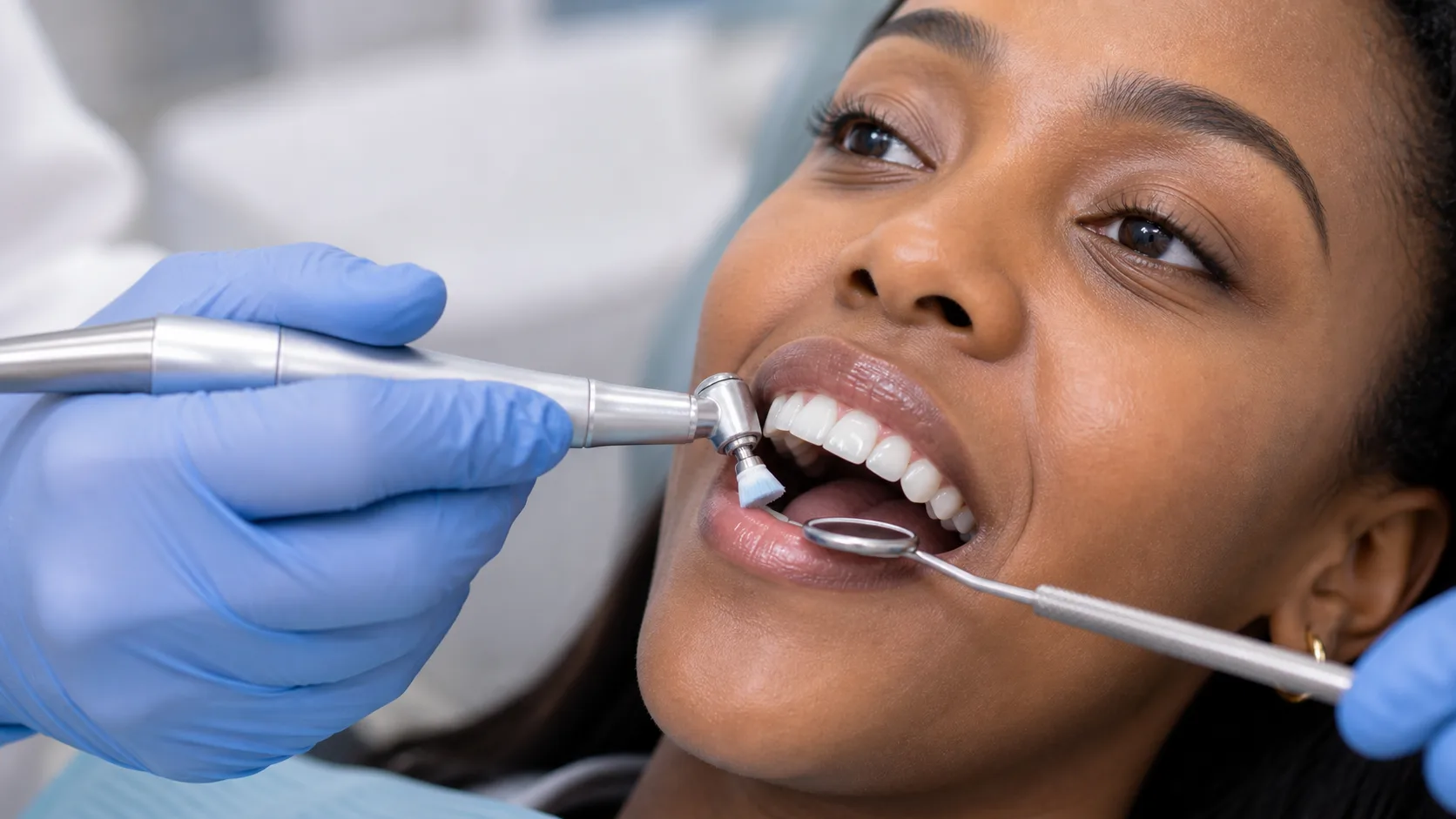
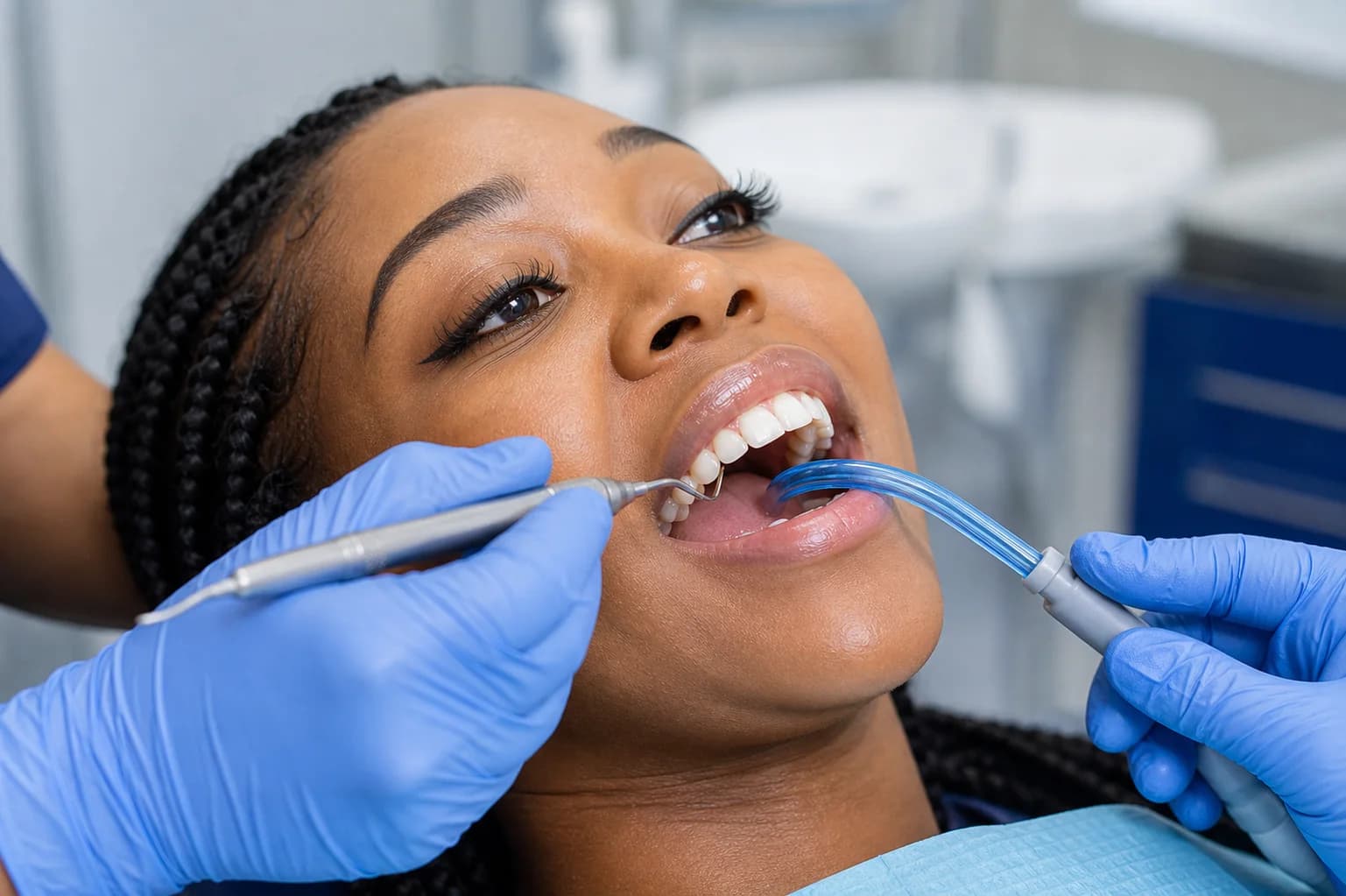
The dental team checks where deposits are located, how the gums respond, and whether the roughness is actually on the tooth surface. A routine cleaning may be suitable for plaque, tartar, and external stain when gum findings allow it. More involved gum care may be discussed when build-up extends below inflamed gums.
Cleaning is not automatically the only visit you need. A cavity, chipped tooth, loose filling, or painful area may require an examination and X-ray. If you are unsure what to book, describe the location, colour, sensitivity, bleeding, and whether the surface changed suddenly.
After suitable cleaning, the team can show you the areas where plaque returns and recommend brushing or interdental tools. The maintenance interval depends on your gum health, build-up pattern, risk factors, and how effectively the area can be cleaned at home.
A rough surface can affect more than appearance
Texture changes can create practical problems even when they are painless. A ledge on a filling may catch floss, a chipped edge may irritate the tongue, and an uneven contact may trap food between teeth. Repeated food trapping can make the nearby gum sore and can increase the time plaque remains against the tooth.
Tell the dentist whether the roughness is always present or only appears after meals, whether floss shreds in the same place, and whether your tongue keeps finding a new sharp edge. These details can help distinguish a widespread deposit from a local tooth or restoration problem.
The aim is not simply to make the surface feel smoother. The dental team should identify why it changed, protect healthy tooth structure, and explain whether cleaning, polishing, repair, monitoring, or another treatment is appropriate.
Book sooner when the rough area is changing
A stable rough deposit without pain still deserves attention because tartar cannot be removed at home and may contribute to gum inflammation. Arrange a problem-focused assessment sooner if the area is sharp, recently broken, painful on biting, sensitive to temperature, or trapping food.
Pain, swelling, pus, a bad taste, a loose tooth, or facial swelling changes the urgency. Tell the practice about those symptoms rather than booking only a cosmetic cleaning. The first goal may need to be diagnosis or urgent care.
The practical next step is to stop guessing from texture alone. A brief examination can distinguish removable build-up from a tooth or restoration problem and direct you to the correct treatment.
Internal Links
Related dental care
Sources
Useful information

Written by
Dr. Kholofelo Machaba-SelatoleChief Dentist & Practice Director
Dr. Kholofelo Machaba-Selatole leads Smile On Dental & Aesthetic Studio with a warm, patient-focused approach to family, restorative, cosmetic, and orthodontic care.
View Profile