
Quick Answer
Teeth cleaning cost in South Africa is not one fixed amount because a routine scale and polish is different from cleaning heavy tartar, treating inflamed gums, removing stubborn stains, or planning deeper gum care. The clearest way to understand the fee is to ask what the appointment includes: consultation, X-rays if needed, scaling, polishing, gum assessment, sensitivity support, and whether any follow-up visits may be required.
- A cleaning fee is shaped by the amount of plaque and tartar, gum condition, staining, sensitivity, and appointment time needed.
- Routine scaling and polishing is different from deeper gum care for patients with signs of gum disease.
- X-rays, consultation, follow-up visits, and additional treatment planning may change the overall cost.
- Ask for an estimate after assessment instead of relying on a generic price from a search result.
Why there is no single cleaning price
When people search for dental cleaning prices, they are usually looking for a simple number. The difficulty is that professional cleaning is not always the same appointment for every patient. One person may need a straightforward scale and polish after regular check-ups. Another may have years of tartar build-up, bleeding gums, sensitivity, or stains that need more time and a different treatment plan.
A dentist or oral hygienist first needs to understand what is present on the teeth and around the gums. Plaque is a soft bacterial film that can be disrupted with daily brushing and cleaning between the teeth. When plaque hardens into tartar, it cannot be brushed away at home and needs professional removal. The more tartar there is, and the harder it is to access, the more involved the cleaning may become.
This is why a practice may not be able to quote a complete final cost before seeing your mouth. A useful estimate should say what is included, what may be separate, and what would trigger a different plan. That protects you from comparing one basic cleaning fee with another fee that includes an examination, X-rays, deeper gum measurements, or a follow-up visit.
- How long it has been since your last cleaning
- Whether tartar is light, moderate, or heavy
- Whether gums bleed, swell, or feel tender
- Whether X-rays or a consultation are needed
- Whether one visit is enough or follow-up care is advised
What a routine scale and polish usually covers
A routine cleaning is usually aimed at removing plaque, tartar, and surface stains from accessible tooth surfaces, then polishing the teeth so they feel smoother. It may be suitable for patients whose gums are generally stable and who need preventive maintenance rather than active gum treatment.
Scaling refers to removing hardened deposits from the teeth. Polishing helps remove surface marks and leaves the cleaned surfaces smoother. The appointment may also include oral hygiene advice, because professional cleaning works best when daily brushing and interdental cleaning keep plaque under control between visits.
The important cost question is whether the quoted cleaning fee includes only scaling and polishing or whether it also includes a dental check-up. Some patients book cleaning as part of a broader preventive visit. Others book after a consultation has already identified what needs to be done. Those two visits may be priced differently because they include different clinical work.
| Cost factor | Why it can change the visit |
|---|---|
| Plaque and tartar build-up | Heavier or harder deposits may need more time and more detailed cleaning. |
| Gum condition | Bleeding, swelling, pockets, or tenderness may require gum assessment and a different plan. |
| Stains | Tea, coffee, smoking, or surface marks may take extra polishing time where appropriate. |
| Sensitivity | Sensitive areas may need slower cleaning, desensitising advice, or treatment planning. |
| Consultation or X-rays | Assessment and imaging may be separate from the cleaning fee when clinically needed. |
| Follow-up | Some patients need review or staged cleaning instead of one simple appointment. |
Build-up and staining can affect appointment time
Two patients can both ask for teeth cleaning and need very different amounts of work. Light plaque and small tartar deposits may be handled efficiently. Heavy tartar around the lower front teeth, behind molars, or under the gumline can take longer and may need a more careful approach.
Staining also matters, but it should not be confused with whitening. A professional cleaning can remove some external surface stains, especially marks linked to food, drinks, tobacco, or plaque retention. It does not change the natural internal shade of the tooth in the way whitening treatment is intended to. If your main concern is tooth colour, cleaning may be the first step, but a separate whitening assessment may still be needed.
Sensitivity can slow the process. Exposed roots, gum recession, worn enamel, or inflamed gums can make cleaning feel sharper in certain areas. The dental team may adjust technique, use water and suction carefully, or discuss sensitivity care before and after the appointment. That does not mean cleaning is unsuitable; it means the visit should be planned around your mouth rather than treated as a generic polish.

Gum condition is a major cost factor
Gum health is one of the biggest reasons a cleaning quote can change after assessment. Healthy gums, mild inflammation, and more advanced gum disease are not managed in exactly the same way. If gums bleed easily, feel swollen, have persistent bad breath, or show deeper pockets, the appointment may shift from routine cleaning to gum-focused care.
Gum disease is linked to plaque and tartar around the teeth and gums. When tartar sits below or near the gumline, it can irritate the supporting tissues. A routine polish may not be enough if the dentist finds periodontal pockets, loose teeth, gum recession, or signs that the supporting bone and tissues need closer monitoring.
In those cases, deeper cleaning such as scaling and root planing may be discussed where clinically appropriate. This is different from a quick cosmetic clean. It may involve cleaning below the gumline, focusing on affected areas, and reviewing healing over time. The number of visits, the areas treated, and the need for follow-up can all affect cost.
- Bleeding when brushing or flossing
- Red, swollen, or tender gums
- Persistent bad breath or unpleasant taste
- Gum recession or teeth looking longer
- Loose teeth or changes in the way teeth meet
Consultation, X-rays, and diagnosis may be separate
A cleaning appointment can sometimes be booked directly, but many patients also need an examination. The dentist may check the teeth, gums, bite, existing fillings, crowns, and areas that are difficult to clean. If there are symptoms, old dental work, suspected decay, bone concerns, or deeper gum issues, X-rays may be recommended where clinically appropriate.
This matters because the cheapest advertised cleaning price may not include diagnostic work. A basic fee might cover scaling and polishing only. A more complete preventive visit may include a consultation, gum assessment, and treatment planning. Neither structure is automatically better; you simply need to know what is included before comparing costs.
If you have not seen a dentist for a long time, it is reasonable to expect that the first visit may involve more assessment than a maintenance cleaning for an existing patient. The dentist may also identify other priorities, such as cavities, cracked fillings, gum disease, bad breath causes, or sensitivity triggers. Cleaning may still be part of the plan, but it should be sequenced safely with the rest of your care.
- Ask whether the fee includes a dental examination.
- Ask whether X-rays are included or charged separately if needed.
- Ask whether the quote is for routine cleaning or deeper gum care.
- Ask whether a follow-up visit may be needed after the first appointment.
How to compare cleaning quotes fairly
A fair comparison is not only about finding the lowest number. It is about checking whether two quotes describe the same service. A short maintenance polish, a first-time consultation with X-rays, and a gum-disease cleaning plan are different clinical situations. Comparing them as if they are identical can lead to confusion.
When phoning a practice, use direct questions. Ask whether the estimate is for a routine scale and polish, whether a dentist consultation is required first, and what happens if heavier tartar or gum disease is found. If you have bleeding gums, persistent bad breath, heavy stains, loose teeth, or sensitivity, mention that before booking. Those details help the team allocate the right type of appointment.
Patients using medical aid should avoid assuming cover from a general search result. Benefits, authorisation rules, annual limits, and exclusions vary. The practical step is to ask the practice and your scheme what information they need, then confirm your own benefits before treatment begins. That is different from assuming any specific treatment will be paid for.
| Question to ask | What the answer should clarify |
|---|---|
| Is this for a routine cleaning? | Whether the quote is for maintenance scaling and polishing only. |
| Is a consultation included? | Whether examination and diagnosis are part of the fee. |
| Are X-rays separate? | Whether imaging is included only when clinically needed or charged separately. |
| What if my gums bleed? | Whether gum assessment or periodontal care may change the plan. |
| Could I need more than one visit? | Whether heavy build-up or deeper cleaning may be staged. |
What to expect at a cleaning visit
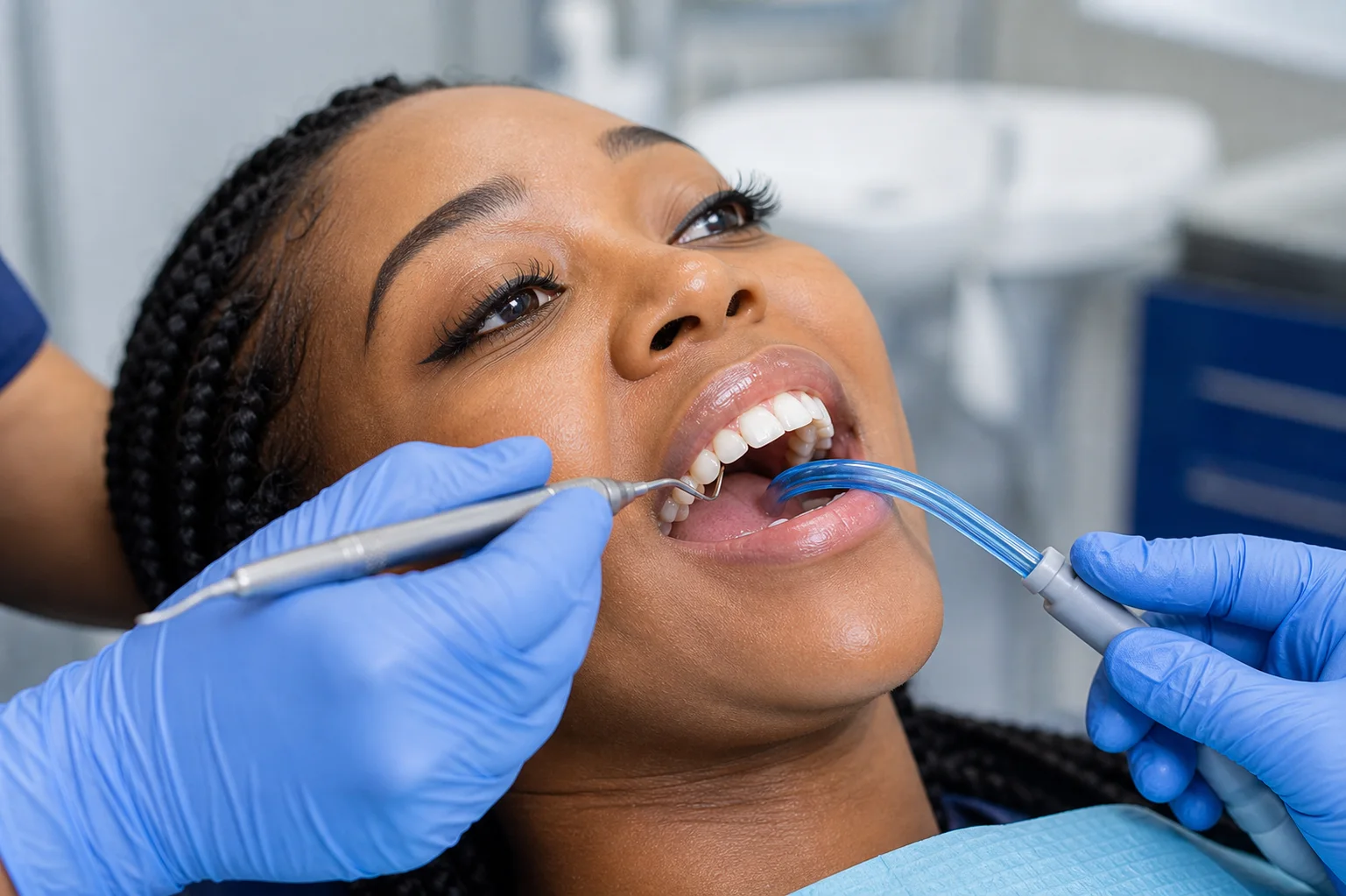
The visit usually starts with a brief discussion about your concerns, dental history, sensitivity, bleeding gums, and how long it has been since your last cleaning. The dentist or oral hygienist then checks what needs attention. This may include looking at tartar deposits, gum condition, stain patterns, and areas where brushing or flossing is difficult.
During scaling, instruments are used to remove hardened deposits from the tooth surfaces. Polishing may follow to smooth the teeth and lift surface marks where appropriate. If gum disease is suspected, the appointment may include gum measurements or a recommendation for deeper care rather than treating the visit as a simple polish.
After cleaning, your mouth may feel fresher and smoother. Some people notice temporary sensitivity, especially if tartar had been covering exposed root surfaces or gums were inflamed. The dental team may recommend home-care changes, interdental brushes, flossing technique, sensitivity toothpaste, or a review interval based on your risk. Follow-up timing depends on the condition of your teeth and gums.
- Assessment of teeth, gums, stains, and tartar
- Scaling to remove hardened deposits
- Polishing where suitable
- Oral hygiene advice for daily plaque control
- Review or gum-care planning if needed
When cleaning should not be delayed
A cleaning is often preventive, but some signs should be assessed sooner rather than treated as routine maintenance. Bleeding gums, swelling, pain, loose teeth, persistent bad breath, pus around the gums, or sudden sensitivity can point to issues that need diagnosis. Waiting for a cheaper or later cleaning appointment may allow the underlying problem to progress.
Professional cleaning also supports broader dental care. It can make it easier to assess the teeth, improve gum health before restorative work, and reduce plaque and tartar that contribute to inflammation. If you are planning other treatment, the dentist may recommend cleaning before moving ahead so that the mouth is healthier and easier to evaluate.
For patients in Pretoria or Polokwane, local cleaning pages can help with appointment context, but the same principle applies anywhere in South Africa: ask what is included, get assessed when symptoms are present, and choose a plan that matches your gum health rather than a generic price list.
- Book an assessment if gums bleed, swell, or feel tender.
- Mention bad breath, sensitivity, or loose teeth when booking.
- Ask whether routine cleaning or gum treatment is more appropriate.
- Confirm the estimate after the dental team has assessed your mouth.
Internal Links
Related dental care
Sources
Useful information

Written by
Dr. Kholofelo Machaba-SelatoleChief Dentist & Practice Director
Dr. Kholofelo Machaba-Selatole leads Smile On Dental & Aesthetic Studio with a warm, patient-focused approach to family, restorative, cosmetic, and orthodontic care.
View Profile