Quick Answer
Brushing twice a day is important, but tartar can still form when plaque remains near the gumline, between teeth, behind crowded teeth, or around braces and dental work. Technique, brush access, interdental cleaning, dry mouth, smoking, and the way mineral-rich saliva contacts certain teeth can influence the pattern. Once plaque has hardened into tartar, brushing cannot remove it. A professional cleaning can clear the deposit, and an oral-hygiene review can help you target the places where it repeatedly forms.
- Frequency alone does not show whether every tooth surface is being reached.
- Tartar is hardened plaque and requires professional removal.
- Cleaning between teeth matters because a toothbrush cannot fully reach those spaces.
- Recurring build-up should lead to a more specific routine, not harsher scrubbing.
Twice-daily brushing can still miss the same areas
A brushing habit can be consistent while the brush path remains incomplete. The gumline, inner surfaces of the lower teeth, back molars, crowded teeth, and the area behind the last tooth are commonly missed. Fixed retainers, braces, bridges, and changes in hand movement can make access harder.
Plaque is difficult to see when it is colourless. If it remains in one area, it can harden and create a rough surface that attracts more plaque. The result can feel frustrating because the person is brushing every day but the same deposit returns.
An oral-hygiene visit can identify the pattern. Instead of general advice to “brush better,” ask the dental team to show you the exact surfaces where plaque and tartar collect and to demonstrate a tool that reaches them.
How plaque becomes tartar
Plaque is a sticky biofilm that forms on teeth and dental restorations. Brushing and cleaning between teeth disrupt it. When plaque remains, minerals in saliva can contribute to hardening it into calculus or tartar.
The hardening process means tartar is not a sign that you should simply brush harder. It is a sign that the deposit needs professional removal and that the home routine should be adjusted before new plaque has time to remain in the same place.
Some people notice heavy build-up behind the lower front teeth or near upper back teeth. Saliva flow and access can help shape those patterns, but only an examination can show whether the roughness is tartar and whether the gums around it are healthy.
| Stage | What helps |
|---|---|
| Fresh plaque | Thorough brushing and interdental cleaning can disrupt it. |
| Plaque in a hard-to-reach area | Technique changes or a different cleaning tool may help. |
| Hardened tartar | Professional dental instruments are needed for safe removal. |
| Inflamed or bleeding gums | Gum assessment, cleaning, home care, and review may be needed. |
Cleaning between teeth changes the result
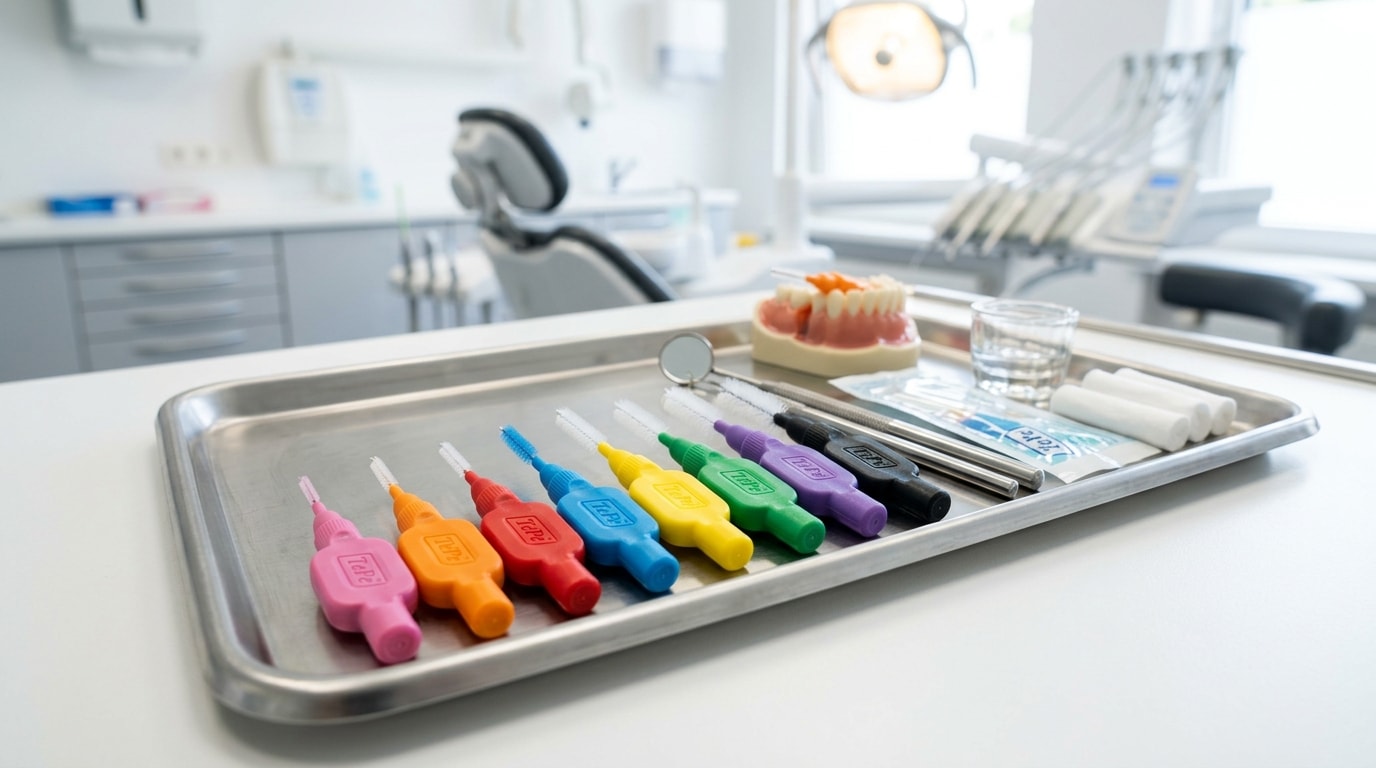
Toothbrush bristles do not fully clean the contact areas between teeth. Floss, interdental brushes, floss holders, threaders, or a water flosser may help, depending on the spaces, dental work, dexterity, and gum condition. The best tool is one that fits safely and that you can use consistently.
Do not force a large interdental brush into a tight space or snap floss into inflamed gums. Ask for a demonstration if bleeding, crowding, braces, a fixed retainer, or a bridge makes cleaning difficult. A tailored method is more useful than collecting several products without knowing where each one belongs.
Bleeding when you restart interdental cleaning can reflect inflamed gums, but persistent or heavy bleeding should be assessed. Do not use bleeding as a reason to ignore the area indefinitely; let the dental team determine whether plaque control alone is enough.
- Floss for suitable tight contacts
- Interdental brushes for spaces that safely accommodate them
- Threaders or specialised tools around bridges and fixed retainers
- Water flossers as an additional option for some patients
- Professional guidance when gums bleed or appliances limit access
Other factors can make plaque control harder
Crowding, gum recession, dry mouth, smoking, irregular meals, and dental appliances can change where plaque collects or how quickly the mouth feels coated. Medicines and health conditions can contribute to dry mouth, which may also affect cavity risk. Share these details rather than treating the problem as a willpower failure.
A worn toothbrush, an oversized brush head, or rushing can reduce access. Angle the bristles toward the gumline and use gentle small movements rather than aggressive back-and-forth scrubbing. Replace the brush when bristles are worn or splayed.
Mouthwash cannot replace physical plaque removal. It may have a role for a particular oral-health need, but it does not lift tartar from the teeth. If a product burns, dries the mouth, or encourages you to skip brushing and interdental cleaning, discuss a better routine.
Professional cleaning resets the surface
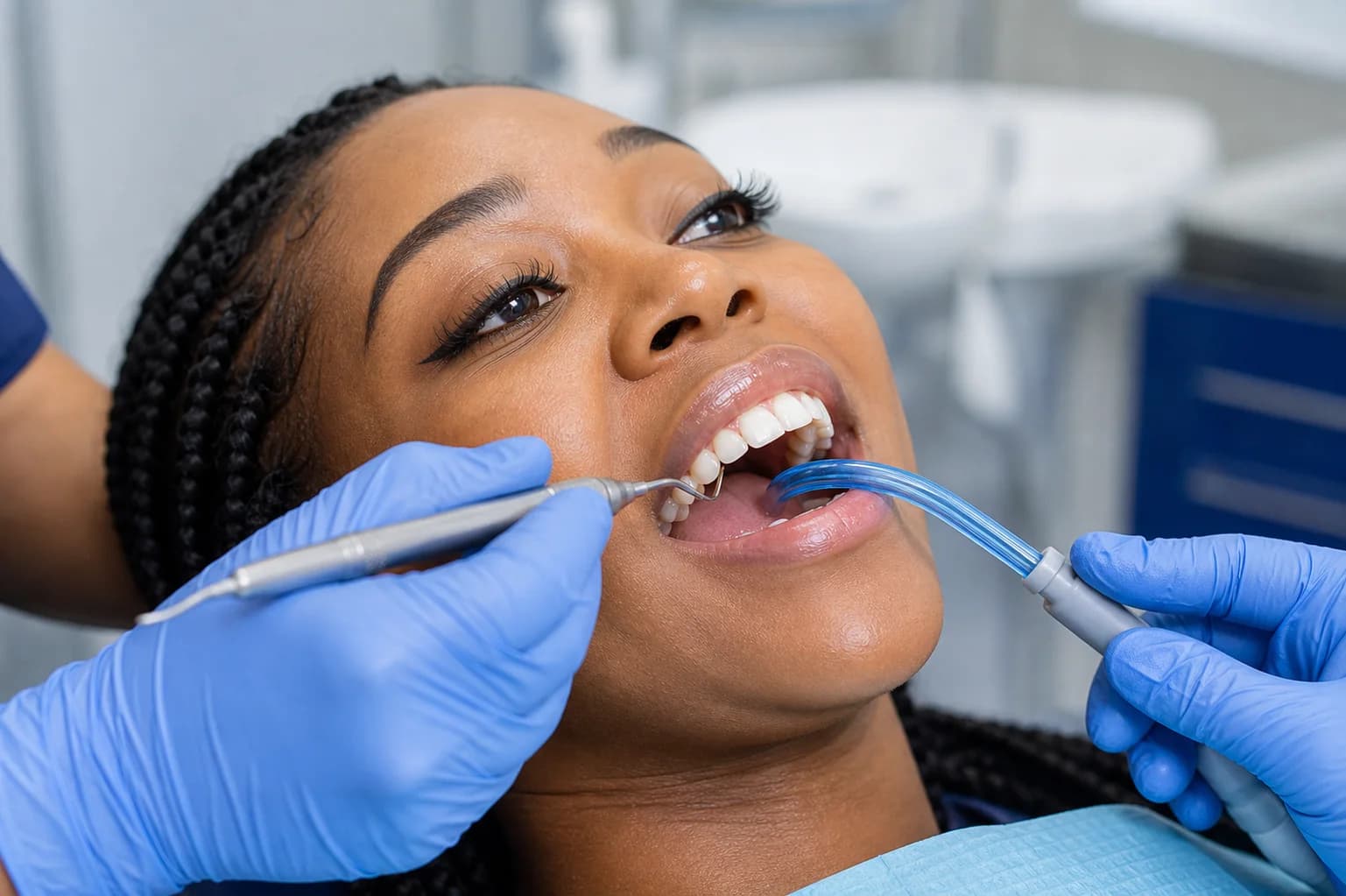
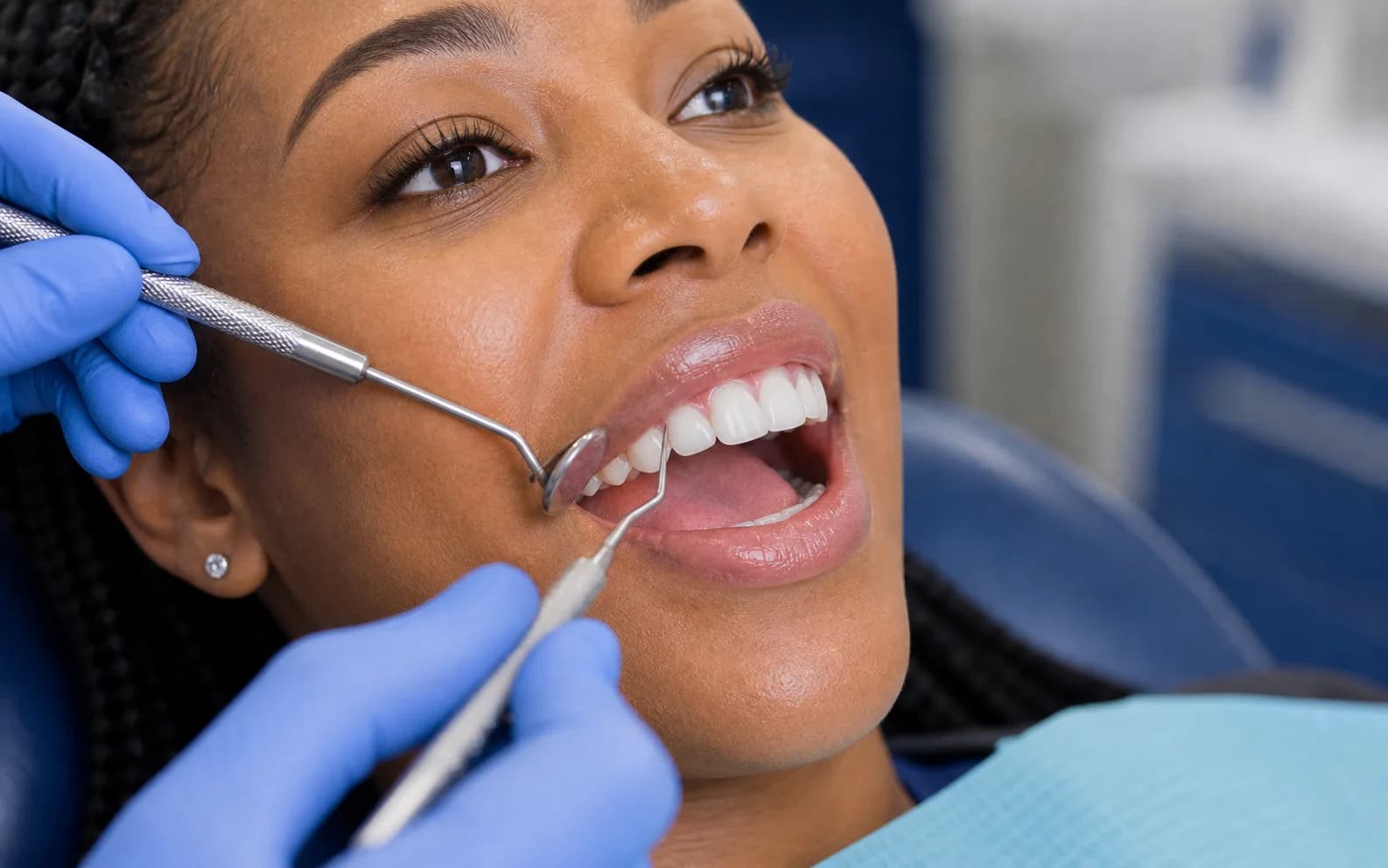
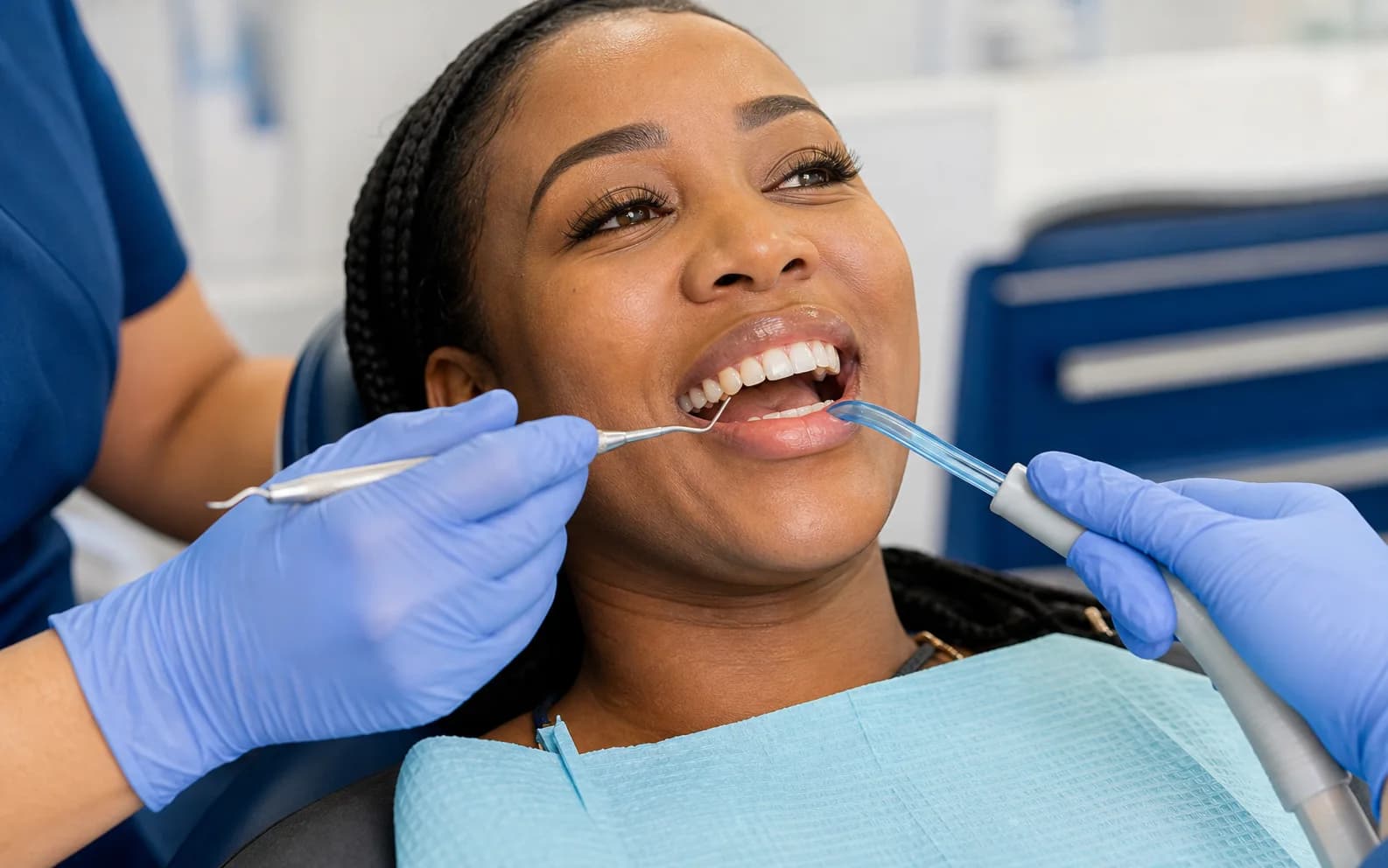
During a suitable cleaning, the dental professional removes plaque and tartar and may polish external surface stain. The gums and deposit pattern should also be reviewed. When there are deeper gum findings, a different gum-care plan may be recommended rather than treating the visit as a routine polish.
After the deposits are removed, roughness should improve where tartar was the cause. If a surface remains sharp or uneven, the dentist may need to check for a chipped tooth, decay, or a restoration problem.
The correct maintenance interval is individual. Someone with stable gum health and effective home care may need a different rhythm from a person with rapid build-up, gum disease, dry mouth, braces, or limited dexterity. Use review findings to set the interval.
Dental work and tooth position can change the routine
A fixed retainer, bridge, implant restoration, crown margin, or orthodontic appliance can create surfaces that an ordinary brushing pattern does not reach well. Crowded, rotated, or overlapping teeth may also need a smaller brush head or a separate interdental step.
This does not mean the dental work is automatically failing. It means the cleaning method should match the shape that is actually present. Ask the dental team to demonstrate around your own appliance or restoration and to check whether a rough margin or food trap is contributing to repeated build-up.
If a tool repeatedly catches, bends, or causes pain in one place, do not force it. The space may need a different size or technique, and the tooth or restoration may need assessment. A personalised routine should be safe, repeatable, and specific enough that you know which tool belongs in each area.
Build a routine around the missed surfaces
After cleaning, choose one or two changes you can sustain. This may be slowing down at the gumline, changing the order so missed areas are brushed first, adding an interdental tool, or using a smaller brush head. Complex routines often fail when they are not linked to a specific problem.
Check the result by feel and by what the dental team sees at review, not only by how fresh the toothpaste tastes. Plaque can remain even when the mouth feels clean. Ask whether disclosing products are appropriate if you need visual feedback on missed areas.
Recurring tartar does not mean professional cleaning replaces home care, and home care does not remove existing tartar. The two parts work together: professional removal clears the hardened deposit, while daily cleaning reduces the plaque available to harden again.
- Have existing tartar removed professionally.
- Identify the two or three surfaces where it forms fastest.
- Choose a brush angle and interdental tool for those surfaces.
- Use gentle technique consistently rather than scrubbing harder.
- Review the pattern at the next dental or oral-hygiene visit.
Internal Links
Related dental care
Sources
Useful information

Written by
Dr. Kholofelo Machaba-SelatoleChief Dentist & Practice Director
Dr. Kholofelo Machaba-Selatole leads Smile On Dental & Aesthetic Studio with a warm, patient-focused approach to family, restorative, cosmetic, and orthodontic care.
View Profile