
Quick Answer
Tell the dental practice before the appointment that fear of judgment or a previous experience has made it difficult to attend. Prepare a short list of symptoms, medicines, and the part of dental care that worries you most. At the visit, ask the dentist to explain each step, agree on a stop signal, and begin with an assessment and prioritised plan if that feels manageable. Honest information helps the dentist plan safely; you do not need to apologise for seeking care now.
- Name the fear directly so the team knows that communication and pacing matter.
- Separate fear of judgment from specific triggers such as pain, injections, sounds, or treatment cost.
- A stop signal and step-by-step explanation can give you more control during the examination.
- Do not hide symptoms, medicines, or habits; accurate information supports safer treatment decisions.
Fear of judgment is a real barrier to care
Dental anxiety is not limited to fear of pain. Some people worry that the dentist will criticise their teeth, hygiene, smoking, diet, a long gap in care, or unfinished treatment. That anticipation can make a person cancel appointments until a small problem becomes painful.
The appointment becomes more useful when you explain the barrier. You can say, “I have delayed care because I feel embarrassed, and I need you to explain what you find without judgment.” That sentence gives the dental team practical information without requiring you to tell your entire story at reception.
The clinical priority is to understand your current health and help you choose a next step. The dentist still needs to be clear about disease, risk, and home care, but clear information should not be the same as shame. If communication feels dismissive or you do not understand the plan, ask for the explanation to be slowed down or repeated.
Work out what you are actually afraid of
“The dentist” can represent several different fears. You may be worried about discovering bad news, losing a tooth, injections, sounds, gagging, not being able to stop, cost, or being blamed. Each trigger needs a different response, so name the two or three parts that cause the most anxiety.
If the concern is loss of control, agree on a hand signal and ask the dentist to pause before moving from examination to treatment. If the concern is information, ask for findings to be grouped into urgent, soon, and monitor. If the concern is cost, ask when a written estimate can be provided.
Do not assume that sedation is available or necessary. Behavioural communication, shorter stages, planned pauses, and a first assessment visit may help many patients. More complex anxiety needs individual assessment, and any pharmacological option must be confirmed by the treating practice rather than promised online.
| Anxiety trigger | A question you can ask |
|---|---|
| Fear of judgment | Can you explain the findings in neutral, practical language? |
| Fear of pain | Please tell me before anything may feel uncomfortable. |
| Loss of control | Can we agree on a hand signal for an immediate pause? |
| Fear of bad news | Can we separate urgent findings from things we can plan? |
| Cost uncertainty | When can I receive a clear estimate for each phase? |
Tell the practice before the appointment
A short note at booking can prevent you from having to introduce the issue while already anxious in the chair. Say whether you want a consultation first, whether a particular trigger is important, and whether pain or swelling is also present. Symptoms still determine urgency.
Ask what to bring. A medicine list, allergies, medical conditions, and previous dental information help the dentist plan safely. If you have a written treatment plan from another practice, bring it, but expect the dentist to confirm the diagnosis before relying on it.
Choose an appointment time that gives you enough time to arrive without rushing. Avoid promising yourself that you must complete treatment at the first visit. The immediate goal can be to attend, explain the concern, allow an assessment where possible, and leave with a next step.
- Tell the practice that you experience dental anxiety or embarrassment.
- Mention urgent symptoms such as swelling, severe pain, or trauma.
- Ask whether the first visit can focus on assessment and planning.
- Prepare medicines, allergies, health information, and key questions.
- Arrange transport or support if that helps you attend.
Create a communication plan before the examination
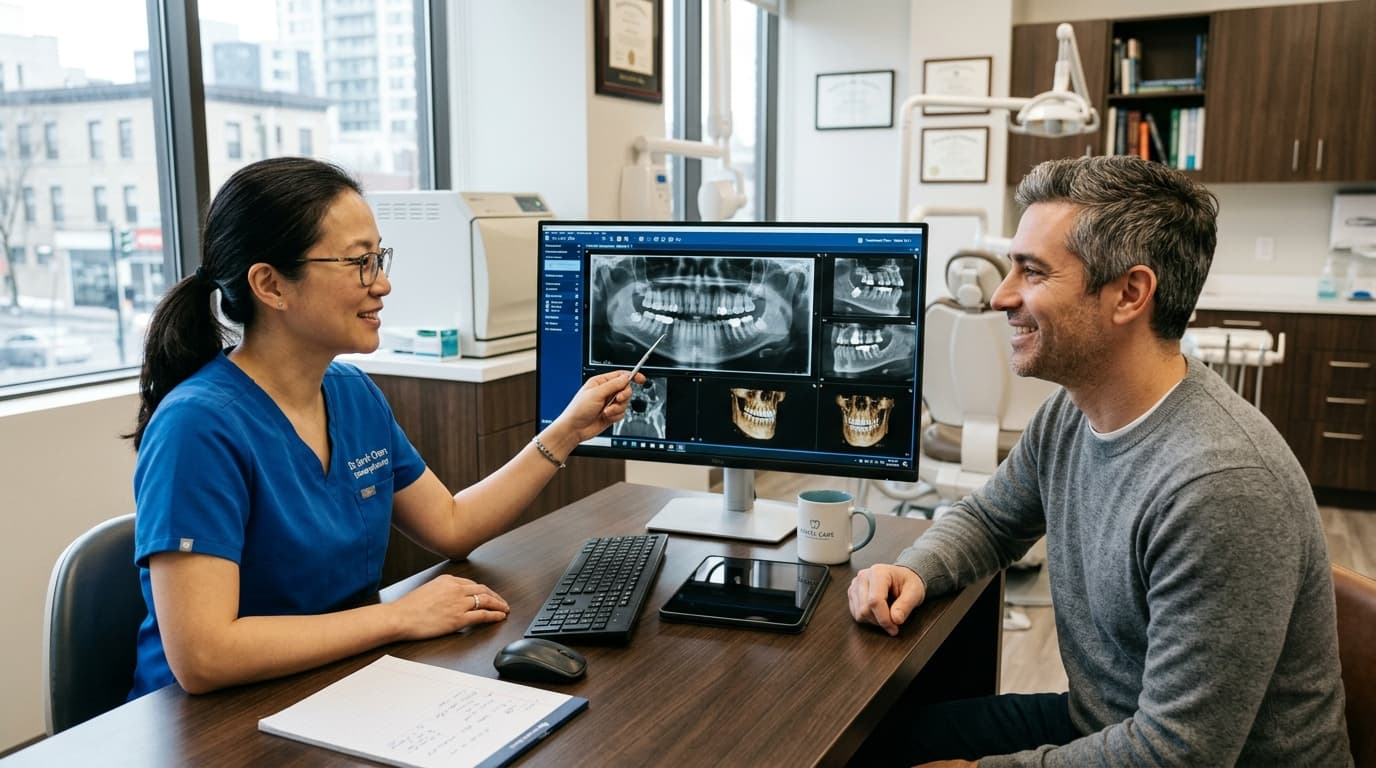
Before the dentist starts, agree on how information and pauses will work. A raised hand can be a stop signal. You can ask to hear what will happen before each step and to receive short explanations rather than every detail at once. If lying back or certain sounds increase anxiety, say so.
During the examination, focus on one step at a time. The dentist may look, gently check teeth and gums, assess the bite, and recommend images if they are needed. You can ask what each test is trying to establish. Understanding the purpose often makes the process feel less unpredictable.
If you cannot complete the entire examination, say what became difficult. That information can help plan the next visit. Progress is not all-or-nothing, but the dentist also needs enough information to diagnose safely before treatment is recommended.
- A clear stop signal
- Explanation before each new step
- Permission to ask for a short pause
- A plan for how much detail you want at once
- Agreement that treatment decisions follow diagnosis and consent
Ask for the findings in a manageable order
An anxious patient can hear a list of dental terms as a disaster even when the findings can be treated in phases. Ask the dentist to start with the most urgent issue, then explain active disease, prevention, repairs, and optional goals. A table or written plan can help you process the information after the visit.
For each recommendation, ask what the problem is, what the proposed treatment is intended to do, what alternatives may be suitable, and what could happen if it waits. The answer may depend on X-rays, gum health, remaining tooth structure, or how symptoms change.
You can also ask which visit is likely to be easiest to start with. Sometimes controlling pain or completing a cleaning builds confidence. In other cases, one damaged tooth needs attention first. The order should follow clinical priority while recognising that successful care also depends on your ability to return.
Prepare for the next visit before you leave
Ask what will happen at the next appointment, how long it is expected to take, and whether there are instructions about eating, medicines, transport, or aftercare. Do not change prescribed medicine or take someone else’s medication based on general online advice; discuss your health information with the treating dentist.
Record what helped during the consultation and what made anxiety worse. Keep the same stop signal and communication preferences for later visits. If the plan includes several appointments, ask for the sequence so you can see progress instead of experiencing each visit as a new unknown.
Seeking care after avoiding it is a meaningful step. The goal is not to become completely fearless before treatment. It is to create enough trust, information, and control to make the next safe decision.
Internal Links
Related dental care
Sources
Useful information

Written by
Dr. Kholofelo Machaba-SelatoleChief Dentist & Practice Director
Dr. Kholofelo Machaba-Selatole leads Smile On Dental & Aesthetic Studio with a warm, patient-focused approach to family, restorative, cosmetic, and orthodontic care.
View Profile