
Quick Answer
Book a dental consultation when you have several problems and are unsure which treatment to choose. Describe every symptom when booking, especially pain, swelling, trauma, fever, bad taste, or difficulty chewing. The dentist can examine the whole mouth, use focused X-rays where needed, separate urgent disease from problems that can be planned, and build a phased treatment plan. Booking one guessed procedure, such as a cleaning or extraction, may not address the problem that needs attention first.
- Choose a consultation when the correct treatment is not yet clear.
- Pain, swelling, spreading infection, trauma, and uncontrolled bleeding change the urgency.
- A phased plan can separate immediate care, disease control, repair, replacement, and optional cosmetic work.
- Ask what each phase achieves, what could happen if it waits, and when costs can be confirmed.
Start with diagnosis instead of choosing a procedure
Patients often try to choose between a cleaning, filling, root canal, extraction, crown, or gum treatment before anyone has diagnosed the problem. That is difficult when several symptoms overlap. Sensitivity can come from decay, wear, gum recession, a crack, or a leaking restoration. Bad breath can sit alongside plaque, gum inflammation, dry mouth, or a damaged tooth.
A dental consultation gives the dentist permission to look at the whole pattern. Explain which problem affects you most, but also list the smaller changes. A sore tooth, bleeding gums, a loose crown, food trapping, and an old missing tooth may be connected or may need separate plans.
If severe symptoms are present, say so when booking. The practice may guide you toward an urgent assessment rather than a routine consultation. The first appointment can then focus on diagnosis and stabilisation, with the broader plan completed when it is safe and practical.
- Pain that wakes you or prevents eating
- Facial, jaw, or gum swelling
- A broken tooth, lost restoration, or dental injury
- Bleeding gums, loose teeth, or persistent bad breath
- Missing teeth, chewing difficulty, or cosmetic concerns
How the dentist decides what comes first
Priority is not based only on which problem looks worst. The dentist considers pain, infection risk, remaining tooth structure, gum and bone support, the effect on eating, and whether delay could make treatment more difficult. A badly broken tooth without pain may still need early protection, while an old cosmetic concern may be safe to plan later.
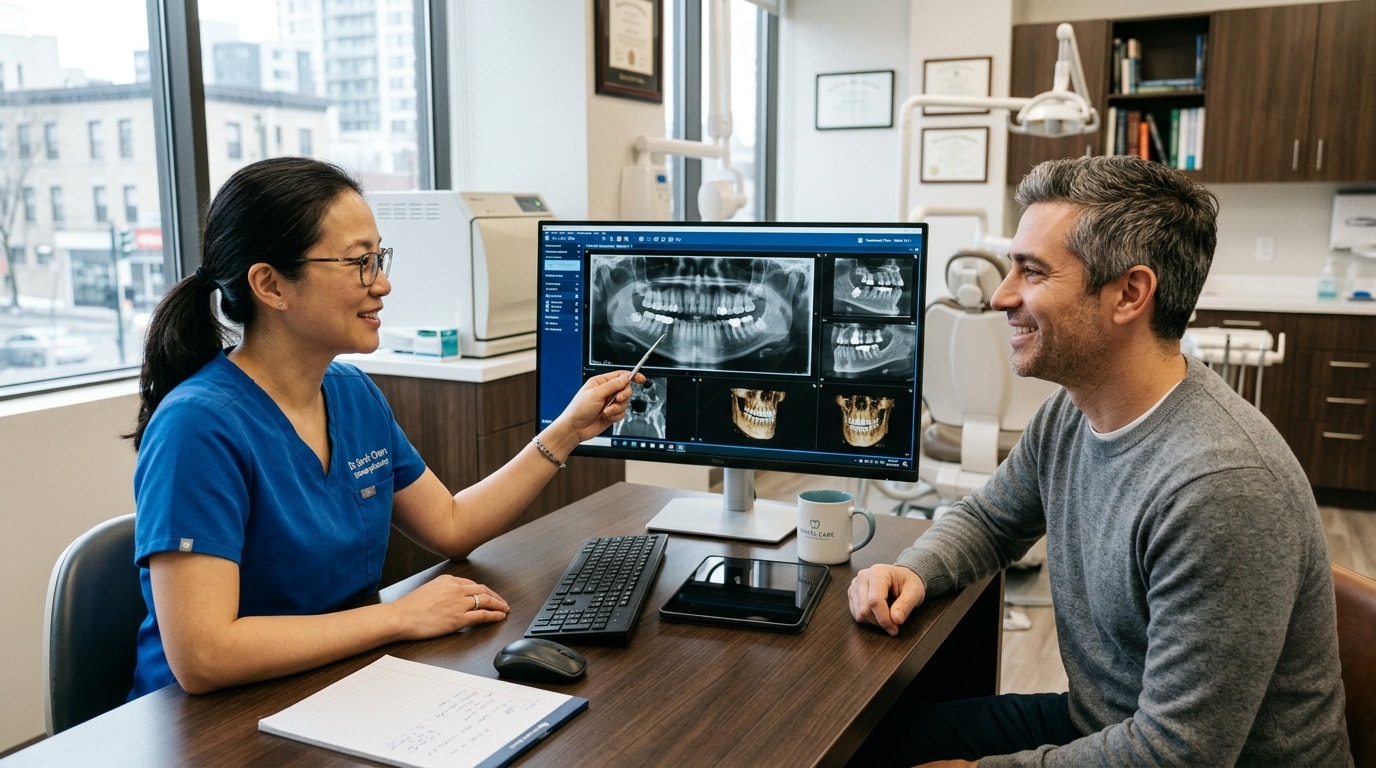
The examination may include teeth, gums, bite, restorations, dentures, and the soft tissues of the mouth. X-rays may be recommended for areas that cannot be assessed visually. The dentist may also ask about health conditions, medicines, smoking or vaping, grinding, and previous treatment because these details can change the sequence.
The result should be a problem list in plain language. It is helpful to separate confirmed findings from things that still need investigation. A symptom does not always point to one treatment, and responsible planning leaves room for the diagnosis to guide the decision.
| Planning level | Examples of the decision |
|---|---|
| Urgent assessment | Spreading swelling, severe uncontrolled pain, significant trauma, or bleeding. |
| Active disease control | Decay, infection, gum inflammation, or a failing restoration that is progressing. |
| Protection and repair | Weak, cracked, worn, or heavily restored teeth that need support. |
| Function and replacement | Missing teeth, dentures, bridges, implants, or bite-related problems. |
| Elective goals | Whitening, bonding, veneers, or alignment after health is stable. |
Why a cleaning is not always the first appointment
A professional cleaning is an important part of preventive and gum care, but it does not diagnose every source of pain or repair damaged teeth. If your main problem is swelling, severe toothache, a broken tooth, or a suspected abscess, the first visit may need to focus on that concern.
Cleaning may still be an early phase when plaque, tartar, bleeding, or gum inflammation affects much of the mouth. Healthier gums can make later restorative or cosmetic care easier to plan and maintain. The dentist can explain whether a routine clean is suitable or whether gum-focused treatment and review are needed.
This is why booking a consultation is useful when the situation is mixed. It avoids assuming that one procedure will solve every concern and helps reserve the right appointment length for what the dentist is likely to do.
A phased plan makes several problems manageable
A phased plan groups treatment by purpose. The first phase may relieve pain or manage infection. The second may control decay and gum inflammation. The third may rebuild weakened teeth or replace missing teeth. Cosmetic or orthodontic goals can be discussed after the mouth is stable enough to support them.
Not every patient needs every phase, and phases do not always mean long delays. The value is that you can see the order and understand dependencies. For example, gum health may need attention before an implant, whitening may be planned before a visible crown, and a root-canal-treated tooth may need final protection.
Ask the dentist to identify what must happen, what may be suitable, and what is optional. Also ask which treatment choices affect later choices. Removing a tooth, preparing teeth for a bridge, starting orthodontics, or changing the shade of visible teeth can influence future planning.
- Stabilise urgent pain, swelling, infection, or trauma.
- Control active decay and gum disease.
- Repair teeth that can be predictably restored.
- Plan missing-tooth replacement or bite correction.
- Consider cosmetic goals and long-term maintenance.
How to discuss cost without losing the clinical priorities
A complete estimate may not be possible until the dentist has examined you and reviewed any necessary images. Once the findings are clear, ask for costs by phase rather than one unexplained total. That makes it easier to see which fees relate to diagnosis, urgent care, disease control, final restorations, or maintenance.
If your budget is limited, say so directly. The dentist can explain whether treatment can be staged and what risks are associated with waiting. Staging does not mean ignoring active disease. It means using diagnosis to place available resources where they protect health and function first.
Medical aid benefits differ by scheme and plan. Confirm your own benefits instead of assuming a procedure is covered. Ask the practice what information or codes may be available after diagnosis, and avoid choosing treatment only because of an unverified benefit assumption.
- What is included in the consultation and imaging
- Which phase is urgent and which can be scheduled
- Whether a temporary or definitive option is being discussed
- What maintenance or follow-up the option requires
- When the written estimate can be confirmed
Prepare one clear summary for the appointment
Before the visit, write a short timeline for each main problem. Note the location, triggers, duration, swelling, bad taste, bleeding, or changes in chewing. Bring medication details, allergies, and any previous X-rays or treatment plans. You can also take a clear photograph if swelling or a broken area changes before the appointment.
Choose one outcome for the first visit: understand the pain, know what is urgent, obtain a phased plan, or discuss options for a particular tooth. The dentist may find additional concerns, but a clear goal makes the appointment easier to navigate.
Leave with the next action written down. That might be an urgent procedure, a cleaning, another diagnostic step, or a review. When several dental problems feel overwhelming, a correct first step is more useful than trying to solve the entire mouth before you book.
Internal Links
Related dental care
Sources
Useful information

Written by
Dr. Kholofelo Machaba-SelatoleChief Dentist & Practice Director
Dr. Kholofelo Machaba-Selatole leads Smile On Dental & Aesthetic Studio with a warm, patient-focused approach to family, restorative, cosmetic, and orthodontic care.
View Profile
