

Quick Answer
If you have not seen a dentist in years, the first appointment should be about understanding your current health rather than judging the past. The dentist will ask about symptoms and medical history, examine your teeth and gums, decide whether X-rays are useful, and explain which concerns need attention first. You do not have to complete every treatment at once, and it is helpful to tell the practice beforehand if embarrassment or anxiety has made booking difficult.
- A long gap is useful clinical context, not a reason to delay the appointment again.
- The first visit usually separates urgent problems from preventive, restorative, and longer-term care.
- X-rays, cleaning, or treatment may be recommended, but the exact next step depends on the examination.
- Tell the practice about anxiety, pain, swelling, medicines, and health conditions before treatment begins.
The appointment starts with what is happening now
People postpone dental care for many reasons. Cost, fear, a difficult previous experience, work, family responsibilities, illness, and embarrassment can all turn a short delay into several years. The useful starting point is not to defend the gap. It is to explain what you have noticed now and what made you ready to return.
The dentist may ask whether you have pain, sensitivity, bleeding gums, bad breath, loose teeth, broken fillings, difficulty chewing, or a cosmetic concern. You can also say that nothing hurts and that you simply want to understand the condition of your mouth. Both are valid reasons to book.
A complete medical and medication history matters because general health, allergies, previous procedures, and medicines can affect dental decisions and healing. Bring the names of medicines you take and mention any recent changes. If a question is unclear, ask what information the dental team needs and why.
- What hurts, bleeds, feels loose, or has changed
- When the problem started and whether it comes and goes
- Previous dental treatment or difficult experiences
- Current medicines, allergies, and health conditions
- What you most want the appointment to achieve
What the dentist may examine
The examination may include the teeth, gums, bite, existing fillings or crowns, and the soft tissues of the mouth. The dentist is looking for active disease, damaged teeth, areas that are difficult to clean, and older dental work that may need monitoring. The examination also creates a new baseline after the gap.
Not every finding needs immediate treatment. A small area may need monitoring or prevention, while pain, swelling, infection, a deep cavity, a loose tooth, or a badly broken restoration may need earlier attention. The purpose of the visit is to put findings in order instead of treating the mouth as one overwhelming problem.
If your gums bleed or there is visible tartar, the dentist may recommend a professional cleaning or a gum-focused assessment. If one tooth is painful or heavily damaged, diagnosis of that tooth may come before routine cleaning. The correct sequence depends on symptoms and clinical findings.
| What the dentist finds | What may happen next |
|---|---|
| No urgent disease | Prevention, cleaning, monitoring, and a recall plan may be discussed. |
| Plaque, tartar, or inflamed gums | A cleaning or gum-care plan may be recommended with home-care guidance. |
| Decay or a broken filling | The dentist may discuss a filling, stronger restoration, or further diagnosis. |
| Pain, swelling, or infection signs | Urgent diagnosis and stabilisation may take priority over routine care. |
| Several concerns | Treatment can be prioritised and planned in manageable phases. |
Why X-rays may or may not be needed
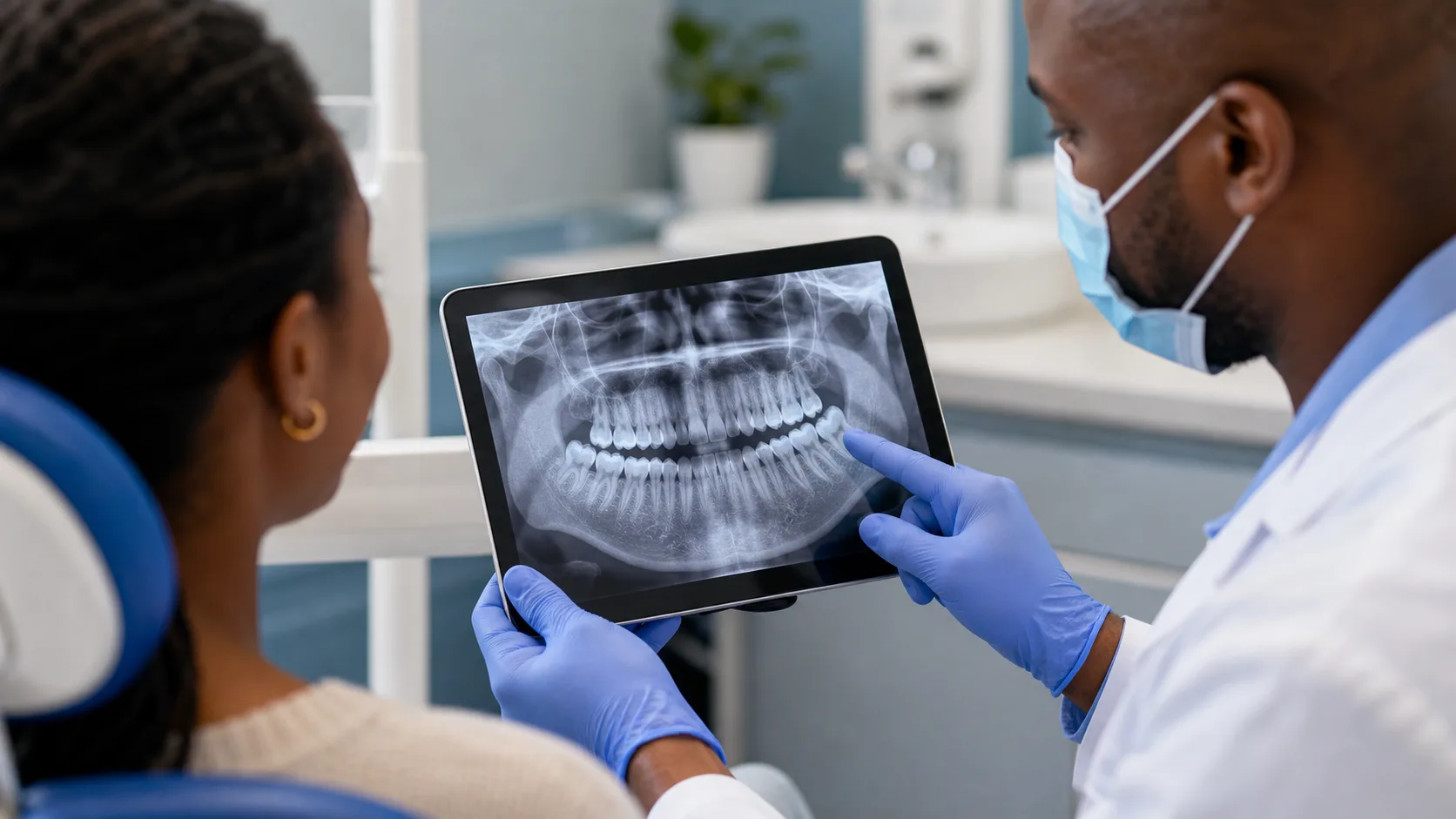
A visual examination cannot show everything below the surface. X-rays may help when the dentist needs to check between teeth, around roots, beneath older restorations, in the supporting bone, or around teeth that have not fully erupted. They are used to answer a diagnostic question, not simply because you have been away for a long time.
The type and number of images depend on what the dentist needs to investigate. A painful tooth may need a focused image, while broader planning may require a different view. If you have recent dental X-rays or records, mention them when booking. The dentist can decide whether they are current and relevant.
It is reasonable to ask what an X-ray is intended to show and how the result could change the treatment plan. That conversation can make the diagnostic process easier to understand and helps separate an examination from the treatment that may follow.
You do not have to fix everything in one visit
A common fear after a long gap is that the dentist will present a long list of treatment that must happen immediately. A useful plan should distinguish urgent disease, active problems, prevention, and optional cosmetic goals. It should also explain what could happen if an item is monitored or delayed.
Treatment may be staged. The first phase might deal with pain or infection. The next could focus on cleaning and controlling decay. Later phases may restore damaged teeth, replace missing teeth, or address alignment and cosmetic goals. The sequence should reflect health, function, risk, and your priorities.
Ask for the plan in clear language. You should understand what each recommendation is intended to achieve, what alternatives may be suitable, and which decisions can wait until more information is available. If the plan feels overwhelming, ask the dentist to identify the first one or two actions.
- Deal with urgent pain, swelling, trauma, or infection concerns.
- Control active decay and gum inflammation.
- Protect teeth that are weak, cracked, or losing support.
- Plan replacement, orthodontic, or cosmetic care after health is stable.
- Agree on a maintenance and review rhythm.
How to make an anxious or embarrassing visit more manageable
Tell the practice that you are anxious or embarrassed when you book. You do not need to explain every detail to reception, but a short note helps the team understand that communication and pacing matter. During the appointment, identify the part you fear most, such as the examination, X-rays, injections, sounds, or hearing the treatment plan.
Agree on a stop signal before the examination begins. You can also ask the dentist to explain each step before it happens, pause when needed, and focus the first visit on assessment if that is the most manageable starting point. These are practical communication tools; they do not require the practice to promise sedation or a pain-free experience.
Embarrassment often becomes smaller once there is a plan. The dental team needs accurate information, so try not to hide symptoms, smoking or vaping, medication use, grinding, or previous difficulties. Honest context supports safer decisions and gives the dentist a better chance of helping you move forward.
- Say that anxiety or embarrassment has delayed care
- Name the specific part of the visit that worries you
- Agree on a hand signal for a pause
- Ask for explanations before each examination step
- Start with assessment and priorities if treatment feels overwhelming
What to do before you book
Write down your main concern, when it began, and anything that makes it better or worse. Collect medication details and any dental records you already have. If cost is a concern, ask what the consultation includes and when treatment estimates can be provided. The final plan usually depends on the examination.
Do not wait for a routine appointment if you develop facial swelling, difficulty breathing or swallowing, uncontrolled bleeding, severe pain that cannot be managed, or significant dental trauma. Tell the practice exactly what is happening so the urgency can be assessed. Life-threatening breathing or swallowing difficulty needs emergency medical help.
The most important result of the first visit is a clear next step. That may be a cleaning, an X-ray, treatment for one tooth, a phased plan, or simply a review schedule. Returning after a long gap is already progress; the plan turns that decision into ongoing care.
Internal Links
Related dental care
Sources
Useful information

Written by
Dr. Kholofelo Machaba-SelatoleChief Dentist & Practice Director
Dr. Kholofelo Machaba-Selatole leads Smile On Dental & Aesthetic Studio with a warm, patient-focused approach to family, restorative, cosmetic, and orthodontic care.
View Profile