

Quick Answer
A dental emergency is usually a problem that needs prompt dental assessment because pain, infection signs, trauma, bleeding, or tooth damage could worsen if it is left too long. Severe toothache, facial or gum swelling, abscess symptoms, a knocked-out adult tooth, a badly broken tooth with pain or sharp edges, uncontrolled bleeding, and dental injuries should be treated as urgent. Routine issues are usually stable problems such as mild sensitivity, small chips without pain, or planned check-ups, but symptoms can change, so patients should contact the dental practice if they are unsure.
- Severe pain, spreading swelling, fever, trauma, a knocked-out adult tooth, and bleeding that will not settle should be assessed promptly.
- A lost filling or crown is often urgent rather than a hospital emergency, especially if the tooth is painful, sharp, or hard to eat with.
- Trouble breathing, trouble swallowing, serious facial or jaw injury, heavy bleeding, confusion, or rapidly spreading swelling needs medical emergency help.
- The safest next step is assessment; home care can support comfort while waiting, but it cannot confirm the cause or replace treatment.
Emergency, urgent, or routine?
Dental problems sit on a spectrum. A true emergency is a situation where waiting could risk the tooth, the surrounding tissues, or the patient's general health. Dental trauma, swelling that is spreading, heavy bleeding, and severe pain are common examples. These problems should not be left until a normal check-up because the dentist may need to assess the tooth, gum, bite, X-rays, soft tissues, and medical factors before deciding the next step.
Urgent dental care is still important, but it may not always mean the same level of immediate risk. A lost filling, a loose crown, a chipped tooth with a sharp edge, or a wisdom tooth flare-up can become worse if ignored, especially when eating is difficult or the tooth is cutting the tongue or cheek. Routine care is different again. A stable stain, a planned cleaning, mild sensitivity that is not worsening, or a check-up without active symptoms can usually be booked as normal dental care.
The challenge is that symptoms can move from one group to another. A mild toothache that becomes severe, a small gum bump that starts swelling, or a broken tooth that begins hurting should be treated more seriously. When patients are unsure, it is better to contact the dental practice and explain the symptoms clearly than to guess based on appearance alone.
| Situation | How to think about it | Practical next step |
|---|---|---|
| Severe pain, swelling, trauma, knocked-out adult tooth, or uncontrolled bleeding | Emergency dental concern | Seek prompt assessment and medical help if breathing, swallowing, heavy bleeding, or serious injury is involved. |
| Lost filling, loose crown, cracked tooth, sharp edge, or wisdom tooth flare-up | Urgent dental concern | Contact the practice for advice and avoid chewing on the affected side. |
| Small chip with no pain, mild stable sensitivity, cleaning, or planned review | Routine or soon appointment | Book dental care and monitor for pain, swelling, or bite changes. |
Severe toothache should not be ignored
A toothache can come from decay, a cracked tooth, gum infection, food trapping, trauma, bite pressure, or inflammation inside the tooth. Mild sensitivity that settles quickly is different from deep, throbbing, constant, or sleep-disrupting pain. Pain that is not settling with normal self-care, pain that affects eating, or pain with swelling should be treated as urgent because the cause may need dental treatment rather than waiting.
The dentist may check the painful tooth, surrounding gum, bite, old fillings or crowns, and X-rays where clinically useful. Depending on the cause and whether the tooth can be restored, options discussed may include a filling, root canal treatment, extraction, drainage of swelling, bite adjustment, or another plan. The key point is that the symptom does not tell the whole story on its own. Two patients can describe similar toothache but need different care after assessment.
While waiting to be seen, avoid chewing hard foods on the painful side, keep the area clean, and follow advice from a dentist, doctor, or pharmacist about suitable pain relief for your medical history. Do not place aspirin, alcohol, or harsh home remedies against the gum because they can burn or irritate the tissues.
- constant or throbbing pain
- pain that wakes you or stops normal eating
- pain with swelling, fever, bad taste, or a gum bump
- pain after a tooth breaks, cracks, or becomes loose
Swelling and abscess signs are urgent
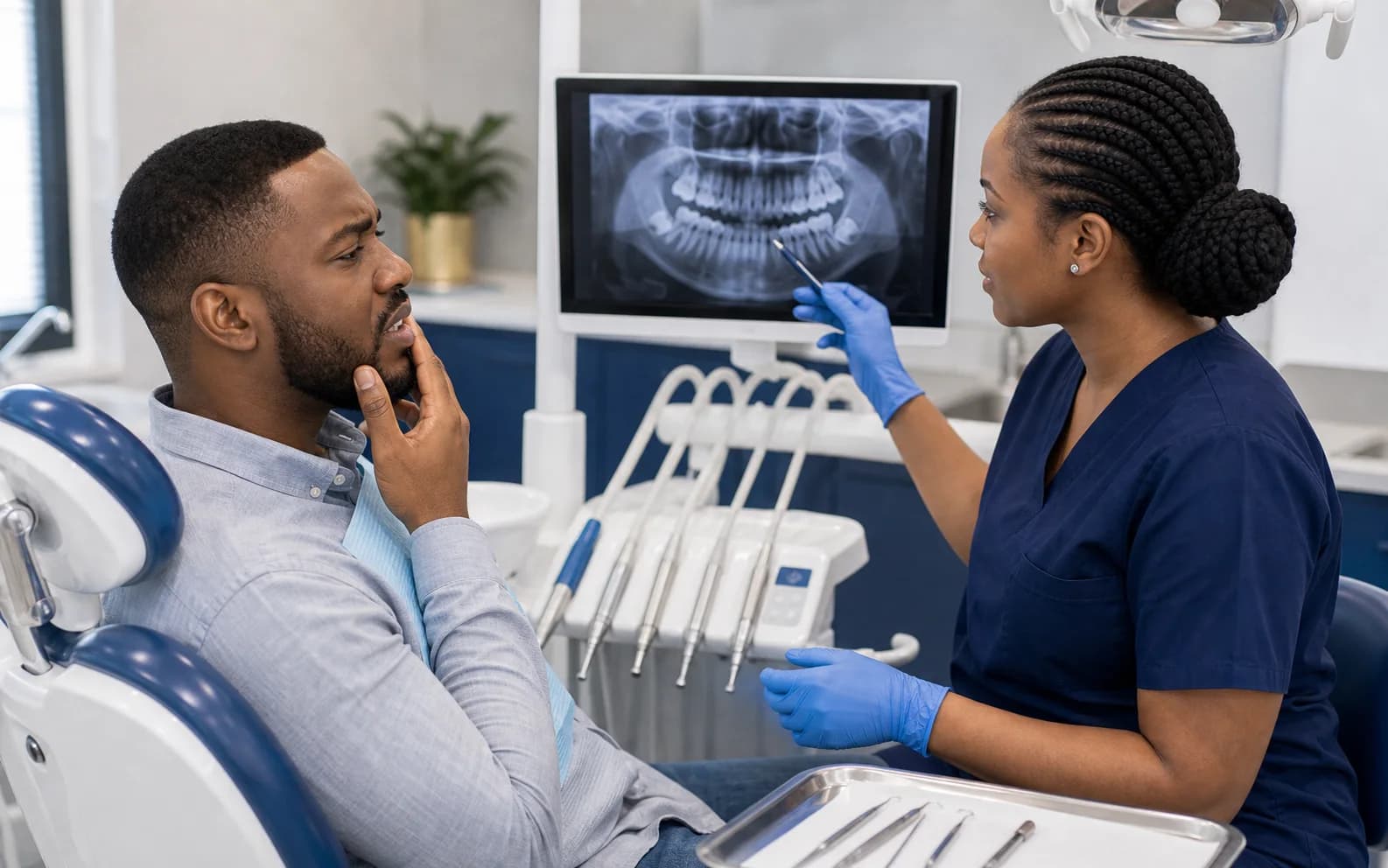
Swelling around a tooth, gum, jaw, face, or neck can be a warning sign. A dental abscess is a pocket of pus linked to infection, and it may appear as a swollen gum bump, facial swelling, bad taste, bad breath, tenderness, loose tooth, fever, or pain that radiates toward the jaw, ear, or neck. Pain can sometimes reduce if the nerve inside a tooth stops responding, but that does not mean the infection has gone away.
Abscess symptoms should be assessed promptly because dental infections can spread into surrounding tissues. A dentist may need to identify the source, check whether swelling is localised or spreading, and discuss treatment that addresses the cause. That can include drainage, root canal treatment, extraction, or another clinically appropriate plan. Tablets alone are not a reliable substitute for treating the source of the problem.
Some swelling needs medical emergency help rather than a dental appointment only. Trouble breathing, trouble swallowing, swelling under the jaw or into the neck, confusion, a high fever, a fast heartbeat, or swelling that is spreading quickly should be treated as a medical emergency. If those signs are present, seek emergency medical care.
- Contact the dental practice if swelling, a gum bump, bad taste, fever, or severe pain is present.
- Explain whether the swelling is getting bigger, whether swallowing is affected, and when symptoms started.
- Use medical emergency help for breathing difficulty, swallowing difficulty, confusion, heavy bleeding, or rapidly spreading swelling.
- Do not try to drain a gum bump at home or use leftover medicine.
A knocked-out adult tooth needs fast action
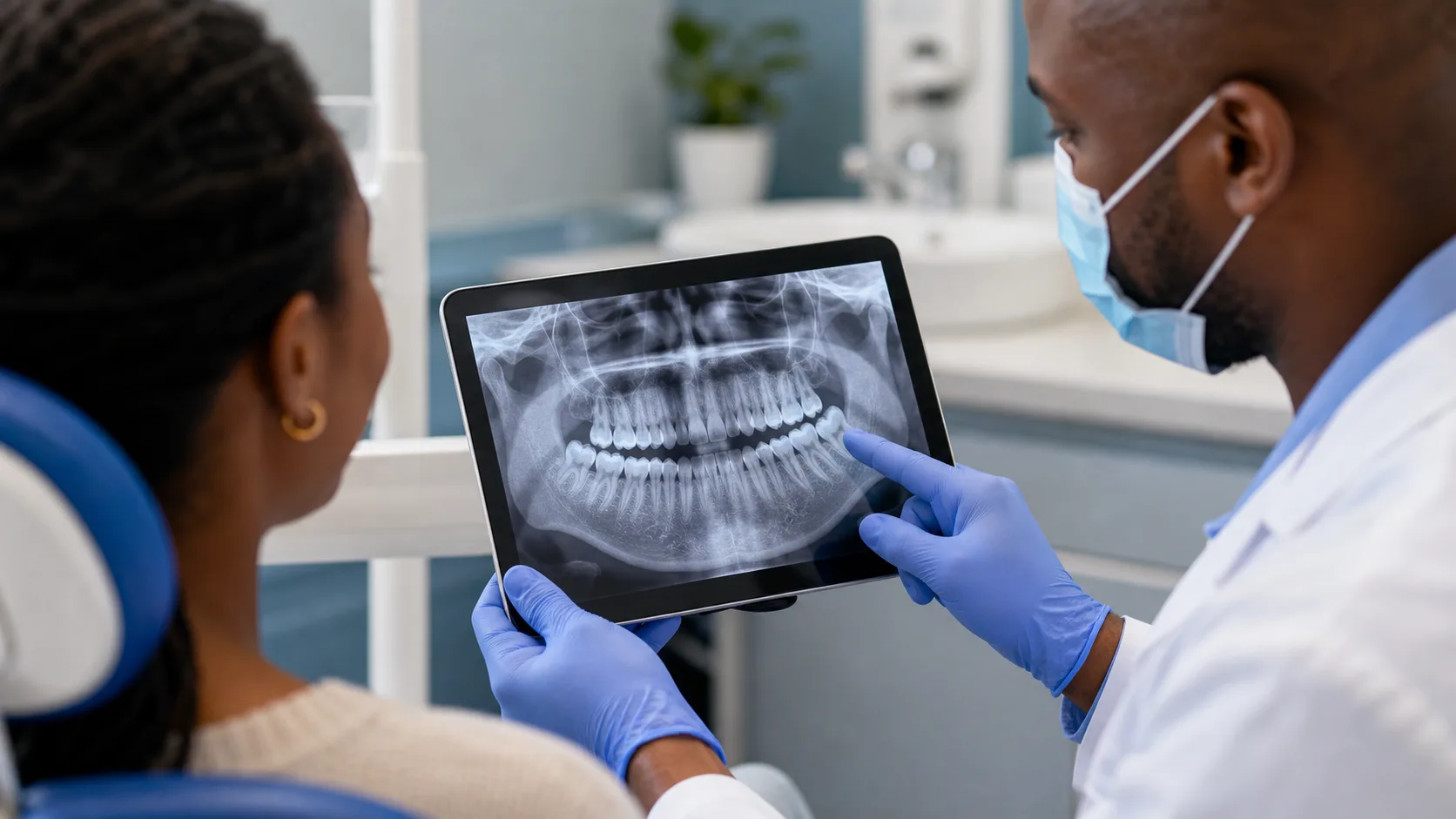
A knocked-out adult tooth is one of the clearest dental emergencies. The tooth has the best chance of being saved when it is handled carefully, kept moist, and assessed as quickly as possible. Pick it up by the crown, which is the white part normally visible in the mouth. Avoid touching or scraping the root because the root surface is delicate.
If the tooth is dirty, gently rinse it with milk or clean water for a brief moment. If it is an adult tooth and the person is conscious and able to cooperate, the tooth can be placed back into the socket and held with gentle biting pressure on clean gauze or cloth. If it cannot be replaced, keep it moist in milk or inside the cheek if safe to do so. Do not store it dry, wrap it in tissue, scrub it, or use household cleaners.
Do not try to reinsert a baby tooth. Replacing a baby tooth can damage the developing adult tooth underneath. For children, dental trauma should still be assessed promptly, but the steps are different. For any trauma with loss of consciousness, vomiting, double vision, suspected jaw fracture, or serious facial injury, seek medical emergency care.
- Find the tooth and hold it by the crown, not the root.
- Gently rinse only if dirty; do not scrub or dry the root.
- Reinsert an adult tooth if safe, or keep it moist in milk.
- Contact a dentist immediately and bring the tooth with you.
- Use medical emergency help for serious head, face, jaw, breathing, or consciousness symptoms.
Broken teeth, sharp edges, and lost crowns
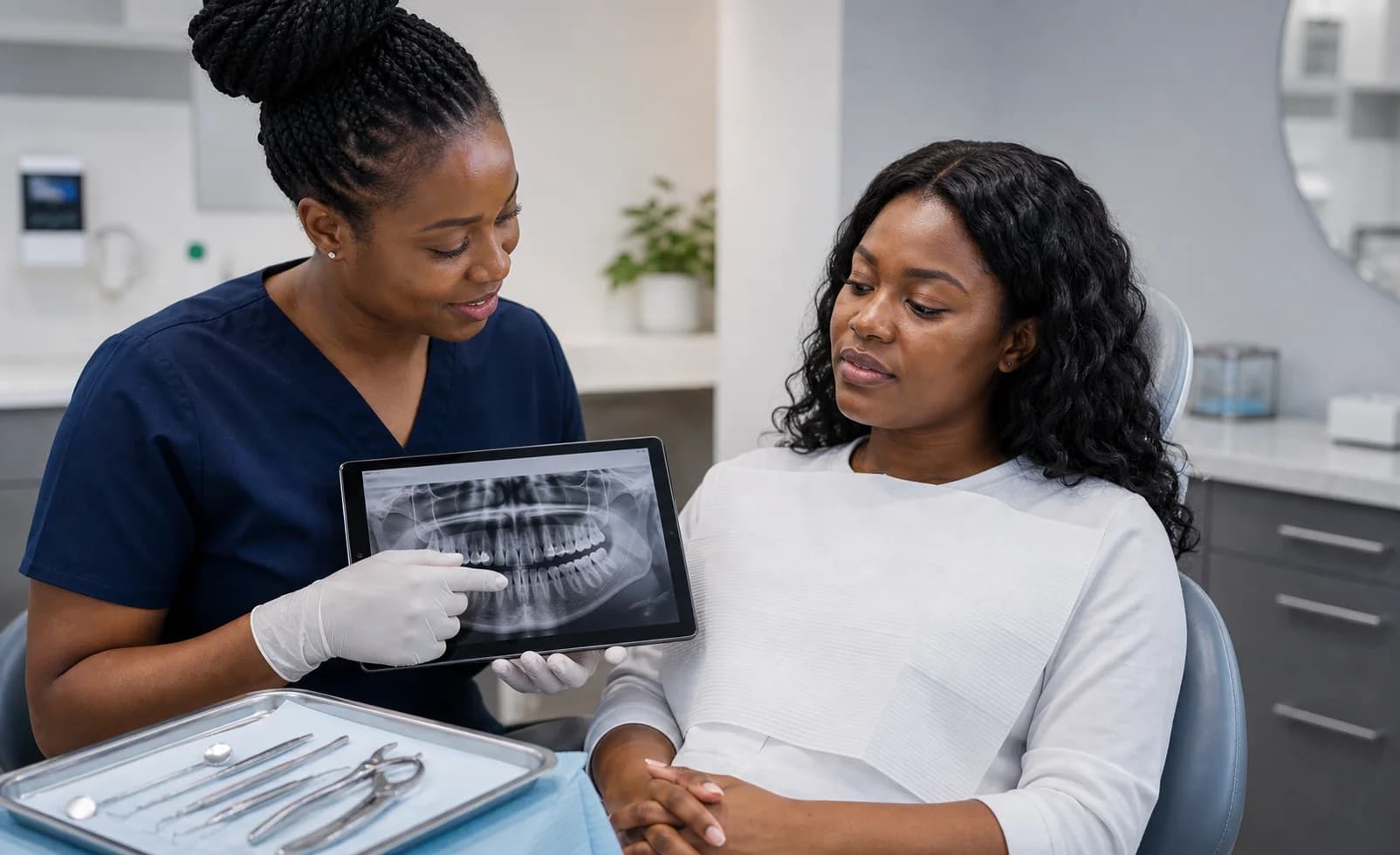
A broken tooth can be minor, urgent, or an emergency depending on pain, bleeding, sharp edges, nerve exposure, bite changes, and how much tooth structure has been lost. A tiny chip with no pain may be booked for routine repair. A large break, deep crack, exposed inner tooth, severe sensitivity, or pain when biting should be assessed sooner. Sharp edges also matter because they can cut the tongue, cheek, or lip.
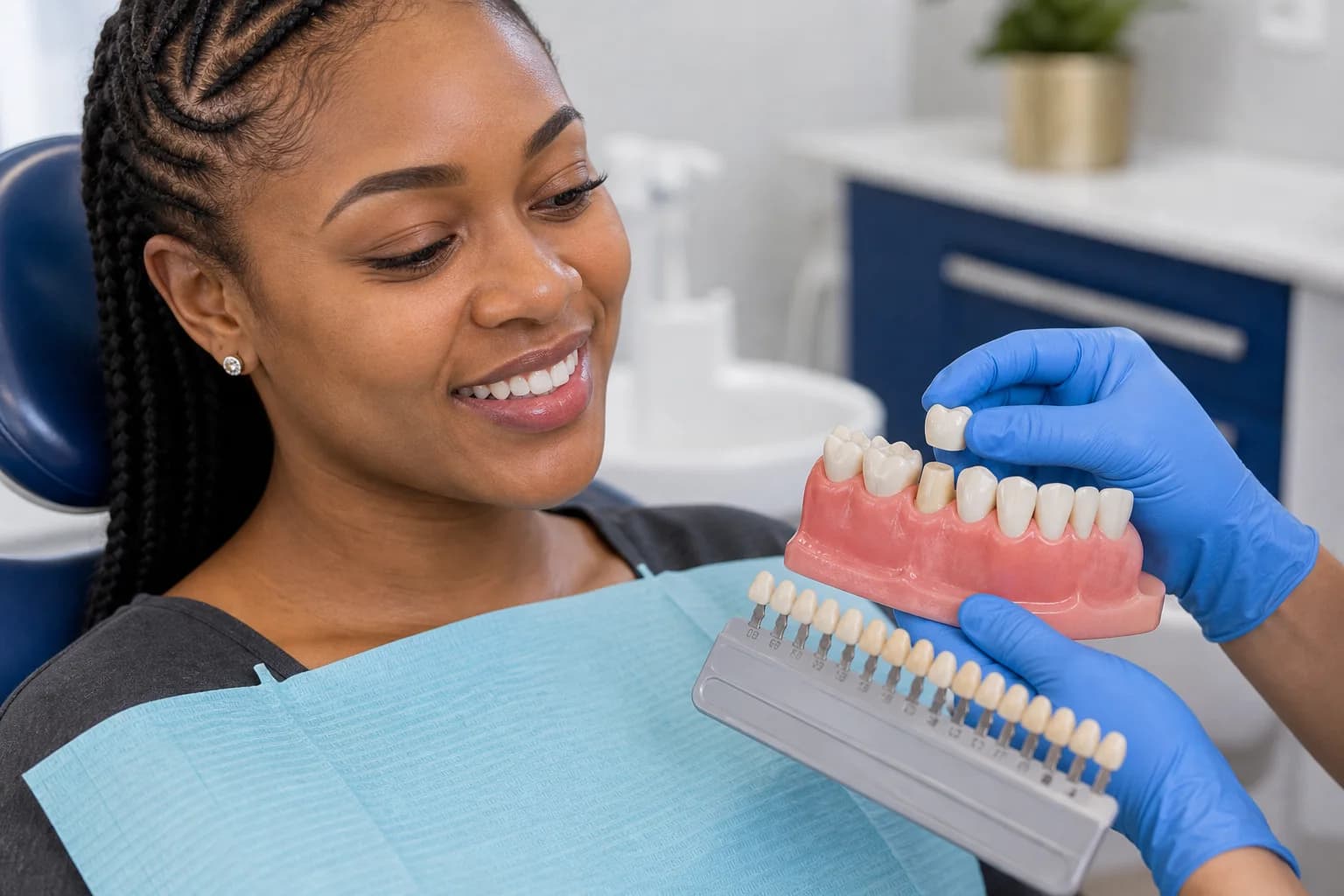
If a piece of tooth has broken off, store the fragment in milk and bring it to the appointment if possible. Avoid chewing on that side and do not try to glue the fragment back at home. If a crown, bridge, veneer, or filling comes loose, keep the piece safe and call the dental practice. The exposed tooth underneath may be sensitive, may decay more easily, or may fracture further if the area is used heavily.
The dentist may discuss smoothing a sharp edge, placing a filling, repairing a crown, making a new restoration, protecting the tooth temporarily, root canal treatment, or extraction if the tooth cannot be restored. The plan depends on the amount of healthy tooth left, symptoms, bite forces, X-rays, gum condition, and whether the fracture extends below the gum.
- large break with pain or sensitivity
- sharp edge cutting the cheek, lip, or tongue
- broken tooth after a fall, sport injury, or accident
- lost filling or crown with pain, bad taste, or difficulty eating
Bleeding after injury or extraction
Bleeding after a mouth injury, dental trauma, or tooth removal should reduce with steady pressure. Small amounts of blood mixed with saliva can look dramatic, but bleeding that soaks gauze repeatedly, forms large clots, or does not slow down after following pressure instructions needs urgent advice. Patients taking blood thinners or those with bleeding conditions should mention this clearly when contacting the practice or medical service.
After an extraction, bite on clean gauze or a clean cloth as instructed and keep pressure steady. Avoid repeated checking, forceful rinsing, spitting, alcohol, smoking, hot drinks, and heavy activity because these can disturb the clot. If bleeding continues heavily despite pressure, contact the dental practice or seek urgent medical help depending on the severity.
Bleeding linked to serious trauma needs medical emergency care. This includes injuries to the face or jaw, suspected broken jaw, deep cuts, heavy bleeding that will not stop, loss of consciousness, vomiting after head injury, or double vision. The dental injury can be assessed after the patient is medically stable.
| Bleeding pattern | What it may mean | Next step |
|---|---|---|
| Pink saliva or light oozing after extraction | Can occur during early clot formation | Follow the dentist's pressure and aftercare instructions. |
| Bleeding that keeps soaking gauze | Needs urgent advice | Use steady pressure and contact the practice or urgent care service. |
| Heavy bleeding after facial injury | May be a medical emergency | Seek medical emergency help, especially with jaw, head, or breathing concerns. |
Wisdom tooth flare-ups and trauma
Wisdom tooth flare-ups often happen when a tooth is partly erupted and gum tissue around it traps food and bacteria. Symptoms may include pain behind the last molar, gum swelling, bad taste, difficulty opening wide, tenderness when biting, or swelling near the jaw. Some flare-ups settle, but repeated episodes, spreading swelling, fever, or difficulty swallowing should be treated as urgent.
The dentist may clean the area, check for decay or gum inflammation, take X-rays where useful, and discuss whether monitoring, local care, extraction, or surgical removal may be suitable. A wisdom tooth problem can be linked to the neighbouring molar, so assessment should not focus only on the visible gum flap.
Dental trauma also deserves careful triage. A tooth that is loose, pushed out of position, cracked, broken, or painful after impact should be checked even if the lips and gums look fine. Injuries can affect the nerve or root of the tooth without an obvious surface crack. Mouthguards reduce risk during contact sports, but any significant impact still needs attention if teeth move, bite feels different, or pain persists.
- pain or swelling behind the last molar
- limited mouth opening or difficulty swallowing
- tooth movement or bite change after impact
- sports, fall, or accident injury involving teeth or jaws
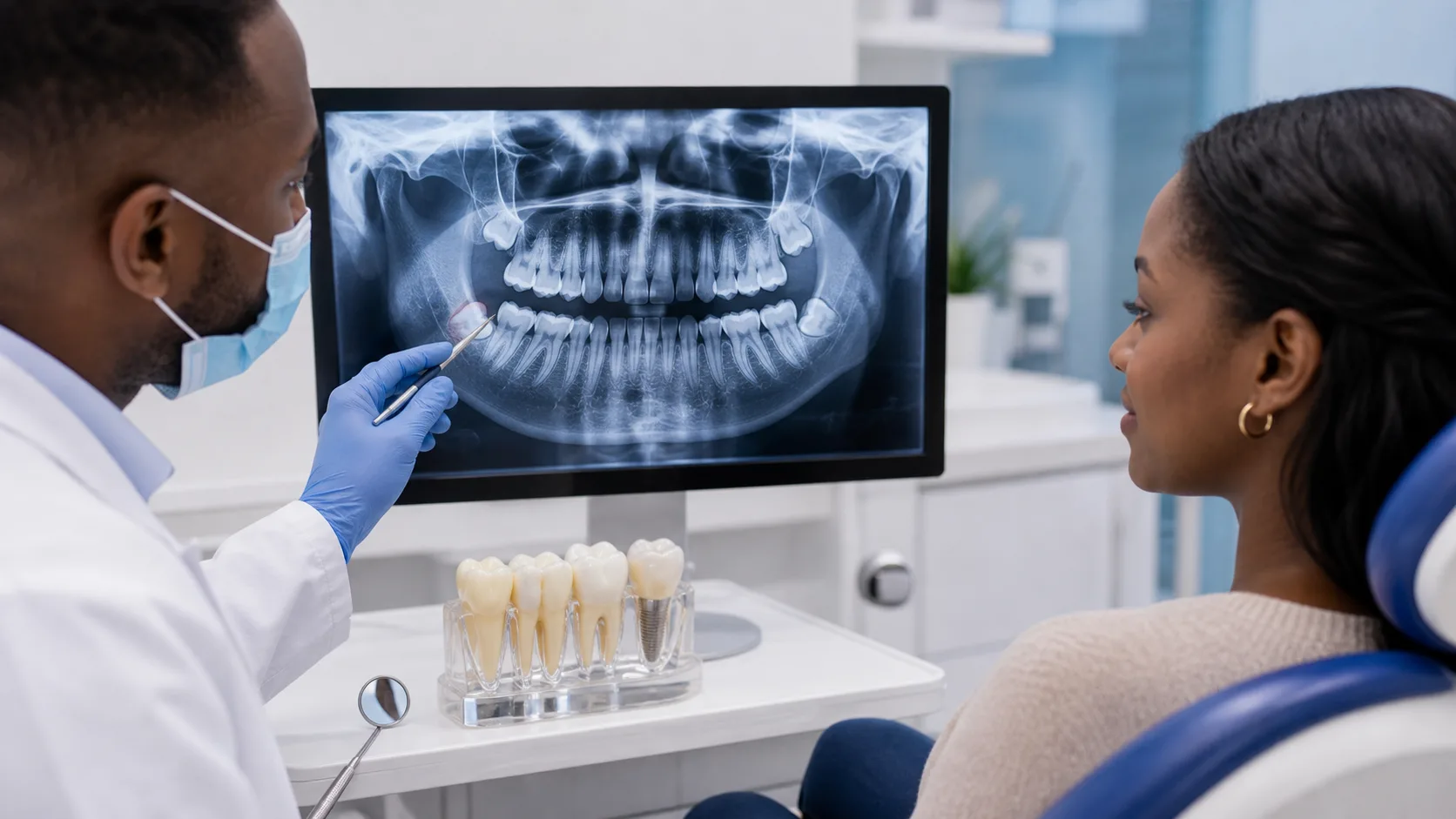
How to prepare for an emergency dental visit
When contacting the dental practice, explain the main symptom first: severe pain, swelling, bleeding, trauma, broken tooth, lost crown, or wisdom tooth flare-up. Mention when it started, whether symptoms are worsening, what makes it better or worse, whether there is fever or swelling, and whether eating, swallowing, breathing, or opening the mouth is affected.
Bring a list of current medicines, allergies, medical conditions, recent dental treatment, and any X-rays or reports if you have them. If a tooth, crown, filling, veneer, or broken fragment came out, bring it in a clean container. If an adult tooth was knocked out and cannot be reinserted safely, keep it moist in milk while travelling to care.
The appointment is usually about finding the cause, reducing risk, and choosing the next clinically appropriate step. Some cases can be treated in one visit. Others may need pain control advice, X-rays, drainage, a temporary repair, root canal treatment, extraction planning, review, or referral depending on the assessment. If medical emergency signs are present, seek medical help first.
- Write down when symptoms started and whether they are getting worse.
- Bring medication details, allergies, and relevant medical history.
- Keep broken fragments, loose crowns, or knocked-out adult teeth safe and moist where appropriate.
- Use the emergency dental care or contact page to choose the most relevant next step.
Internal Links
Related dental care
Sources
Useful information

Written by
Dr. Kholofelo Machaba-SelatoleChief Dentist & Practice Director
Dr. Kholofelo Machaba-Selatole leads Smile On Dental & Aesthetic Studio with a warm, patient-focused approach to family, restorative, cosmetic, and orthodontic care.
View Profile