
Quick Answer
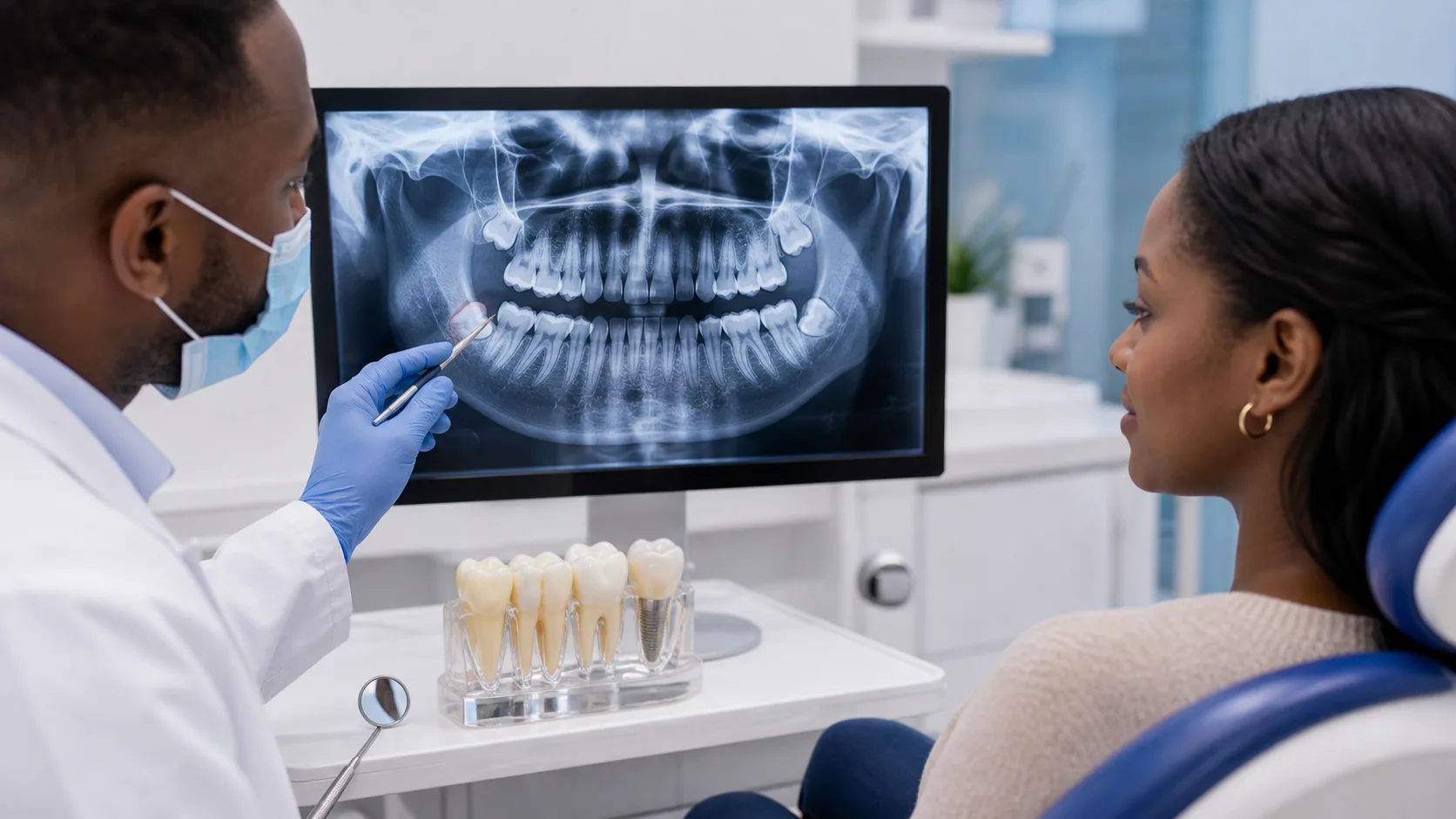
Wisdom tooth removal cost in South Africa depends on whether the tooth can be removed simply or needs surgical removal, whether it is impacted, whether infection or swelling is present, how many wisdom teeth are being assessed, what X-rays are needed, and whether stitches, medicines, or review visits form part of the plan. Recovery also depends on complexity: the first day focuses on clot protection, rest, soft foods, and following medicine instructions, while the next few days may involve swelling, jaw stiffness, bruising, and careful cleaning. Worsening pain after a few days, bad taste, pus, fever, spreading swelling, or difficulty swallowing or breathing needs prompt help.
- A reliable wisdom tooth quote starts with examination and X-rays where clinically appropriate, not a generic online price.
- Simple removal, surgical removal, and impacted wisdom tooth cases can involve different planning, appointment time, aftercare, and review needs.
- The first 24 hours are mainly about protecting the blood clot, resting, eating soft foods, avoiding straws and smoking, and using medicines only as instructed.
- Dry socket can cause severe worsening pain after extraction and should be assessed rather than managed by guessing at home.
Why wisdom tooth removal costs vary
Wisdom tooth removal is not priced reliably from the tooth name alone. A wisdom tooth that has fully erupted and is easy to access is different from a tooth trapped under gum, partly covered by bone, angled into the second molar, associated with swelling, or close to important anatomical structures. Those differences can change the records needed, the procedure type, the appointment length, and the follow-up plan.
The cost conversation should therefore start with what the dentist has actually assessed. Patients searching for wisdom teeth removal cost South Africa often want a clear number before booking, but a generic number can be misleading when it does not explain whether consultation, X-rays, surgical time, stitches, medicine instructions, and review visits are included.
A responsible estimate should be tied to a clinical plan. The dentist may first check symptoms, mouth opening, gum coverage, decay, infection signs, the position of the wisdom tooth, the condition of the second molar, and whether removal is suitable now or whether another step should happen first. If the case is urgent because of swelling or pain, the immediate goal may be to assess and stabilise the problem before a final removal plan is confirmed.
- consultation and clinical examination
- X-rays needed to assess tooth position and nearby structures
- simple extraction compared with surgical extraction
- fully erupted, partially erupted, or impacted wisdom teeth
- infection, swelling, limited mouth opening, or active pain
- number of wisdom teeth being removed or monitored
What the dentist checks before quoting
The first appointment helps the dentist understand why the wisdom tooth is causing concern and whether removal is the right next step. Some patients have pain behind the last molar, food trapping, swelling, gum inflammation, decay, pressure, or repeated infections around a partly erupted wisdom tooth. Others have no pain but have been told an X-ray shows an impacted tooth that needs monitoring.
Assessment matters because wisdom teeth sit at the back of the mouth where access can be limited. The dentist may check how much of the tooth is visible, how the gum is covering it, whether the opposite tooth is biting into the area, whether the second molar is affected, and whether the jaw can open comfortably. Medical history also matters. Medicines, allergies, bleeding risk, immune concerns, diabetes, smoking, pregnancy, and previous extraction problems can all affect planning and aftercare.
Only after this assessment can the practice explain whether the likely plan is monitoring, cleaning support, simple removal, surgical removal, referral, medicine before treatment, or urgent dental care. The quote should match that plan rather than assuming every wisdom tooth is the same.
- Discuss symptoms, timing, dental history, medical history, and current medicines.
- Examine the wisdom tooth area, gum, jaw opening, bite, and nearby molar.
- Use X-rays where clinically appropriate to assess position, roots, bone, and nearby structures.
- Explain whether removal, monitoring, urgent care, or another step may be suitable.

X-rays and impaction can change the plan
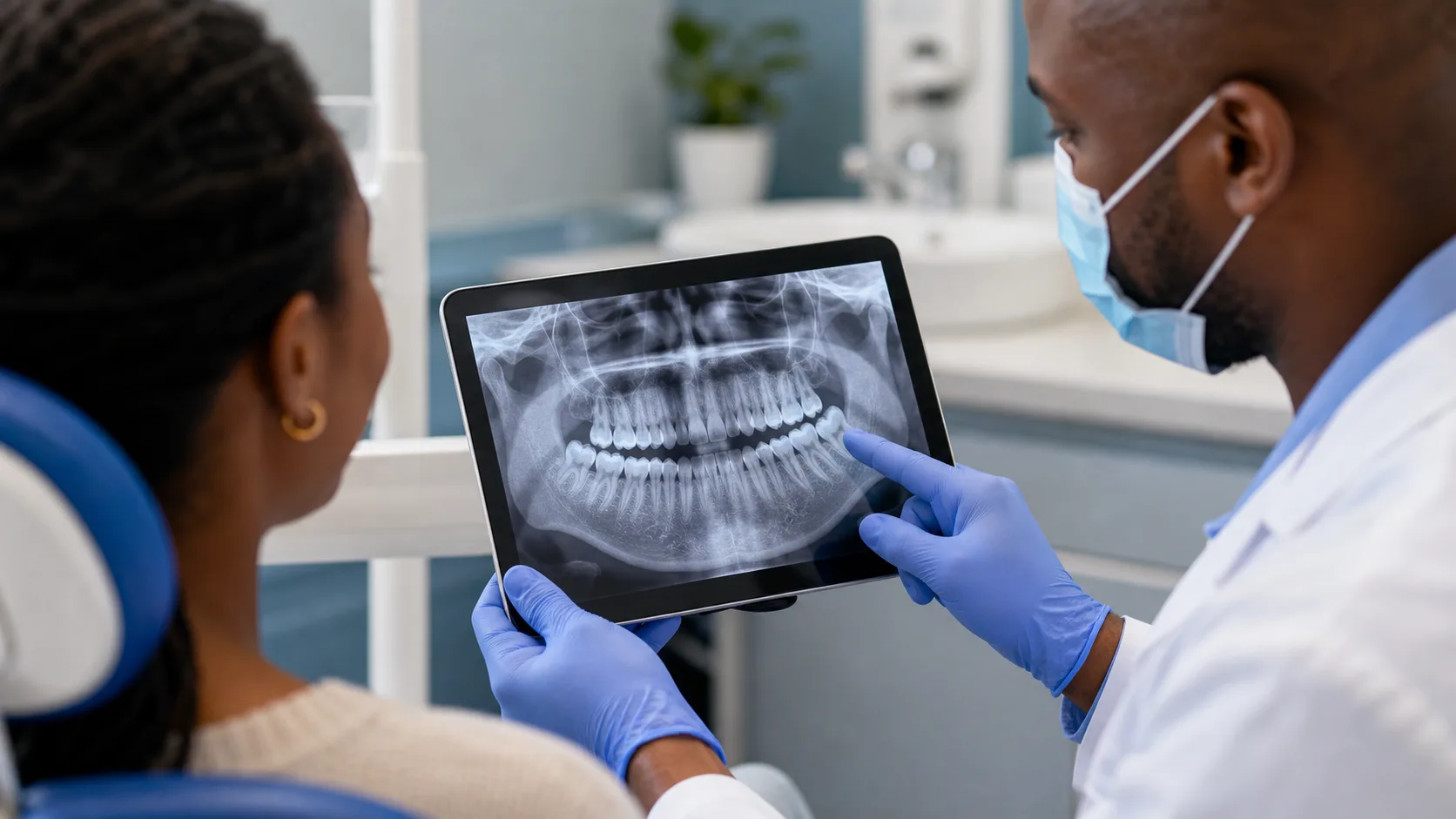
Wisdom tooth X-rays are often part of planning because the dentist needs to see what cannot be judged from the gum surface alone. A tooth may look partly visible in the mouth but still have roots, bone coverage, decay, or angulation that changes the removal approach. X-rays can also help the dentist assess the second molar and look for infection-related changes.
Impacted wisdom teeth are teeth that do not fully erupt into a normal cleaning and biting position. They may be angled forward, backward, sideways, or remain partly under gum or bone. Some impacted teeth are monitored, while others may be discussed for removal because of pain, repeated infection, decay, gum problems, or risk to the neighbouring tooth. Suitability depends on the individual assessment.
Imaging can affect cost because different records answer different clinical questions. A simple X-ray may be enough in some cases. More detailed imaging may be discussed when the tooth position, root shape, or nearby anatomy needs closer planning. Ask what X-ray is recommended, what it is intended to show, and whether it is included in the estimate.
| Finding | Why it can affect cost or recovery |
|---|---|
| Fully erupted wisdom tooth | May be more straightforward if access is good and roots are favourable. |
| Partially erupted tooth | Can trap food and inflame gum, and may need more careful access and cleaning guidance. |
| Impacted tooth | May require surgical planning, gum access, bone removal, sectioning, stitches, and review. |
| Infection or swelling | May change timing, medicines, urgency, and whether immediate removal is appropriate. |
| Multiple wisdom teeth | Can change appointment planning, aftercare burden, and review needs. |
Simple vs surgical wisdom tooth removal
A simple wisdom tooth extraction may be discussed when the tooth is visible, accessible, and can be loosened and removed without a surgical approach. The dentist still needs to assess root shape, decay, gum condition, infection risk, and patient factors before confirming that the removal is straightforward.
Surgical wisdom tooth removal may be discussed when the tooth is impacted, partly covered by gum or bone, broken down, angled, difficult to access, or close to structures that need careful planning. Surgical removal can involve lifting gum tissue, removing a small amount of bone, sectioning the tooth into pieces, placing stitches, and giving more specific aftercare instructions. These steps can affect both the fee and the recovery experience.
Patients should not assume surgical means something has gone wrong. It is a planning category for teeth that need a more controlled approach. The useful question is what the dentist expects to do, why that approach is recommended, what aftercare applies, and whether a review visit is planned.
- Ask whether the tooth is expected to be simple or surgical.
- Ask whether stitches may be needed and how they will be reviewed.
- Ask what symptoms would mean the site should be checked after removal.
- Ask what is included in the quote and what may be billed separately.
Cost factors to compare before treatment
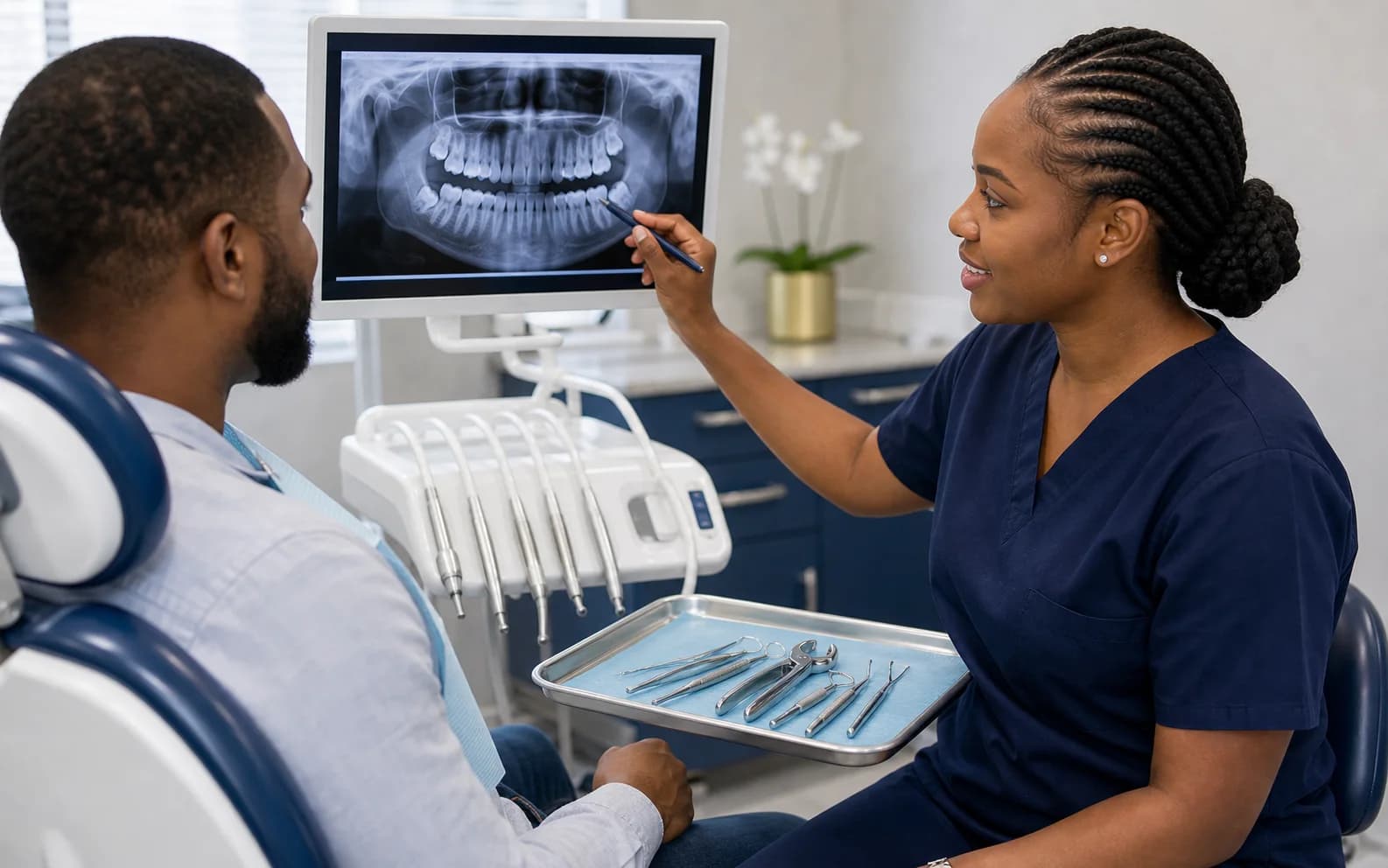
When comparing wisdom tooth removal quotes, compare the scope rather than only the headline fee. One estimate may include consultation and X-rays, while another may list them separately. One may be for a simple extraction, while another may be for an impacted surgical case. One may include a review visit, while another may charge if follow-up care is needed.
Medicines can also form part of the discussion. The dentist may give instructions about pain control, infection management, mouth rinses, or other medicines where clinically appropriate. Patients should follow those instructions exactly and avoid adding antibiotics, aspirin, pain tablets, herbal products, or rinses unless the dentist, doctor, or pharmacist says they are suitable for them.
The number of teeth matters too. Removing one lower wisdom tooth is different from planning several wisdom teeth, especially if both sides of the mouth are involved. More teeth can mean different appointment planning, eating limitations, swelling patterns, and aftercare responsibilities. The best quote explains the exact teeth being treated and the expected appointment pathway.
| Cost factor | Question to ask |
|---|---|
| Consultation | Is the examination included, and will I receive a written treatment plan? |
| X-rays | Which X-rays are needed, and are they included in the quoted amount? |
| Removal type | Is this planned as simple extraction or surgical removal? |
| Impaction | Is the tooth partly under gum or bone, angled, or affecting the second molar? |
| Number of teeth | Does the quote cover one tooth, one side, or several wisdom teeth? |
| Infection or swelling | Does active infection change timing, medicines, or review needs? |
| Stitches and review | Are stitches expected, and is a follow-up visit included or separate? |
First-day recovery after wisdom tooth removal
The first day after wisdom tooth removal is about protecting the blood clot and keeping the mouth calm. The dentist may place gauze and ask the patient to bite with steady pressure for a set time. Mild oozing or pink saliva can happen, but bleeding should gradually settle. If bleeding stays heavy despite following the pressure instructions, contact the dental team for advice.
Numbness can last for a few hours. During that time, avoid hot drinks, chewing while numb, or biting the cheek, lip, or tongue. Soft, cool or lukewarm foods are usually easier early on. Chew away from the removal site where possible, and avoid hard, sharp, crunchy, sticky, spicy, or seedy foods that may irritate the socket or pack into the area.
Avoid actions that can dislodge the clot. This usually includes vigorous rinsing, forceful spitting, drinking through a straw, smoking, vaping, alcohol, heavy exercise, and poking the socket. Follow the dentist's medicine instructions exactly. If instructions differ from a general article, use the instructions from the appointment because they reflect the tooth, procedure, and medical history.
- Keep gauze pressure for the time advised and replace gauze only as instructed.
- Rest with your head supported and keep activity light.
- Eat soft foods and avoid hot food or drinks while numb.
- Avoid straws, smoking, alcohol, forceful rinsing, and poking the socket.
- Take prescribed or recommended medicines only as directed.

What recovery may feel like over the first week
Wisdom tooth recovery is often more noticeable than recovery after a small straightforward extraction because the back of the mouth is difficult to access and surgical cases can involve more tissue handling. Soreness, swelling, bruising, jaw stiffness, a strange taste, and difficulty opening wide can occur, especially after lower wisdom teeth or impacted teeth are removed.
The key pattern is improvement. Symptoms may increase during the first couple of days and then gradually settle, but pain that suddenly becomes much worse after initially improving should be checked. Swelling that spreads, fever, pus, a worsening bad taste, or pain that radiates to the ear, temple, or side of the face should not be ignored.
Cleaning remains important. Brush the rest of the teeth carefully, avoid trauma to the socket, and follow the dentist's timing for any rinsing or mouthwash instructions. Some patients are told to begin gentle warm salt-water rinses after the first day; others may receive different instructions because of stitches, surgical access, or infection. Gentle means gentle. Vigorous swishing and forceful spitting can disrupt healing.
| Stage | What may happen | Main focus |
|---|---|---|
| First hours | Numbness, gauze pressure, mild oozing, and tenderness as anaesthetic wears off. | Rest, protect the clot, and avoid chewing while numb. |
| First day | Tenderness, limited eating, pink saliva, and need for careful medicines. | Soft foods, no straws, no smoking, and no forceful rinsing. |
| Days 2 to 3 | Swelling, bruising, jaw stiffness, and deeper soreness may be more noticeable. | Monitor whether symptoms are broadly stable or improving. |
| Days 4 to 7 | Eating and opening may improve gradually, but surgical sites still need care. | Clean gently, keep review plans, and report worsening symptoms. |
| After one week | Soft tissue may feel better while deeper healing continues. | Ask about stitches, delayed pain, food trapping, or ongoing swelling. |
Dry socket and urgent warning signs
Dry socket is a painful complication that can happen when the clot in the extraction socket is lost, breaks down too early, or does not protect the bone as expected. It is more often discussed after difficult extractions and lower wisdom tooth removal, but patients should not try to diagnose it by appearance alone. The important warning pattern is severe pain that gets worse a few days after extraction, often with a bad taste or smell and pain that may spread toward the ear.
Dry socket is not the only reason for worsening pain. Food trapping, infection, bruising, bite irritation, delayed healing, or another dental problem can also cause symptoms. That is why the right next step is assessment. A dentist can examine the site, clean or dress it if appropriate, review medicine instructions, and decide whether another visit is needed.
Some symptoms need urgent help rather than waiting for a routine review. Seek prompt dental advice for worsening pain, persistent bleeding, pus, fever, chills, spreading swelling, rash, hives, or symptoms that feel out of proportion. Use emergency medical services if there is difficulty breathing, difficulty swallowing, chest pain, fainting, or rapidly spreading swelling of the face, jaw, floor of the mouth, or neck.
- Severe pain that worsens after the first few days should be checked.
- A worsening bad taste, bad smell, pus, or fever may need prompt care.
- Spreading swelling, limited swallowing, or trouble breathing is urgent.
- Do not pack the socket, scrape it, or use leftover medicine without advice.
How to plan your appointment in Pretoria or Polokwane
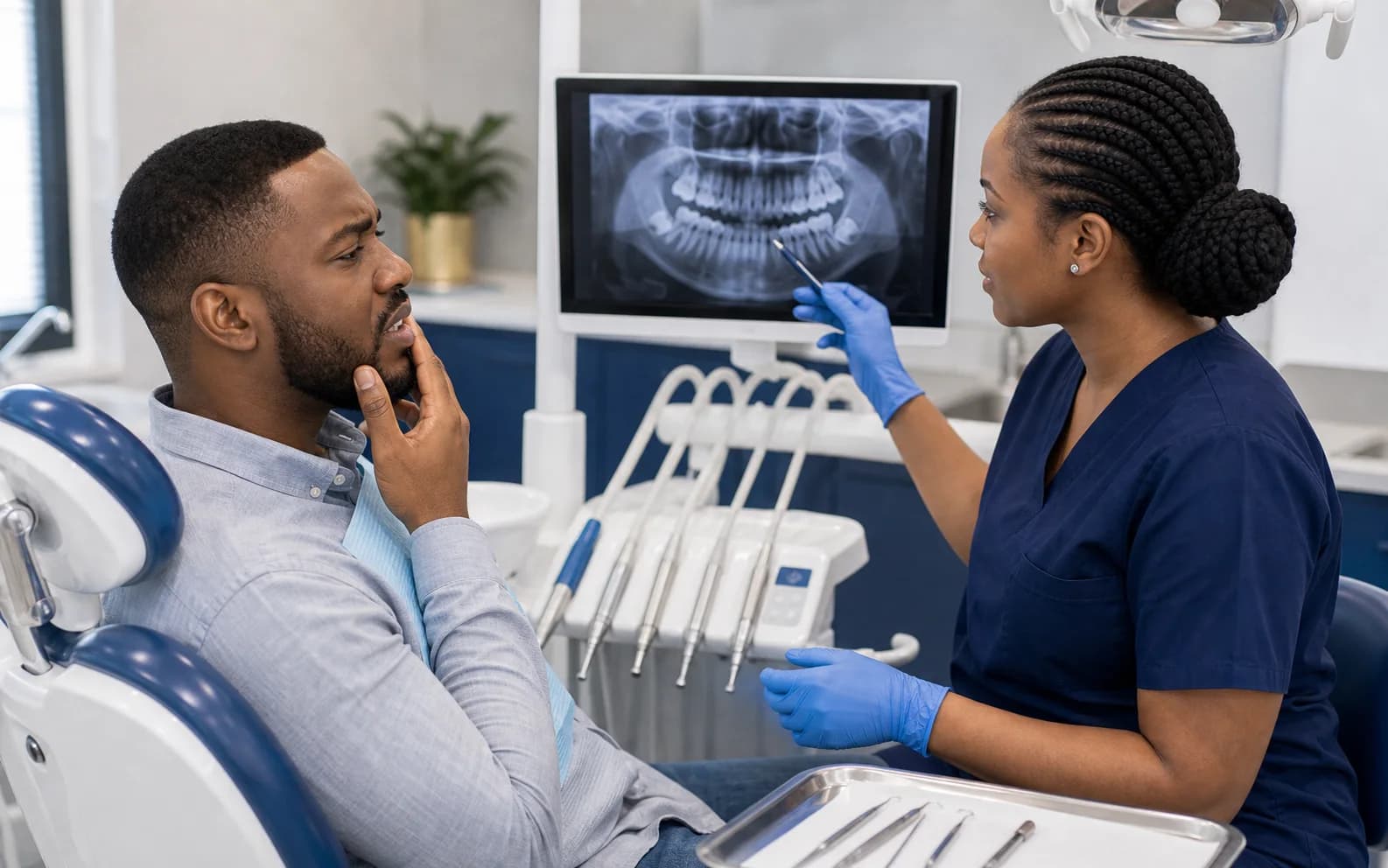
If you are comparing wisdom tooth removal cost in South Africa, the practical next step is to book an assessment that can separate a simple case from a surgical or impacted case. Bring details about when symptoms started, what worsens them, what medicines you are taking, whether swelling has occurred, and whether you have had previous extraction complications.
For patients near Smile On Dental, the main wisdom tooth removal page explains the treatment category, while the Pretoria and Polokwane pages help with local appointment context. Surgical extraction information is useful when a tooth is impacted, broken down, or difficult to access. Digital dental X-rays explain why imaging may be recommended before a final plan is confirmed.
If the wisdom tooth problem is linked to severe pain, swelling, trauma, fever, or difficulty eating, the emergency dental care page can help you understand when to seek prompt assessment. If your main question is recovery after any type of extraction, the tooth extraction recovery timeline gives a broader aftercare guide that supports this wisdom-tooth-specific article.
- Use assessment to confirm tooth position, infection signs, and likely procedure type.
- Ask what the quote includes before comparing it with another estimate.
- Follow the aftercare instructions given for your specific removal.
- Report symptoms that worsen instead of improving during recovery.
Internal Links
Related dental care
Sources
Useful information

Written by
Dr. Kholofelo Machaba-SelatoleChief Dentist & Practice Director
Dr. Kholofelo Machaba-Selatole leads Smile On Dental & Aesthetic Studio with a warm, patient-focused approach to family, restorative, cosmetic, and orthodontic care.
View Profile