
Quick Answer
Dental crown cost in South Africa cannot be compared fairly from a single headline price because a crown is planned around the tooth, the bite, and the reason the tooth needs protection. A complete quote should explain the diagnosis, whether decay, cracks, root canal treatment, a post or core build-up, temporary crown, laboratory or digital workflow, crown material, number of crowns, and maintenance needs are included. The most useful comparison is not which crown is cheapest, but what clinical steps and long-term responsibilities the fee covers.
- A crown quote should start with diagnosis because the remaining tooth structure and symptoms determine the treatment pathway.
- Root canal treatment, post placement, or a core build-up may be discussed before a crown when the tooth is badly damaged or weakened.
- Material, laboratory work, temporary crowns, and digital records can all affect the fee without making one option best for every patient.
- Implant crowns and tooth-supported crowns are different treatment categories and should not be compared as the same item.
- Bite forces, grinding, crown replacement, and maintenance should be part of the cost conversation before treatment begins.
Start with what the crown is meant to solve
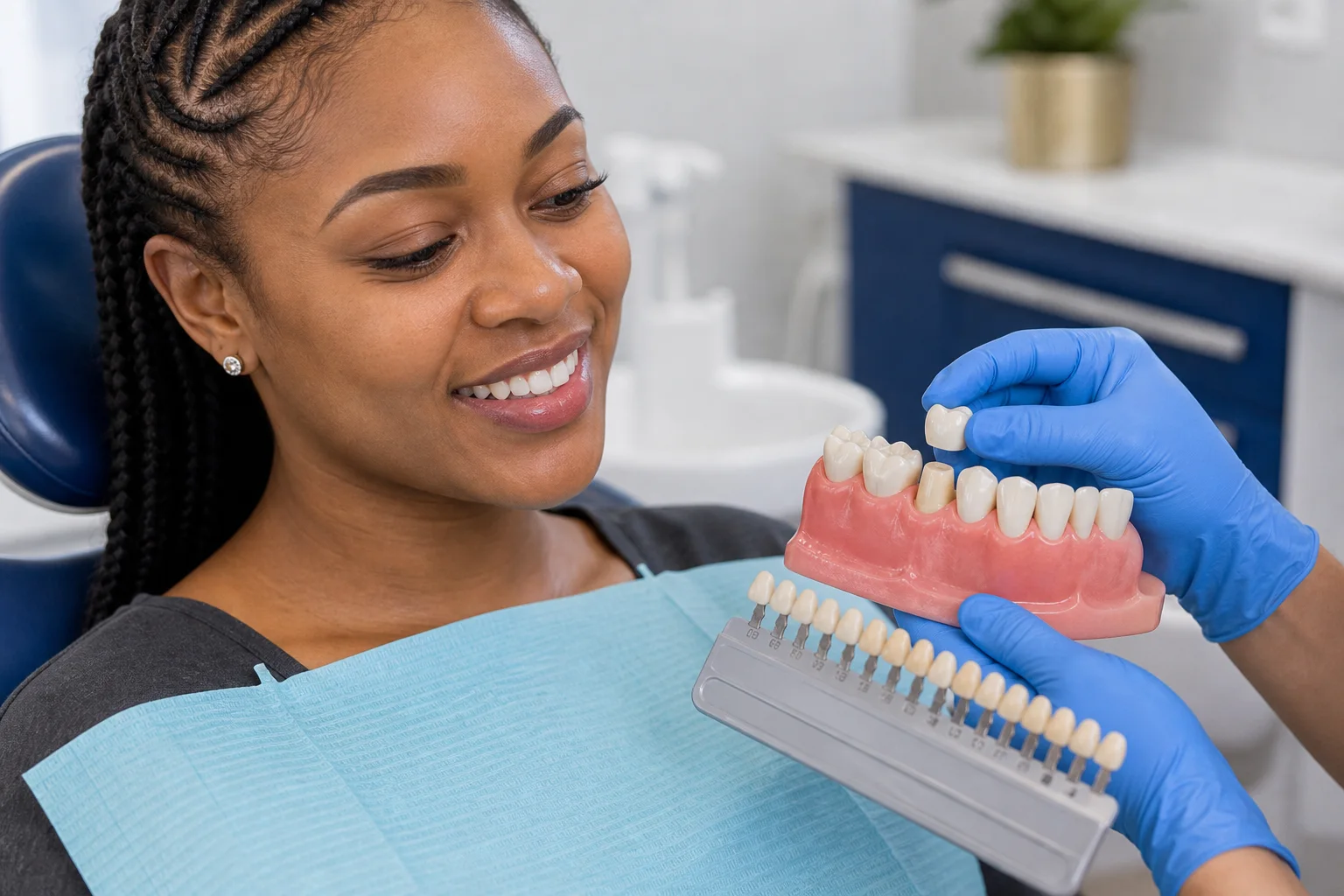
A dental crown is a custom restoration that covers a tooth or fits onto an implant component. Patients often ask for the cost of a crown as if every crown is the same product, but the fee depends on why the crown is needed and what has to happen before it can be fitted.
A crown may be discussed when a tooth has a large filling, a crack, heavy wear, a root canal history, a broken edge, or too little healthy structure for a filling alone. It may also be used as the visible restoration on a dental implant. Each of those situations has a different planning pathway.
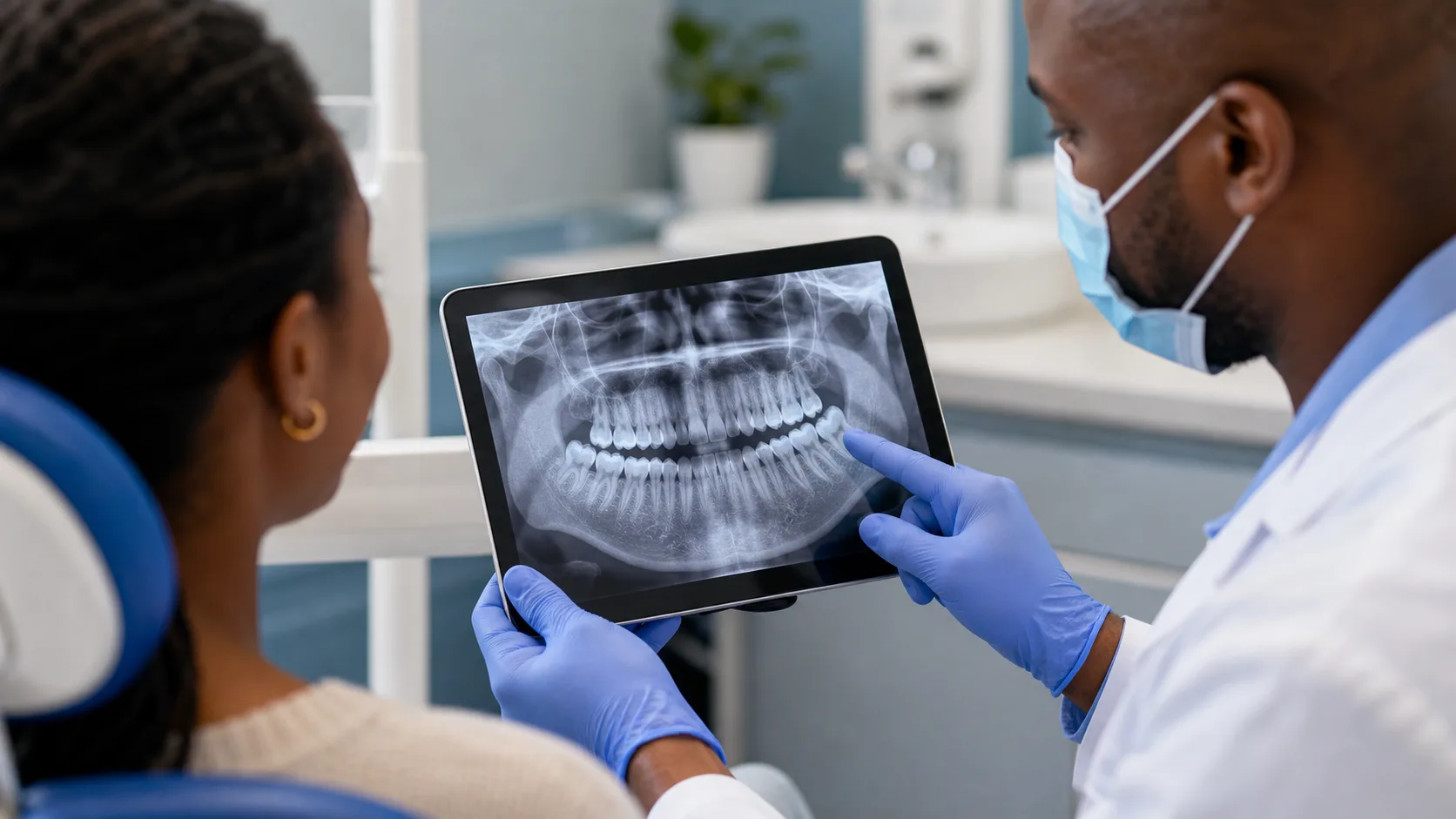
This is why the first cost question should be about diagnosis. The dentist checks the tooth, gum, bite, symptoms, existing restorations, decay risk, and X-rays where clinically appropriate. Only then can the practice explain whether the plan is a simple crown, a crown after other treatment, a bridge, a filling, a veneer, an implant crown, or monitoring.
- What problem is the crown solving?
- How much healthy tooth structure remains?
- Are symptoms, cracks, decay, or infection present?
- Does the bite put heavy force on this tooth?
- Is this a tooth-supported crown or an implant crown?
Tooth condition can change the whole quote
The condition of the tooth is one of the biggest reasons dental crown prices vary. A tooth with a sound foundation may need a different plan from a tooth with deep decay, old large fillings, cracks below the gumline, pain on biting, or a history of repeated repairs.
If the tooth is still restorable, the dentist may need to remove decay, replace old filling material, shape the tooth, and build a stable base before the crown is made. If the tooth is not restorable, a crown may not be the correct treatment. In that case, extraction and replacement options such as a bridge, denture, or dental implant may be discussed instead.
A useful quote should separate the crown from any supporting care that is needed first. This helps you avoid comparing a crown-only estimate with a more complete treatment plan that includes diagnosis, stabilisation, foundation work, or treatment of another dental problem.
| Finding | How it can affect the plan |
|---|---|
| Large old filling | The dentist may need to remove weak material and rebuild the tooth before the crown. |
| Deep decay | Decay removal may reveal whether a filling, crown, root canal treatment, or another plan is needed. |
| Cracked tooth | The crack pattern, symptoms, and remaining structure influence whether a crown can protect the tooth. |
| Heavy wear | The bite and grinding pattern may need to be considered before restoring the tooth shape. |
| Poor tooth support | If the tooth cannot be predictably restored, replacement options may be discussed. |
Root canal, post, and core work may be separate
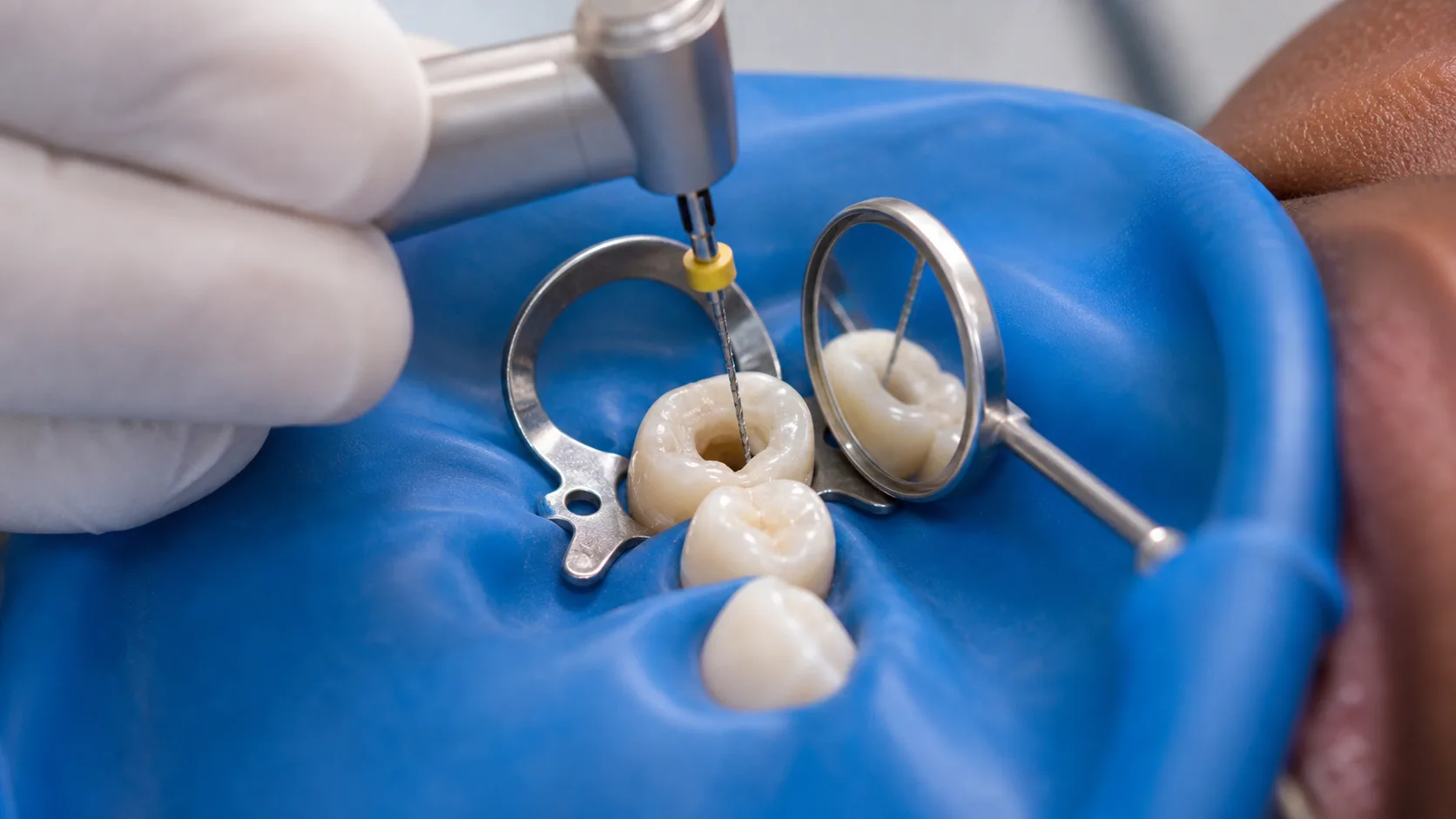
Some teeth need more than a crown. If decay, trauma, or infection has reached the pulp inside the tooth, root canal treatment may be discussed before the tooth can be restored. A crown can protect a root-treated tooth in selected cases, but the root canal and crown are usually separate clinical stages.
A badly broken tooth may also need a core build-up. This means the dentist rebuilds enough tooth shape to support the crown. In some root-treated teeth, a post may be considered where clinically appropriate to help retain the core. A post does not make every weak tooth suitable for a crown, and it is not automatically needed for every root canal tooth.
These decisions affect cost because they add diagnosis, chair time, materials, and sometimes extra visits before the crown itself is made. Ask whether the estimate includes root canal treatment, a post, a core build-up, temporary restoration, and the final crown, or whether each item is quoted separately.
- Assess symptoms, decay depth, cracks, and X-rays where needed.
- Decide whether root canal treatment is required before restoration.
- Rebuild the tooth with a core or post and core where clinically appropriate.
- Prepare records for the final crown once the foundation is stable.
Material and workflow influence the fee
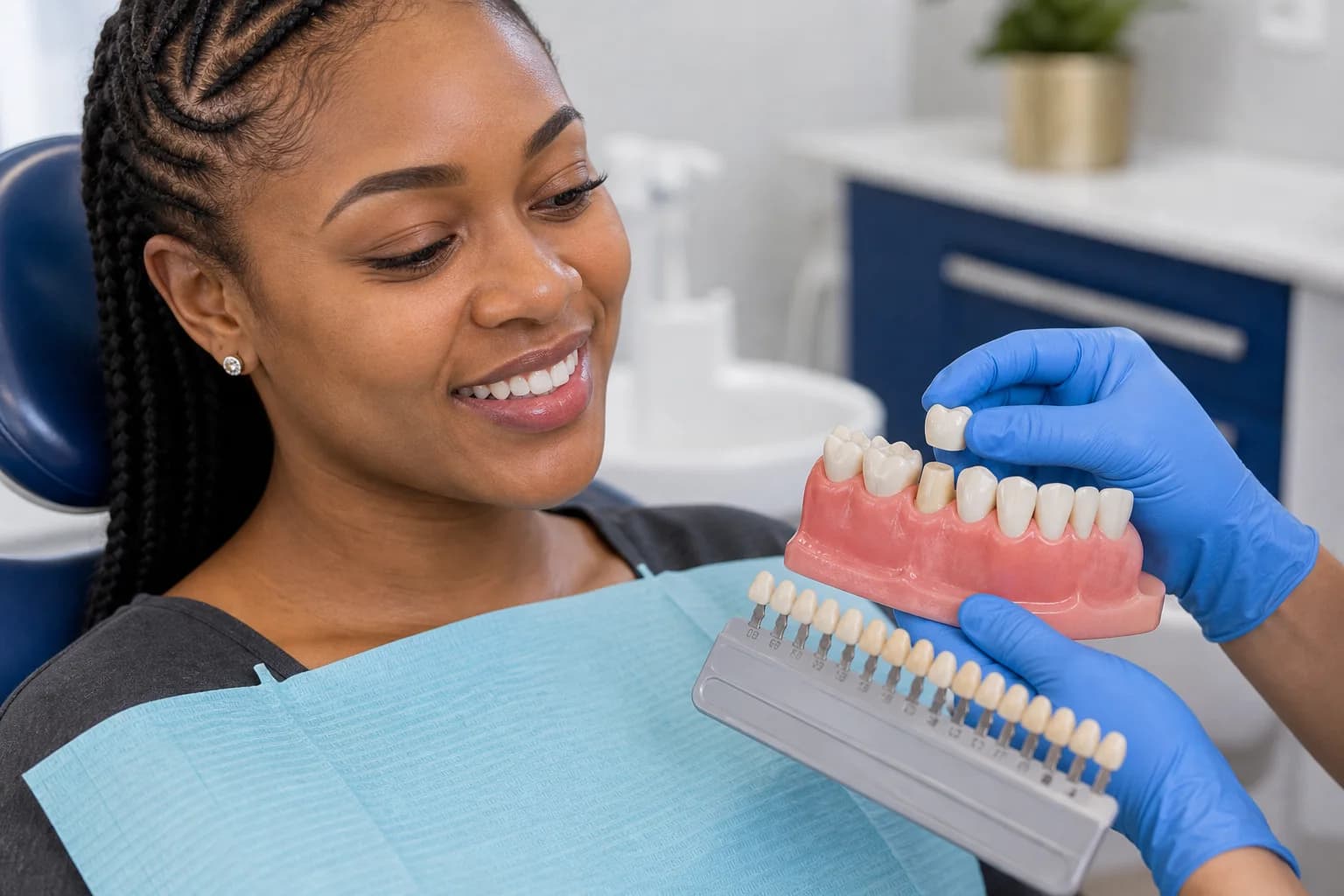
Crown materials can include ceramic, porcelain-based, zirconia, metal, porcelain fused to metal, or other options used for specific clinical situations. The right choice depends on the tooth position, appearance goals, bite forces, space available, gumline, allergy history where relevant, and how the crown needs to function.
No crown material is best for every patient. A front tooth may place more emphasis on shade and translucency. A back tooth may need to tolerate stronger chewing forces. A patient who grinds may need a different discussion from a patient with light bite forces. The dentist should explain why a material is being recommended for that tooth rather than presenting it as a universal upgrade.
Workflow also matters. Some crowns involve impressions, digital scans, shade matching, bite records, laboratory design, try-in, adjustments, and final cementation. A digital workflow may change how records are captured or how the crown is designed, but the clinical goal remains the same: a restoration that fits the tooth, bite, and cleaning needs.
| Cost factor | What to clarify |
|---|---|
| Crown material | Why the material suits the tooth position, bite, appearance needs, and remaining structure. |
| Laboratory work | Whether an external dental laboratory or in-practice workflow is involved. |
| Digital records | Whether scans, photographs, shade records, or bite records are part of the plan. |
| Fitting visits | How many appointments are expected before the crown is finally fitted. |
| Adjustments | Whether bite adjustment, contact adjustment, or review is included after fitting. |
Temporary crowns and multiple crowns change planning
Many crown plans include a temporary crown between tooth preparation and final fitting. A temporary crown helps protect the prepared tooth, preserve space, and maintain function while the final crown is being made. It is not intended to behave like the final restoration, so patients usually need to be careful with sticky or hard foods during this stage.
The number of crowns also matters. Restoring one broken molar is different from planning several crowns across a smile or bite. Multiple crowns may require more records, shade planning, bite analysis, temporary restorations, laboratory coordination, and staged fitting. The dentist may also need to check whether crowns are the most conservative option for every tooth involved.
If you are considering crowns for appearance, the discussion may include veneers, composite bonding, whitening, fillings, or a smaller repair where suitable. If you are considering crowns to replace missing teeth, the discussion may shift toward dental bridges or implant crowns. The quote should match the actual treatment category, not simply the number of visible teeth.
- whether a temporary crown is included
- how long the temporary stage is expected to last
- whether multiple crowns are being planned together
- whether shade matching or smile planning is needed
- whether a filling, veneer, bridge, or implant crown is a more relevant comparison
Implant crowns are not the same as tooth crowns
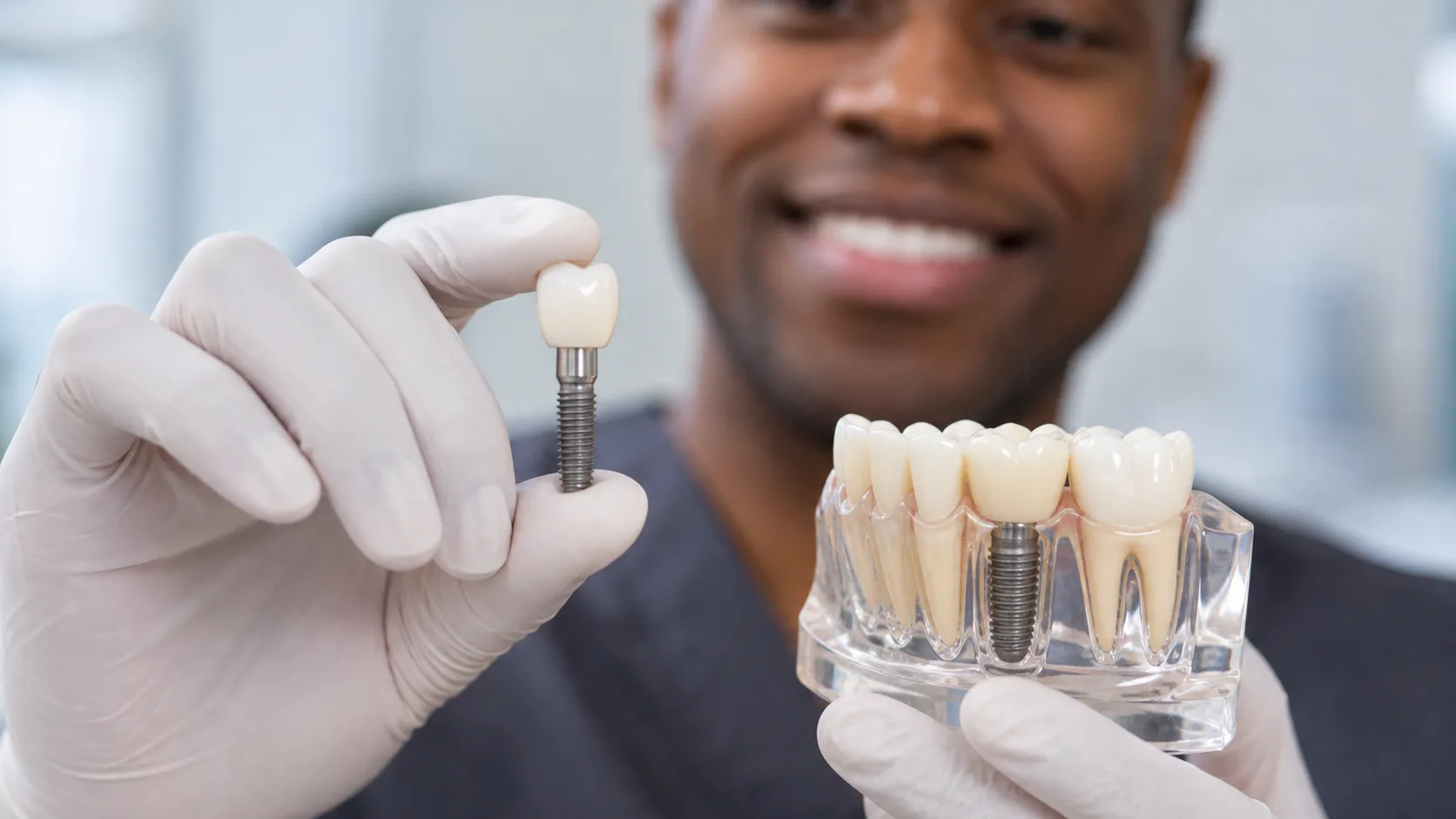
A tooth-supported crown covers a natural tooth after the tooth has been prepared. An implant crown is the visible tooth replacement attached to an implant system. These are different treatment categories, even though both may be called crowns in everyday conversation.
With an implant crown, the total pathway may include implant assessment, imaging, surgical placement, healing, an abutment or connector, laboratory work, and the final crown. If the implant has already been placed, the quote may only relate to the restoration stage, but the dentist still needs to check the implant position, gum shape, bite, and component compatibility.
A dental bridge can also involve crowns, because supporting teeth may be crowned to hold the replacement tooth between them. This is another reason to ask whether the quote is for one crown on one tooth, a crown on an implant, or crowns that form part of a bridge. The same word can describe very different clinical work.
| Treatment category | What the quote should explain |
|---|---|
| Tooth-supported crown | Diagnosis, tooth preparation, temporary crown, material, laboratory work, and fitting. |
| Implant crown | Whether the implant, abutment, records, laboratory crown, and fitting are included or separate. |
| Bridge involving crowns | Which teeth support the bridge, how many units are included, and how cleaning will work. |
Bite, grinding, and replacement affect long-term cost
A crown must work in the bite, not only look correct on a model. Heavy biting forces, clenching, grinding, missing teeth, uneven wear, or an unstable bite can increase the demands placed on a crown. The dentist may need to adjust the bite, discuss a night guard, or plan other treatment before or after the crown.
Crown replacement is another cost factor. Existing crowns may need replacement because of decay at the margin, a loose fit, fracture, gum changes, poor appearance, recurrent symptoms, or changes in the supporting tooth. Replacing a crown is not always the same as placing the first crown, because the dentist has to assess what is underneath and whether the tooth is still strong enough.
It is sensible to ask what could shorten the life of the crown and what maintenance will be needed. Crowns can be durable, but they are not immune to decay around the edges, gum disease, bite overload, cracks, or hygiene problems. Long-term cost depends partly on how well the restoration and the rest of the mouth are maintained.
- clenching or grinding habits
- uneven bite contacts
- missing teeth that shift chewing forces
- decay or leakage around an old crown
- gum recession exposing crown margins
- night guard needs where clinically appropriate

How to compare crown quotes fairly
A fair crown cost comparison looks at the complete plan. One quote may include consultation, X-rays, tooth preparation, temporary crown, laboratory crown, final fitting, and review. Another may list only the crown and leave diagnosis, build-up work, root canal treatment, temporary restoration, or replacement of old restorations as separate items.
Ask direct questions before treatment begins. This does not mean choosing the most expensive option. It means understanding what each quote includes and whether the plan is clinically suitable for your tooth. A lower fee may be reasonable for a simpler case, but it may be misleading if it excludes steps that your tooth actually needs.
Maintenance should also be part of the conversation. Daily brushing, cleaning between teeth, regular check-ups, gum care, and avoiding habits that overload the crown can all affect how the restoration performs. If the crown is part of a bridge or implant plan, cleaning access and review timing become even more important.
For Smile On Dental patients comparing options, the most relevant starting points are the dental crowns page, the Pretoria and Polokwane crown pages, and related pages on root canal treatment, fillings, veneers, and dental bridges. Those pages explain the treatment categories, while a consultation confirms what applies to your mouth.
- Ask what diagnosis the crown recommendation is based on.
- Confirm whether root canal treatment, post, core build-up, or temporary crown is included.
- Ask which crown material is recommended and why it suits this tooth.
- Clarify whether the quote is for a tooth crown, implant crown, or bridge unit.
- Ask what maintenance, review, or night guard discussion may be needed.
| Question to ask | Why it matters |
|---|---|
| What is included in this quote? | It separates the crown fee from diagnosis, build-up work, temporary crowns, and review. |
| Could a filling or veneer be suitable instead? | Some teeth may not need full crown coverage if a more conservative option is appropriate. |
| Is root canal treatment expected? | Root canal treatment changes the clinical pathway and is usually a separate stage. |
| How will this crown be maintained? | Cleaning, gum health, bite forces, and reviews affect long-term performance. |
Internal Links
Related dental care
Sources
Useful information

Written by
Dr. Kholofelo Machaba-SelatoleChief Dentist & Practice Director
Dr. Kholofelo Machaba-Selatole leads Smile On Dental & Aesthetic Studio with a warm, patient-focused approach to family, restorative, cosmetic, and orthodontic care.
View Profile