Quick Answer
The cost of dentures in South Africa depends on whether the denture is partial or full, immediate or conventional, how many teeth are being replaced, whether teeth need to be removed first, the materials and framework used, the number of records and try-in visits needed, and whether future adjustments, relines, repairs, or remakes are likely as the mouth changes. A reliable quote should come after an examination because denture price is shaped by fit, bite, gum health, remaining teeth, healing, and the full pathway from planning to maintenance.
- A denture quote should explain the full pathway, not only the appliance fee.
- Partial dentures, full dentures, immediate dentures, and implant-supported options involve different planning, materials, appointments, and maintenance needs.
- Extractions, healing changes, impressions, bite records, try-ins, adjustments, relines, and remakes can all change the final cost conversation.
- Dentures should be compared with dental implants, dental bridges, and crowns where those options are realistic for the same mouth.
Start with the type of denture
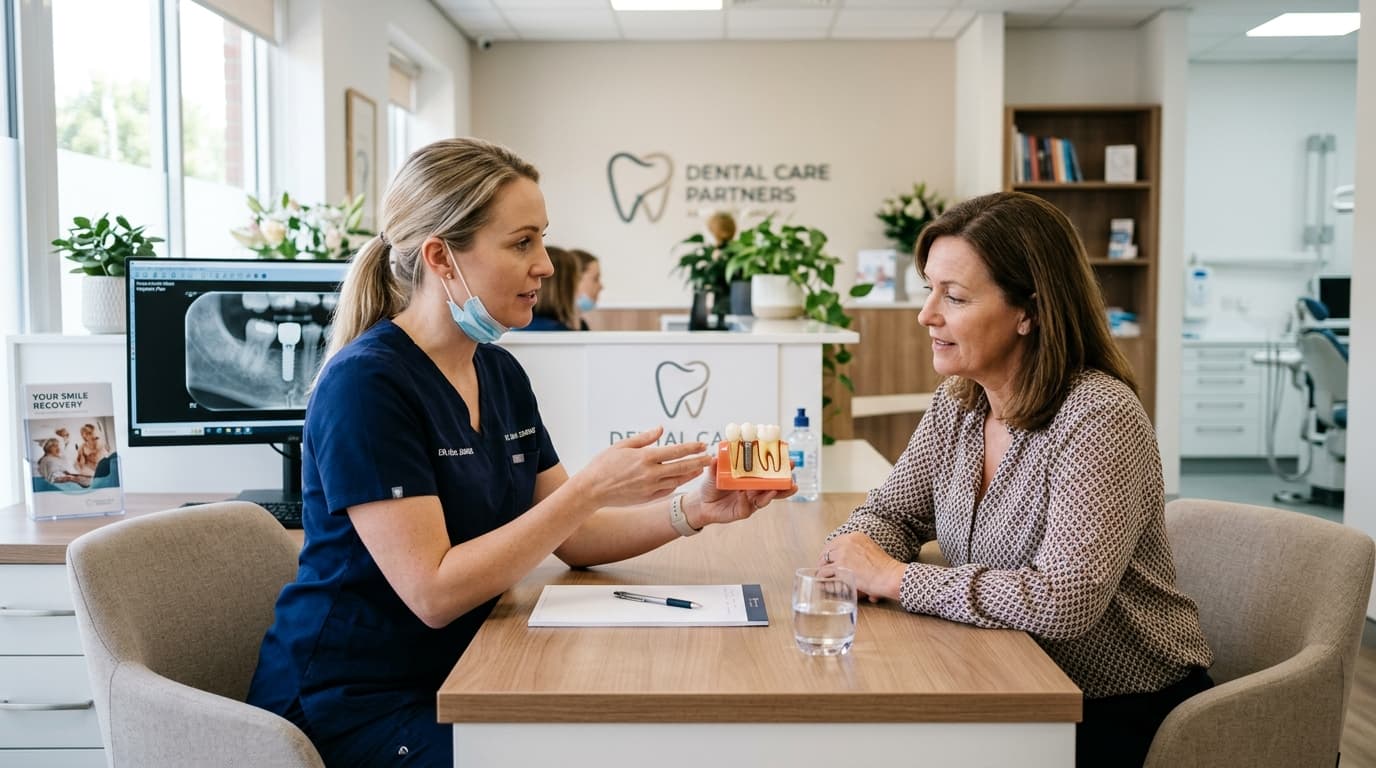
Dentures are not one fixed product with one reliable price. A small partial denture that replaces a few teeth is different from a full upper denture, a full lower denture, a replacement denture, or a denture that works with implants. The dentist first has to understand what is missing, what teeth remain, and how the bite and gums can support the appliance.
This is why denture price, false teeth prices near me, and permanent false teeth price searches can be confusing. The patient wording may be similar, but the clinical pathways are different. A removable denture may replace some or all teeth. A bridge may replace one or more teeth by being attached to support teeth. Dental implants may support crowns, bridges, or selected denture designs. Permanent false teeth are not automatically implants, and implants are not the only way to replace teeth.
The first useful question is not only what the denture costs. It is what type of replacement is being planned, what it needs to rest on, how it will be cleaned, and whether the mouth is ready for it. A quote should make those assumptions clear before the patient compares fees.
- partial denture for some missing teeth
- full denture for a complete upper or lower arch
- immediate denture placed after extractions
- conventional denture made after tissues have healed
- implant-supported or implant-retained denture where clinically suitable
Partial and full dentures change the scope
A partial denture is planned around the teeth that remain. Those teeth may help support or retain the denture, so their health matters. The dentist may need to assess decay, gum condition, looseness, old fillings, bite pressure, and cleaning access before deciding whether a partial denture design is realistic.
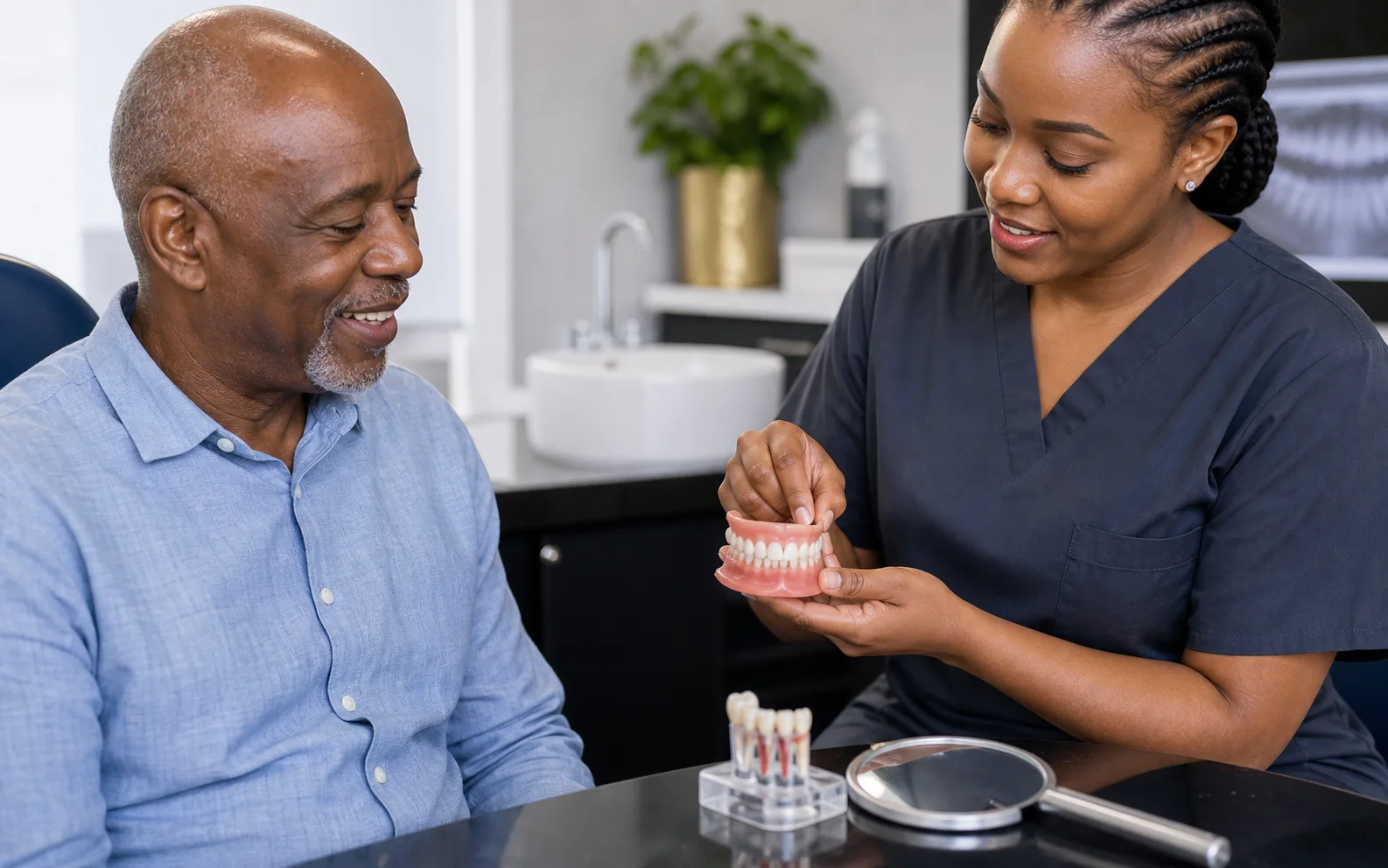
A full denture replaces all teeth in an upper or lower arch. It relies more on gum shape, saliva, muscle control, and the way the upper and lower teeth meet. Upper full dentures often have more surface area for support from the palate. Lower full dentures can be more challenging because tongue movement and a shallower ridge may affect stability.
The difference affects cost because the clinical work, laboratory design, records, and follow-up needs are different. A partial denture may need clasps, rests, a framework, or careful planning around remaining teeth. A full denture may need more attention to lip support, speech, bite balance, and adaptation after fitting.
| Denture type | Cost factor to clarify |
|---|---|
| Small partial denture | How many teeth are replaced and whether the remaining teeth can support the design. |
| Larger partial denture | Whether the material, framework, clasps, rests, and cleaning access change the plan. |
| Full upper denture | How gum shape, palate support, bite records, tooth setup, and try-in visits are handled. |
| Full lower denture | How stability, tongue space, ridge shape, bite balance, and adjustment visits are planned. |
Immediate and conventional dentures are priced differently
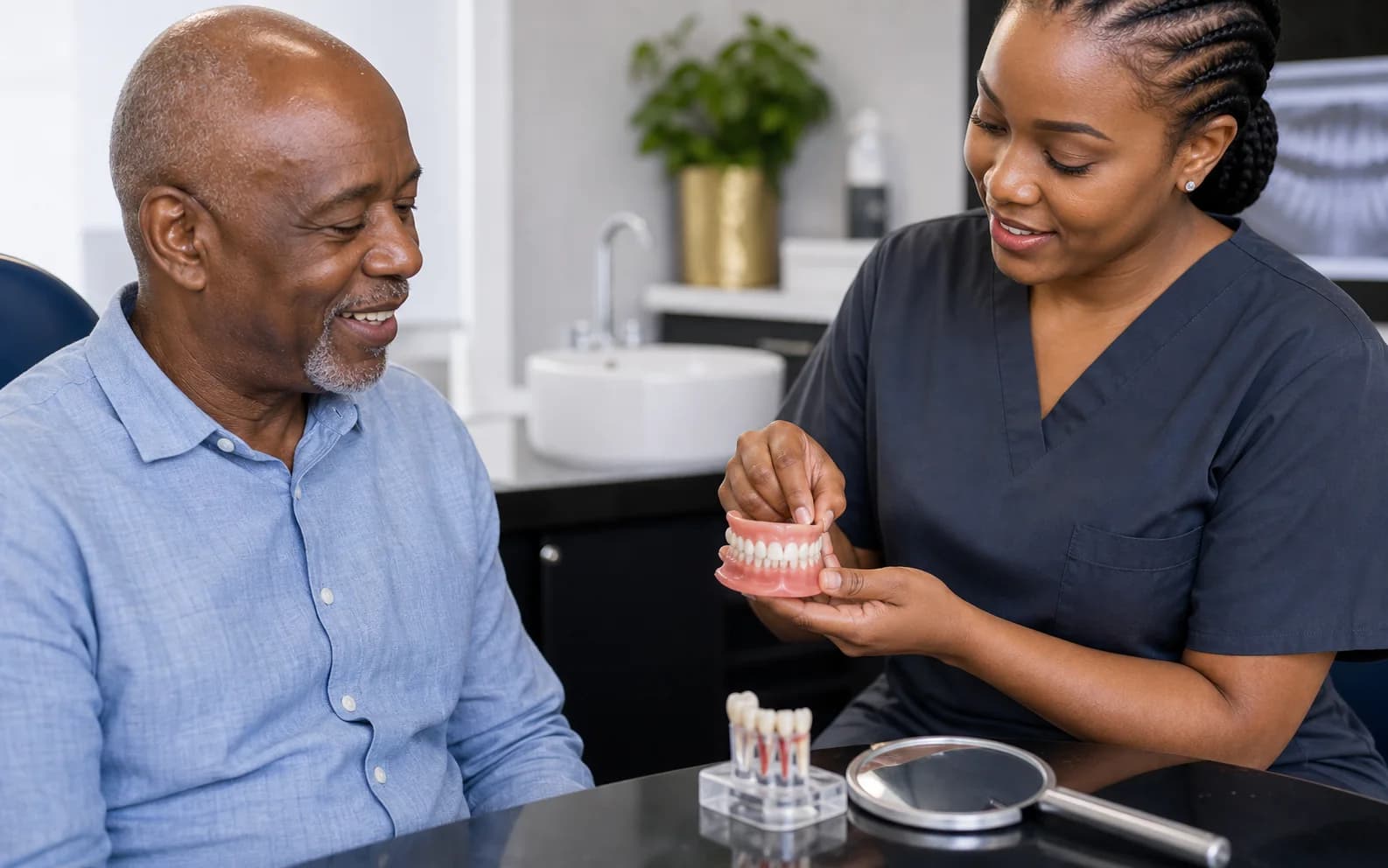
Immediate dentures and conventional dentures can both replace missing teeth, but they are not the same pathway. An immediate denture is made before the remaining teeth are removed and is inserted around the time of extraction. It can help a patient avoid being without teeth during early healing, but the gums and bone will change after extractions.
A conventional denture is usually made after the tissues have healed enough for a more stable record. That can mean waiting before the final denture is made, but the appliance is planned after more of the early healing change has already happened. The best sequence depends on the mouth, the teeth being removed, appearance needs, healing, and the longer-term plan.
Immediate dentures can involve extra planning because measurements and models are taken before teeth are removed. After healing, the denture may need adjustment, relining, or even remaking depending on how the gums and bone settle. Conventional dentures may involve a different timeline, but they still need accurate impressions, bite records, try-in stages, fitting, and review.
- whether teeth need to be removed before the denture is fitted
- whether the denture is temporary, interim, or planned as a longer-term appliance
- how much healing change is expected after extractions
- whether relines, adjustments, or a later remake may be needed
Extractions and healing can change the plan
Denture cost often changes when teeth need to be removed first. A patient who already has healed spaces may need a different pathway from someone with broken, loose, infected, or painful teeth still in the mouth. The dentist may need to assess whether extractions are simple or more complex, whether X-rays are needed, and whether gum disease or infection should be stabilised first.
Healing is a major part of denture planning. After teeth are removed, the gum and bone do not stay exactly the same shape. This is normal, but it can affect how a denture fits. A denture that feels acceptable shortly after extraction may become loose as healing continues. That does not automatically mean the denture was made incorrectly; it may mean the mouth has changed and needs review.
Patients comparing denture prices should ask whether the quote includes extractions, review visits, adjustments, temporary stages, relines, or a later remake. Sometimes these are quoted separately because the amount of healing change cannot be known fully before treatment begins.
- Assess remaining teeth, gums, bite, and any painful or loose teeth.
- Confirm whether extractions or other stabilising care are needed first.
- Discuss immediate or delayed denture timing where relevant.
- Plan review visits for sore spots, looseness, and bite changes after fitting.
Records, models, bite records, and try-ins matter
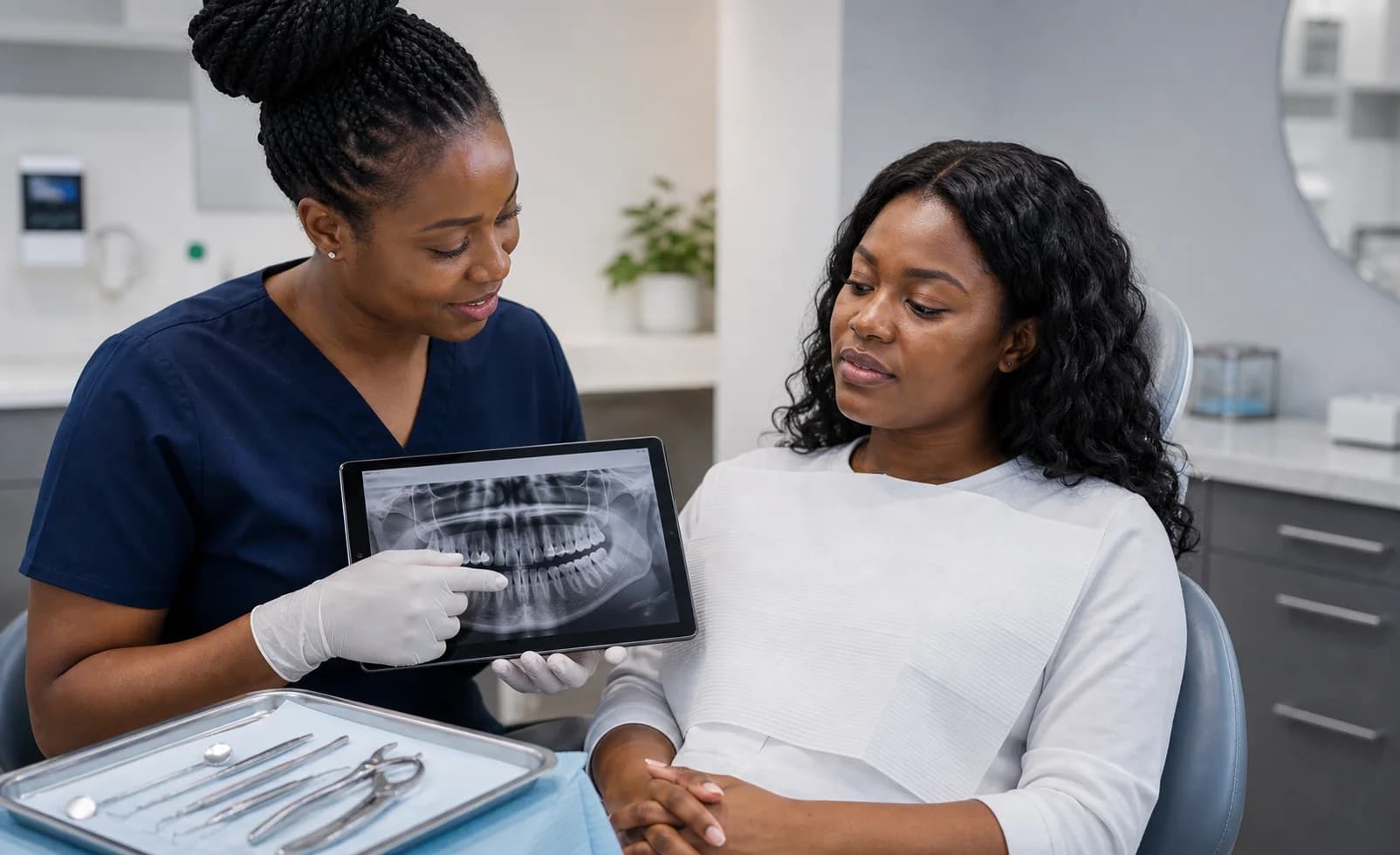
A denture needs to fit a moving mouth, not only fill a gap. That is why records can affect both cost and outcome. The dentist may need impressions or scans, models, bite records, shade and tooth-shape decisions, and try-in appointments before the final appliance is finished.
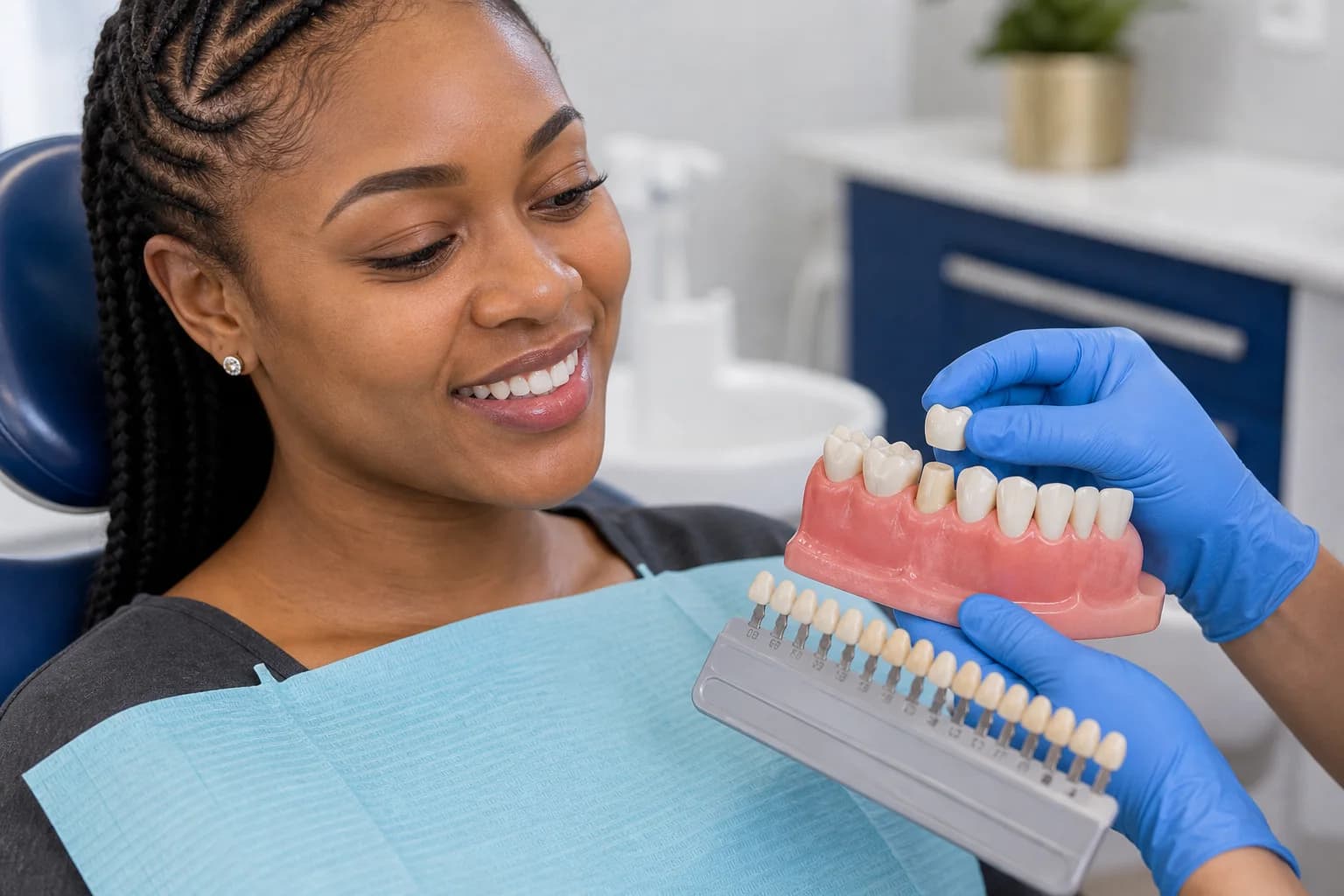
Impressions or models capture the shape of the gums, palate, ridge, and remaining teeth. Bite records show how the jaws meet and where the denture teeth should contact. A try-in appointment allows the dentist and patient to check tooth position, lip support, speech, bite, and appearance before the final denture is processed.
Skipping important records can create problems later: rocking, sore spots, poor bite contact, speech difficulty, or a denture that looks wrong for the face. Not every denture needs the same number of visits, but a quote should explain what records and try-ins are included and when extra appointments may be needed.
| Stage | Why it can affect cost |
|---|---|
| Impressions or models | Accurate records help the denture fit the gums, palate, ridge, and remaining teeth. |
| Bite records | The dentist must record how the jaws meet so the denture teeth are not placed randomly. |
| Tooth setup and try-in | A try-in can help check appearance, speech, bite, and tooth position before finishing. |
| Fitting appointment | Pressure areas and bite contacts are checked when the denture is inserted. |
| Review adjustments | New dentures commonly need refinement as tissues, muscles, and bite adapt. |

Materials and design change the fee
Materials matter because dentures have to balance strength, comfort, appearance, repairability, and cleanability. A simple acrylic partial denture may be planned differently from a metal framework partial denture, a flexible design, a complete denture, or an implant-retained appliance. The material is only one part of the decision; the design must suit the mouth.
Partial dentures may need clasps, rests, or framework features to help with retention and support. Those design choices can affect laboratory work and cost. Full dentures may require careful tooth selection, gum-coloured acrylic shaping, balanced contacts, and adjustments so the appliance works with the cheeks, lips, tongue, and opposing teeth.
The lowest upfront fee is not always the best value if the appliance is difficult to clean, poorly supported, uncomfortable, or likely to need replacement sooner. The dentist should explain why a material or design is being recommended and how it affects daily use, repair options, and future maintenance.
- acrylic, metal framework, flexible, or other clinically suitable designs
- number of teeth replaced and whether one or both arches are involved
- clasp positions, rests, support teeth, and cleaning access
- laboratory stages and the number of fitting or review visits
- repair, reline, or replacement expectations over time
Implant-supported options have a different cost structure
Some patients use the phrase permanent false teeth when they mean teeth that do not come out. Others use it to mean a denture that feels more stable. These are different goals. A removable denture, a fixed bridge, an implant crown, an implant bridge, and an implant-retained denture can all be discussed in different situations.
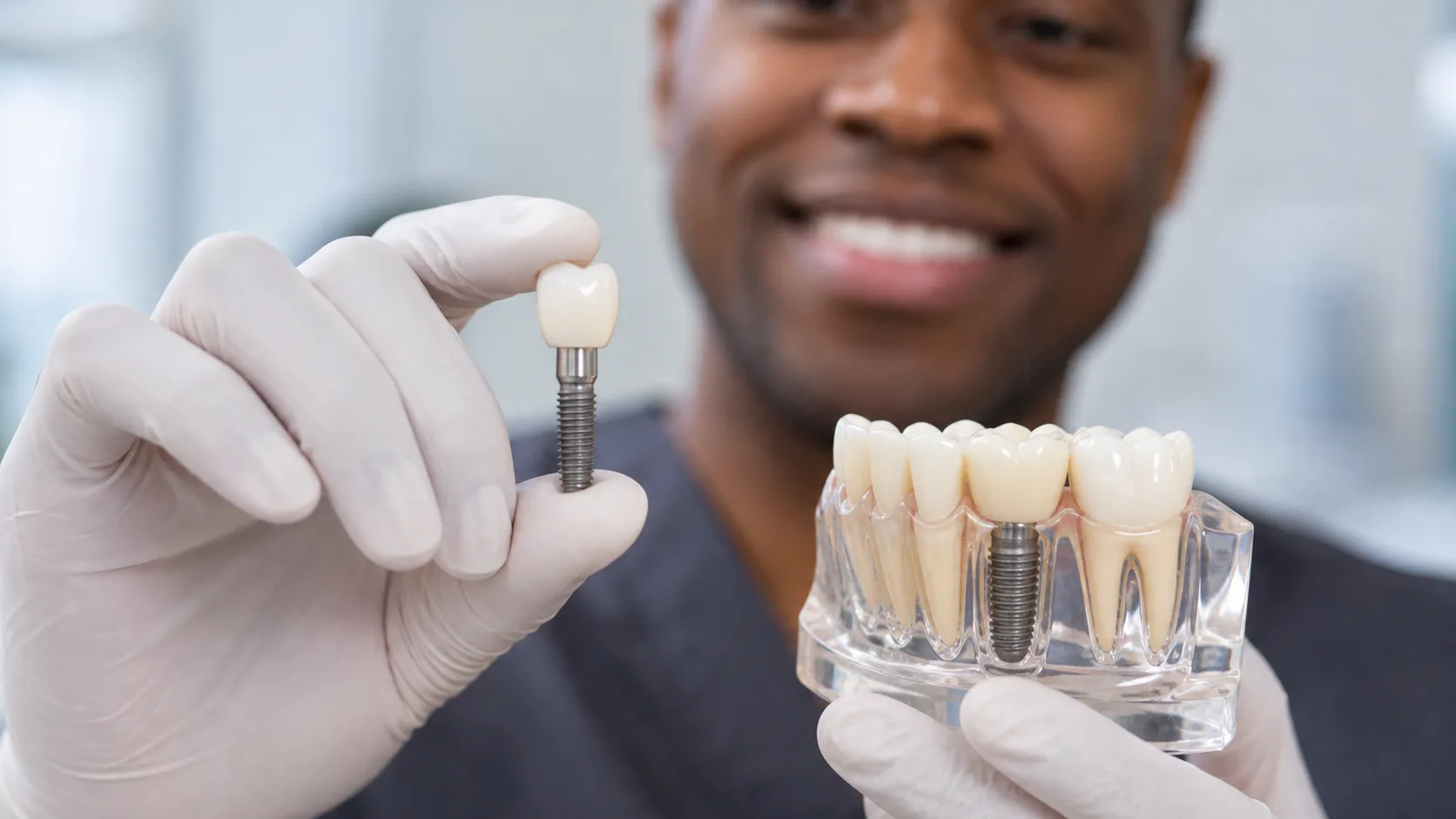
Implant-supported or implant-retained dentures can improve stability for selected patients, but they are not simply a more expensive version of the same denture. They require implant assessment, imaging where appropriate, bone and gum suitability checks, surgical planning, implant components, attachments, maintenance, and a denture design that works with those attachments.
This means the cost structure is different from a conventional removable denture. The quote should separate the denture, implant planning, surgical stages, components, attachment parts, review appointments, and future maintenance where relevant. Patients should also compare whether a dental bridge, conventional denture, or implant-supported option is appropriate for their mouth before assuming one route is best.
| Option | What to compare before deciding |
|---|---|
| Conventional removable denture | Fit, stability, number of teeth replaced, materials, adjustments, relines, and remakes. |
| Dental bridge | Support teeth, crown preparation, cleaning access, fixed replacement needs, and bite forces. |
| Dental implant | Bone and gum support, imaging, surgical stages, components, restoration, and maintenance. |
| Implant-retained denture | Implant suitability, attachments, denture design, repairs, component wear, and review needs. |
Adjustments, relines, remakes, and maintenance should be included in the conversation
New dentures often need adjustment. The cheeks, tongue, gums, and bite need time to adapt, and small pressure areas can appear after a patient starts eating and speaking with the appliance. A sore spot should be reviewed rather than tolerated, especially if it causes an ulcer or makes eating difficult.
Relines and remakes are also part of the long-term cost conversation. A reline changes the fitting surface of a denture when the mouth has changed but the appliance is still suitable to keep. A remake may be needed if the denture is worn, cracked, poorly fitting, no longer supports the bite, or no longer suits the mouth. Repairs may be possible for some damage, but home repair kits can make a professional repair more difficult and may irritate the tissues.
Daily care affects lifespan and comfort. Dentures should be cleaned every day, and the gums, tongue, palate, and any remaining teeth still need attention. If dentures become loose, painful, damaged, or difficult to chew with, book a review so the cause can be checked. Adhesive may help some patients temporarily, but it should not hide a poor fit that needs professional attention.
- Remove and clean dentures every day using the method recommended by the dental team.
- Clean the gums, tongue, palate, and any remaining teeth.
- Store dentures safely when they are out of the mouth.
- Book a review for rubbing, ulcers, looseness, cracks, or chewing difficulty.
- Ask whether adjustments, relines, repairs, or remakes are included or quoted separately.
Questions to ask before accepting a denture quote
A denture quote is easier to compare when it explains the full clinical pathway. A low headline price may only describe the appliance and exclude extractions, repairs to remaining teeth, cleaning, X-rays, additional impressions, try-ins, reviews, relines, or future remakes. A higher quote may include more stages, a different material, or more detailed laboratory work.
Ask what the dentist found during the assessment and how those findings affected the recommendation. If teeth remain, ask whether they are strong enough to support a partial denture. If teeth need removal, ask how healing will be handled. If implants are being discussed, ask what is included in the implant-supported denture plan and what maintenance will be needed later.
For patients in Pretoria or Polokwane, Smile On Dental has denture pages for the main treatment and local appointment context. These pages can help you understand the categories before an examination confirms the right option for your mouth.
- Is this a partial, full, immediate, conventional, replacement, or implant-supported denture?
- Are extractions, X-rays, cleaning, fillings, or gum treatment separate?
- How many impression, bite record, try-in, fitting, and adjustment visits are expected?
- What material or framework is being recommended, and why?
- Are relines, repairs, remakes, or review visits included or separate?
- Should bridges, crowns, implants, or staged treatment be compared before deciding?
Internal Links
Related dental care
Sources
Useful information
Written by
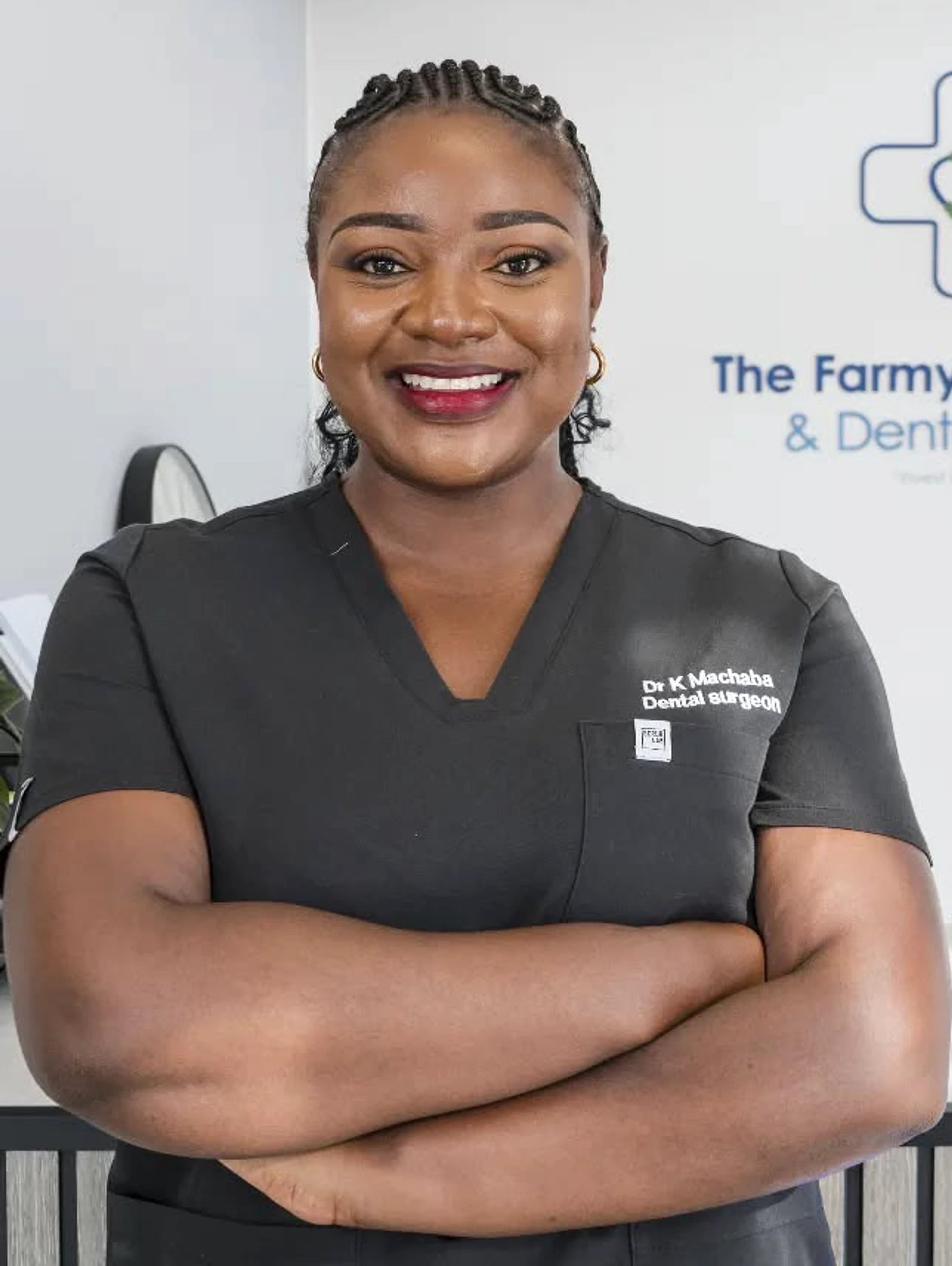
Dr. Kholofelo Machaba-SelatoleChief Dentist & Practice Director
Dr. Kholofelo Machaba-Selatole leads Smile On Dental & Aesthetic Studio with a warm, patient-focused approach to family, restorative, cosmetic, and orthodontic care.
View Profile