
Quick Answer
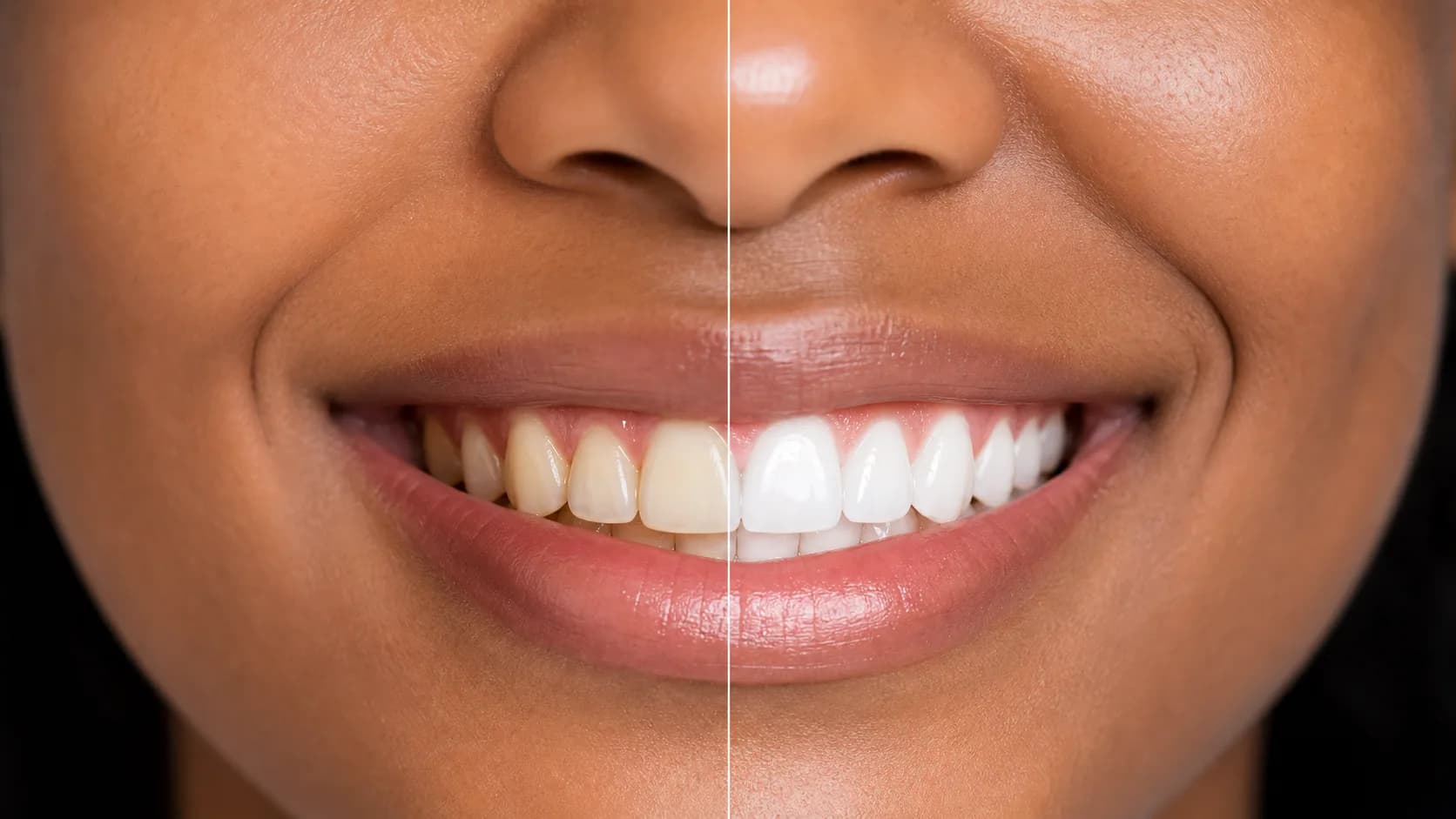
A professional dental cleaning can often remove plaque, tartar, and some external staining from coffee, tea, and tobacco. The result depends on whether colour sits on the surface, within enamel or dentine, around a restoration, or beside decay. Cleaning is different from whitening: cleaning removes deposits, while whitening changes the colour of suitable natural teeth. The dentist should assess dark marks, gum health, and existing dental work before promising a cosmetic result.
- Surface stain may polish away; internal discolouration usually does not.
- Tartar must be removed professionally and can itself become stained.
- Cleaning and whitening have different goals.
- One dark tooth or a changing spot needs diagnosis before cosmetic care.
Start with the full situation, not one isolated detail
Pigments can collect on enamel, plaque, and tartar, especially in rough or hard-to-reach areas. Professional instruments remove hardened deposits and polishing may reduce suitable external stains.
Colour inside the tooth, decay, cracks, fluorosis, medication-related changes, and restoration materials do not respond like surface stain. The clinical assessment identifies which part is removable and which needs another conversation.
The useful question is not only whether removing coffee, tea, or smoking stains with dental cleaning is common. It is whether the pattern, timing, location, and associated symptoms point to something that needs prevention, monitoring, repair, or urgent treatment. A dental assessment combines what you have noticed with the condition of the teeth, gums, bite, and existing dental work.
What may explain removing coffee, tea, or smoking stains with dental cleaning
Several explanations can produce a similar experience. Appearance or symptoms at home can narrow the conversation, but they cannot reliably confirm the diagnosis. The dentist looks for a finding that explains the whole pattern rather than choosing treatment from one symptom.
Tell the dental team what changed, when it started, whether it is improving or recurring, and what makes it better or worse. That history helps the examination focus on the most relevant teeth and tissues while still checking for another source.
| Possible factor | Why it may matter |
|---|---|
| External surface stain | May respond to professional cleaning and polishing. |
| Stained tartar | Requires professional removal rather than abrasive home scrubbing. |
| Internal tooth colour | May require whitening assessment or another cosmetic option. |
| Decay or restoration change | Needs diagnosis and possible repair rather than polishing. |
What the dentist may check
The appointment begins with your symptoms, dental history, medicines, allergies, health conditions, and previous treatment. The clinical examination then tests the possibilities that fit removing coffee, tea, or smoking stains with dental cleaning. An X-ray or another diagnostic step may be used only where it adds useful information.
No single test answers every dental question. Visual findings, gum measurements, bite response, sensitivity testing, imaging, and comparison with nearby teeth are interpreted together. If the source is uncertain, the safest plan may include review or referral before irreversible treatment.
| Check | What it helps establish |
|---|---|
| Deposit and colour location | Distinguishes surface stain from internal or structural change. |
| Gums and tartar | Determines the suitable level of cleaning. |
| Fillings, crowns, and veneers | Identifies materials that will not whiten like enamel. |
| One-tooth changes | Checks trauma, decay, pulp, or restoration causes. |
How the next step is chosen
The dentist should separate health, deposit removal, and shade goals. Cleaning may make teeth look brighter by removing stain, but it cannot guarantee a chosen shade. Whitening may create mismatch with existing crowns or fillings.
The recommended option should match the diagnosis, the amount of healthy tooth and gum support, the urgency, your wider health, and whether the result can be maintained. Ask the dentist to distinguish treatment needed to control disease from elective improvements that can safely wait.
A complete plan should include any temporary stage, definitive procedure, final restoration, and review. If care is staged, confirm what protects the area between visits and which change means the next appointment should be brought forward.
| Possible next step | When it may enter the discussion |
|---|---|
| Professional cleaning | Removes plaque, tartar, and some external stain. |
| Whitening assessment | Considers changing suitable natural tooth colour after health checks. |
| Restorative treatment | Addresses decay, cracks, or failed dental work. |
| Monitor or refer | May be appropriate for internal or uncertain discolouration. |
Turn the diagnosis into a complete care plan
A useful plan for removing coffee, tea, or smoking stains with dental cleaning should connect every recommended step to a finding from the examination. Ask the dentist to separate what controls active disease or immediate risk from what restores function, improves appearance, or prevents recurrence. That distinction makes it easier to understand why one step comes before another.
Confirm whether treatment can be completed in one appointment or requires a temporary stage, laboratory work, healing, specialist input, or a final restoration. If several visits are involved, ask what protects the tooth or gum between them, which activities or foods should be limited, and whom to contact if the temporary stage changes.
Long-term value also depends on maintenance. Discuss how the area will be cleaned, which review findings show that treatment is working, what can fail over time, and whether future repair is possible. Where cost affects timing, request a written sequence that identifies the urgent phase, the definitive phase, and any later elective or replacement decision.
Record the diagnosis and agreed sequence in language you understand. If more than one option is suitable, compare expected durability, maintenance, recovery, limitations, and the likely result of delaying each choice. A clear written plan also helps another clinician understand what has already been assessed if you need urgent care or continue treatment at a different practice.
What to do before the appointment
Brush gently with fluoride toothpaste and avoid highly abrasive powders or hard scrubbing. Reducing tobacco use and rinsing with water after staining drinks can help, but repeated exposure and surface texture influence how quickly stain returns.
Home care should protect the area without hiding a worsening problem. Avoid scraping, forcing tools, applying chemicals to teeth or gums, or using someone else’s prescription. Use only medicines that are safe for you and follow the label or advice from a qualified healthcare professional.
Keep the appointment even if the symptom settles. A changing symptom is still useful evidence, and temporary improvement does not prove that decay, inflammation, infection, a crack, or a gum problem has resolved.
- Note whether colour is widespread or limited to one tooth.
- List tobacco and staining-drink habits without embarrassment.
- Avoid scraping or abrasive home remedies.
- Ask whether gum findings allow routine cleaning.
- Discuss whitening only after the cause of colour is clear.
Questions that make the plan clearer
Good questions connect the proposed care to a specific finding. Ask what the dentist can confirm today, what remains uncertain, and what would change the recommendation. This is more useful than comparing procedure names without knowing whether they address the same diagnosis.
Also ask about the full sequence, likely review point, maintenance, alternatives that are clinically suitable, and the consequences of waiting. Where cost matters, request an estimate that covers the complete plan rather than only the first urgent or temporary stage.
- Is the colour surface stain, tartar, or internal?
- How much is likely to improve with cleaning?
- Do any dark areas need an X-ray or restorative check?
- How will existing crowns or fillings respond?
- What maintenance reduces stain returning?
When to arrange faster care
Move the appointment forward when symptoms are worsening, affecting sleep or eating, or accompanied by swelling, pus, a bad taste, fever, trauma, uncontrolled bleeding, or increasing difficulty opening the mouth. Describe these changes when booking so that the practice can triage the situation.
Difficulty breathing, swallowing, or speaking, extensive mouth or neck swelling, swelling affecting an eye, severe facial trauma, confusion, or uncontrolled bleeding can require emergency medical help. Do not wait for an ordinary dental appointment when airway, vision, consciousness, or general health may be affected.
Without emergency signs, persistent or recurring removing coffee, tea, or smoking stains with dental cleaning still deserves assessment. Early diagnosis usually gives the dentist more information and may preserve more conservative choices than waiting for a crisis.
- Facial or gum swelling, pus, fever, or a persistent bad taste
- A loose tooth, severe pain, or rapidly increasing sensitivity
- Bleeding that is heavy or does not stop with gentle pressure
- A broken tooth, filling, crown, bridge, or appliance
Internal Links
Related dental care
Sources
Useful information

Written by
Dr. Kholofelo Machaba-SelatoleChief Dentist & Practice Director
Dr. Kholofelo Machaba-Selatole leads Smile On Dental & Aesthetic Studio with a warm, patient-focused approach to family, restorative, cosmetic, and orthodontic care.
View Profile