Quick Answer
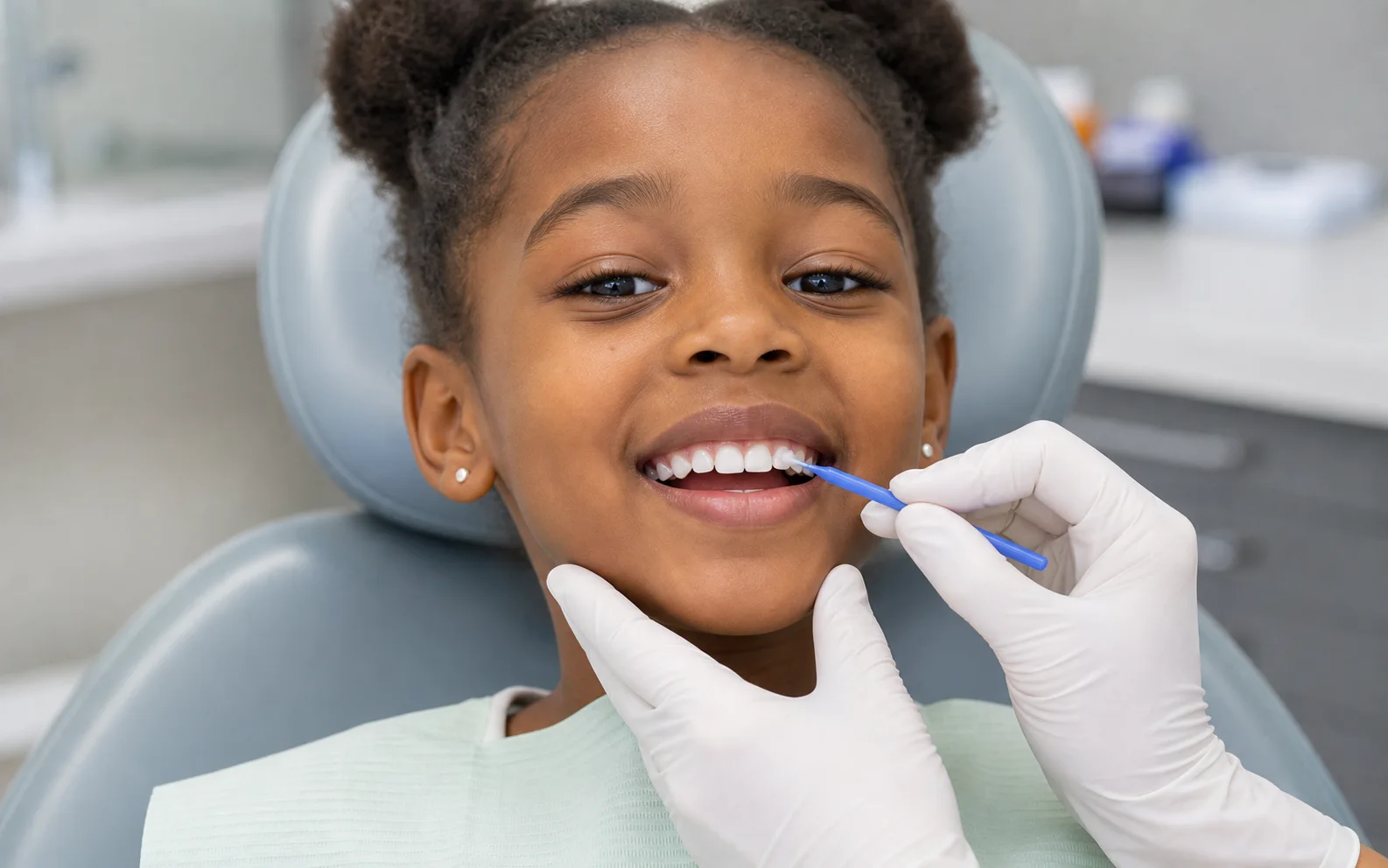
Start brushing when the first tooth appears. Standard guidance uses a smear of fluoride toothpaste for children under three and a pea-sized amount from three to six, with adult supervision. The fluoride concentration and any higher-risk plan should be checked with the dentist. More paste is not better: use the right amount, clean every surface and prevent swallowing from the tube.
- Check both the fluoride concentration and the amount used.
- An adult should dispense toothpaste for a young child.
- A higher-risk child may need an individual prevention plan.
The amount on the brush and the concentration are separate
Toothpaste packaging can make this confusing. The amount is the small quantity placed on the brush; concentration describes the fluoride within that product, usually shown in parts per million or ppm. A tiny quantity of one product is not automatically equivalent to the same quantity of another. Read the active information, not only the age label or flavour name.
The purpose is regular fluoride contact with the tooth surface while limiting unnecessary swallowing. An adult can apply the paste and put the tube away before brushing begins. Letting a young child squeeze the tube independently often produces much more than intended and turns toothpaste into something to taste or eat.
A practical age guide to discuss with the dentist
For children under three, use a smear rather than a pea-sized blob. From three to six, a pea-sized quantity is the usual guidance. NHS guidance recommends at least 1,000 ppm fluoride for younger children, with higher concentrations appropriate in some circumstances, and 1,350–1,500 ppm from age seven. A dentist may adapt advice to individual risk.
These age bands support a conversation; they do not replace an assessment when a child has repeated cavities, swallowing difficulties or a complex medical history. Do not use prescription high-fluoride toothpaste left over from another family member. Ask which exact product and amount suit your child.
| Age or situation | Amount and supervision |
|---|---|
| Under three | A smear; an adult brushes |
| Three to six | A pea-sized amount; supervise and help |
| Seven and older | Continue supervising technique and product use as needed |
| Special risk or swallowing needs | Request an individual plan rather than improvising |
Begin with the first tooth and make coverage count
The first tooth is the starting point for brushing, even if the mouth contains only one or two teeth. Use a small soft brush and gentle movements. As more teeth appear, remember the inside and chewing surfaces as well as the visible fronts. Adult assistance remains important until the child can clean effectively.
Brush twice daily, including at the end of the day. A timer may support consistency, but a child can spend two minutes chewing the brush without cleaning well. Watch where the bristles actually reach. If a newly erupting back tooth sits lower than its neighbours, ask the dentist how to reach its chewing surface.
Spitting, rinsing and swallowing
Encourage children who can spit to spit out excess toothpaste after brushing. Rinsing immediately with lots of water reduces the fluoride left on the teeth. Young children who cannot reliably spit need careful control of the amount used and close supervision; do not compensate by avoiding all fluoride without advice.
Normal supervised use is different from eating toothpaste. Store the tube safely and contact an appropriate medical or poison-information service if a child swallows a substantial amount or develops concerning symptoms. Keep the product packaging available for that conversation. Do not try to make the child vomit.
Why some children need more than a toothpaste change
Repeated cavities may reflect several factors: frequent sugar exposure, areas missed during brushing, deep grooves, dry mouth or difficulty maintaining the routine. Changing brands alone may not address those factors. A dentist can assess the pattern and recommend additional protection where appropriate.
Professional fluoride treatment and fissure sealants have different roles from daily toothpaste. They do not make brushing optional. Ask why each additional measure is recommended, which teeth need it, how it will be reviewed and what changes at home are most likely to help. Avoid buying several overlapping fluoride products without checking the combined plan.
5 checks to make when buying or changing toothpaste
Two tubes can both be labelled for children while offering different formulations and instructions. One may appeal because of the flavour, another because of a familiar character on the packaging. Neither feature tells you whether the fluoride concentration and recommended use fit your child. Treat the packaging as information to check, not as a complete personalised prevention plan.
It is also worth checking what happens at both homes when care is shared. A grandparent may use a different tube or apply a much larger quantity, while another caregiver may avoid fluoride because the child cannot spit reliably. A single agreed instruction from the dentist, shared with everyone who helps, can remove that uncertainty. Bring any conflicting advice to the appointment rather than asking the child to navigate it.
- Find the fluoride information on the tube or box. Write down the concentration and product name so the dentist can comment on the actual formulation you use.
- Confirm the amount for your child’s age and needs. Ask for a demonstration of a smear or pea-sized quantity if the descriptions are difficult to translate onto the brush.
- Check who dispenses it. An adult can control the amount and put the tube away, reducing the chance that toothpaste becomes something to lick or eat.
- Discuss tolerance. Explain burning, gagging or flavour aversion before changing to a product that may offer different protection or create another difficulty.
- Review the plan when circumstances change. Repeated cavities, new medicines, swallowing problems or a revised prevention programme are reasons to check that the instructions still fit.
What to bring to the appointment
Bring the toothpaste tube or a clear photograph of its label. Explain who applies it, how much is used and whether the child usually spits or swallows. Mention any sensitivity, mouth irritation, cavities or strong aversion to flavour. This gives the dentist more useful information than simply saying that the child uses a children’s toothpaste.
Can a child use a family toothpaste? Sometimes, provided its formulation and amount are appropriate; ask the dentist. Does fluoride-free toothpaste provide the same cavity protection? It does not provide fluoride’s protective effect. Should toothpaste be changed when adult teeth appear? Review the label, age and risk rather than changing solely because one adult tooth has erupted.
For a child who struggles with the routine, ask for a demonstration and a practical plan. Effective prevention comes from a method the family can repeat, with the right product, an appropriate quantity and regular review of how the teeth are developing.
The fluoride treatment page explains professional prevention, and our comparison of fluoride varnish and toothpaste shows why an additional application does not replace the daily routine. If applying the paste is easy but completing the brushing is difficult, the brushing-routine guide addresses that separate practical problem.
- Product label: photograph the ingredient panel clearly rather than only the front design, which may omit the concentration information.
- Actual quantity: describe what normally ends up on the brush, including whether the child adds more during the session.
- Other products: include fluoride rinses or prescribed pastes used by the household so accidental borrowing can be avoided.
- Caregiver agreement: keep a short written instruction available to anyone who regularly helps the child with brushing.
Internal Links
Related dental care
Sources
Useful information
Written by
Dr. Kholofelo Machaba-SelatoleChief Dentist & Practice Director
Dr. Kholofelo Machaba-Selatole leads Smile On Dental & Aesthetic Studio with a warm, patient-focused approach to family, restorative, cosmetic, and orthodontic care.
View Profile