First Step
Consultation
The dentist checks your concern and confirms whether this treatment is suitable before care begins.
Dental Hygiene & Prevention
Book Fissure Sealants with Smile On Dental. Start with an assessment, understand your options, and get clear next steps before treatment begins.
Quick Summary
First Step
The dentist checks your concern and confirms whether this treatment is suitable before care begins.
Best For
Suitability depends on oral health, symptoms, goals, and clinical findings.
Planning
Timing, visits, cost factors, and aftercare are explained after the assessment.
Branch Access
Use the location section to choose the branch that is easiest for you to attend consistently.
Overview
Treatment Introduction
Fissure sealants are preventive coatings that may be recommended for suitable back teeth, especially where grooves are more likely to trap food and plaque.
Decision Support
Smile On Dental uses the visit to understand your symptoms, goals, oral health, and expectations before recommending a suitable treatment plan.
Visual Guide
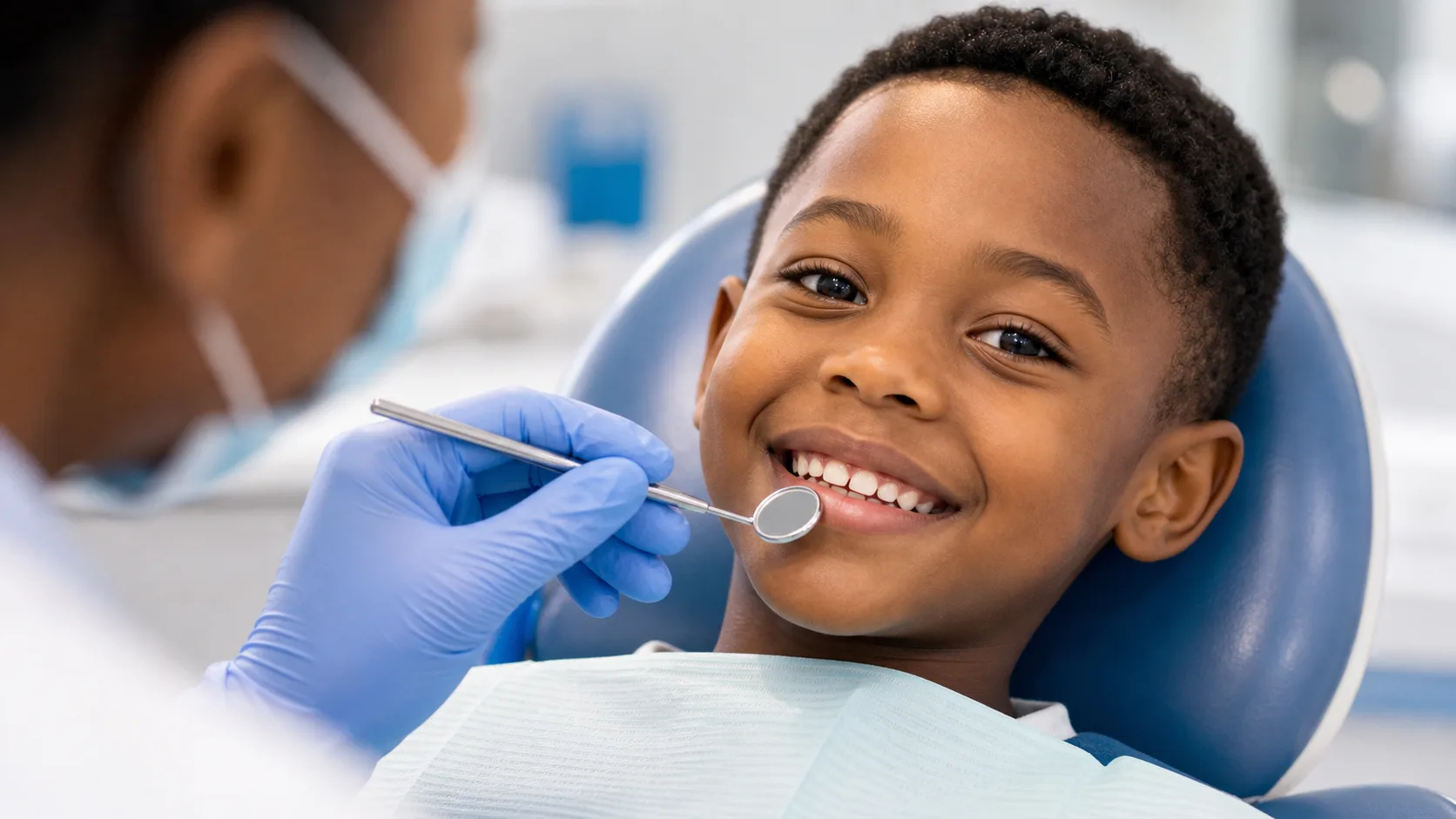
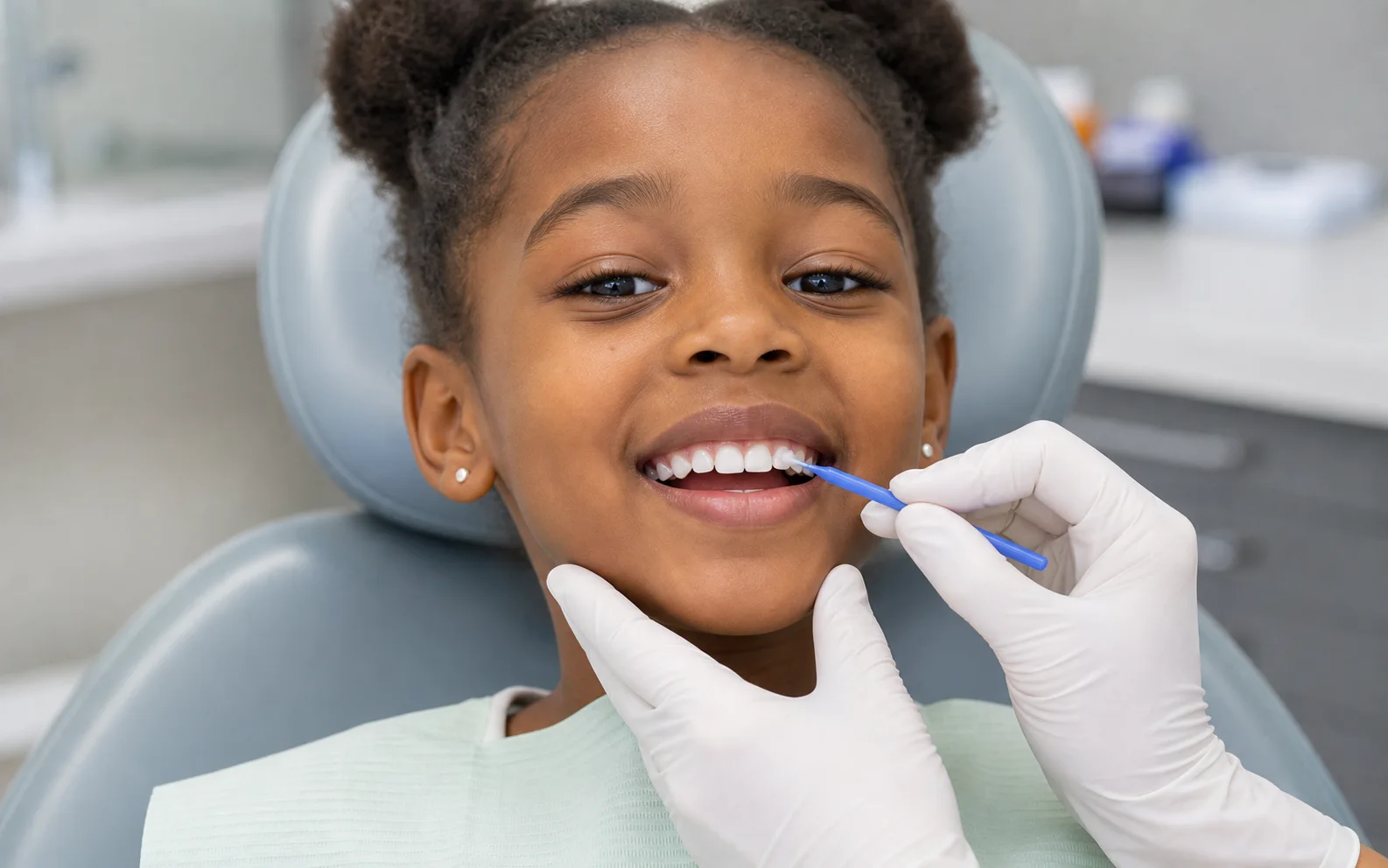
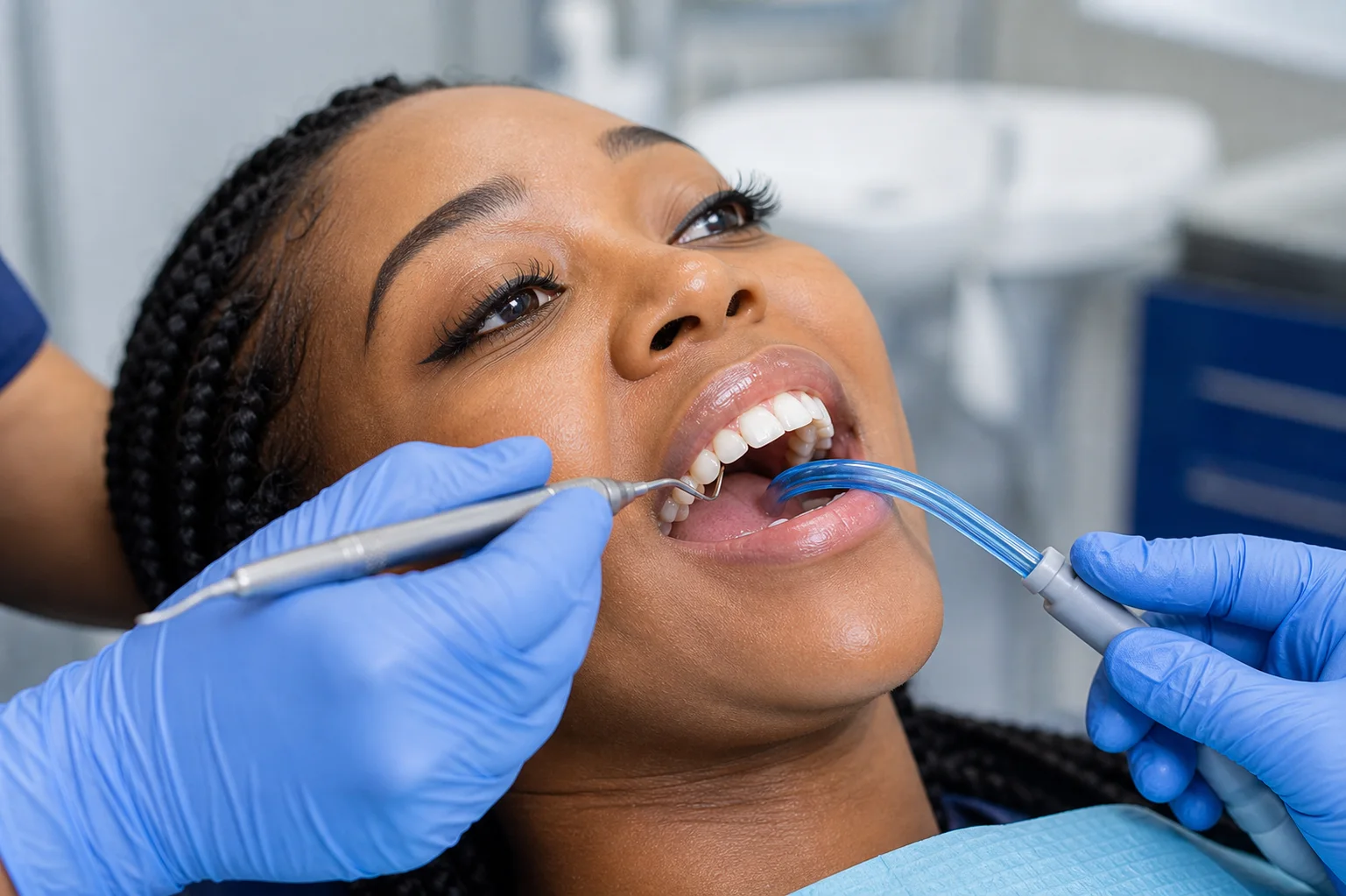
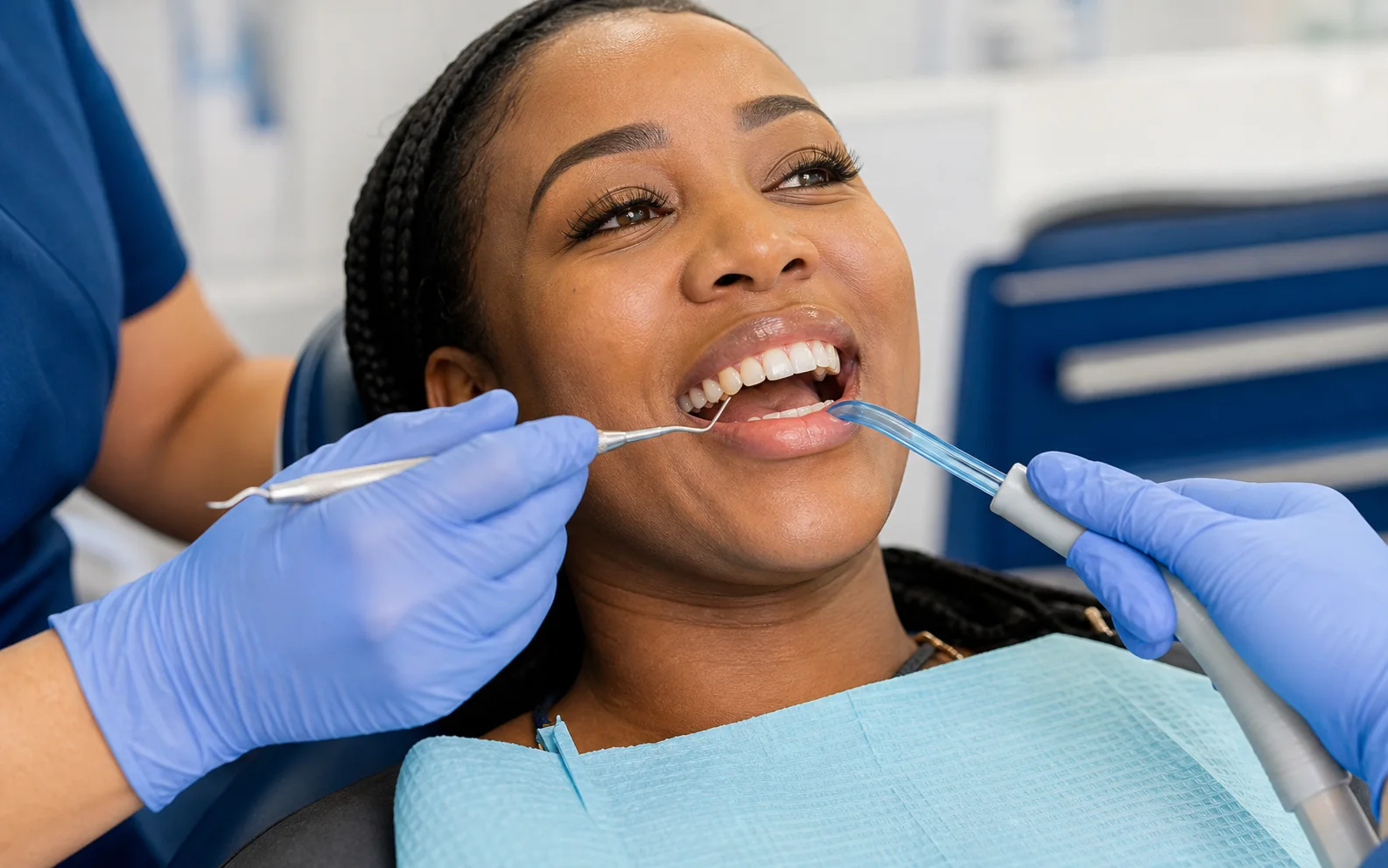

Treatment Guide
Back teeth often have narrow grooves where food and plaque can settle, even with regular brushing.
Fissure sealants are thin protective coatings placed into the grooves of molars and premolars. These grooves can be deep and difficult for toothbrush bristles to clean properly, which is why cavities commonly start on the biting surfaces of back teeth.
Sealants are often recommended for children and teenagers soon after permanent molars come through, but adults with deep, decay-free fissures may also be assessed. The goal is prevention: protecting vulnerable surfaces before they break down. This can be especially helpful when the grooves are too narrow for normal brushing to clean predictably.
Sealants protect
Sealants are especially useful for patients whose back teeth have deep grooves and no existing decay in those areas.
Children may benefit because newly erupted molars can be more vulnerable while brushing skills and routines are still developing. Sealants can give these teeth additional protection during an important stage of oral development.
Adults may also be considered if their molars have deep fissures that remain healthy but collect plaque. If decay is already present, the dentist will discuss other options, because sealants are not designed to cover untreated cavities. The decision is based on the actual tooth surface, not age alone.
Good candidates
A careful tooth check is important before any sealant is placed.
The dentist will examine the biting surfaces and may use X-rays if there is concern about hidden decay. A sealant should only be placed on a surface that is suitable, clean, and free from decay that needs restorative treatment.
No major preparation is usually needed from the patient. For children, it helps to explain that the tooth will be cleaned and kept dry while the material is placed, and that staying still helps the sealant bond properly. A calm explanation can make the visit feel more like prevention than a procedure.
Before placement
Sealant placement is conservative because it protects the tooth surface without removing healthy structure.
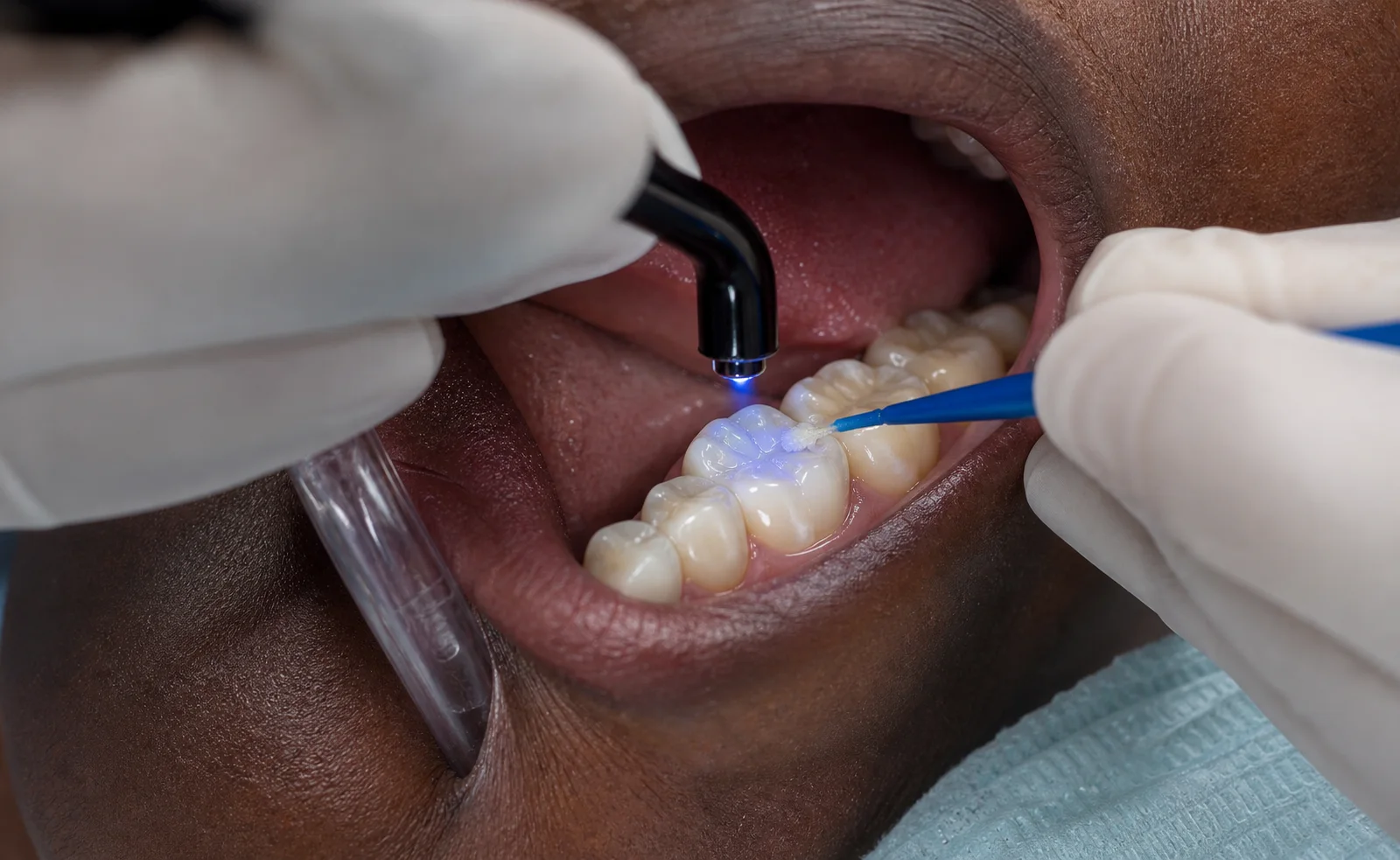
The tooth is cleaned, isolated, and prepared so the sealant can bond to the enamel. The liquid material is flowed into the grooves, then hardened with a curing light when required.
After placement, the dentist checks the bite and the coverage. The sealant should sit in the grooves like a protective barrier, making the biting surface smoother and easier to keep clean during daily brushing. If the bite feels unusual afterward, it should be checked so the surface can be adjusted if needed.
Placement includes
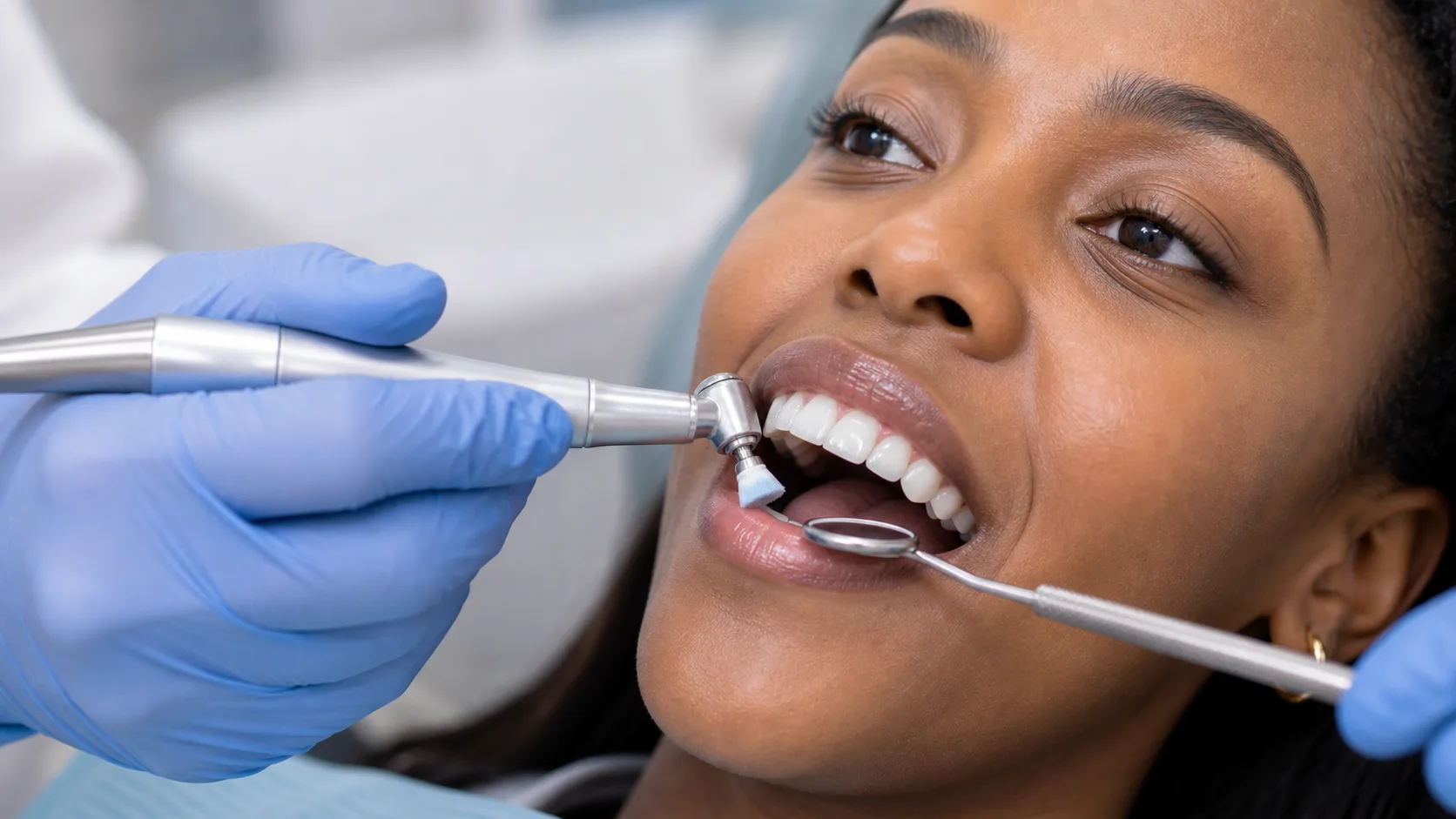
Sealants reduce risk on treated grooves, but they do not make teeth cavity-proof.
Brushing, fluoride toothpaste, flossing, and sensible snacking still matter. Sealants only protect the covered biting surfaces; cavities can still form between teeth, near the gumline, or around a sealant that has worn or chipped.
At routine visits, the dentist can check whether each sealant is intact. If a sealant has partly worn away, it may be repaired or replaced depending on the tooth and the patient’s risk level. This review is important because a sealant only helps while it is covering the vulnerable grooves effectively.
Keep doing

Sealant costs depend on how many teeth need protection and whether other care is needed first.
Factors can include the number of molars or premolars being sealed, the complexity of keeping the area dry, whether X-rays are needed, and whether a cleaning or restorative treatment is required before sealants are appropriate.
Because sealants are preventive, the dentist will first confirm that placement makes sense for the specific tooth. If a fissure is already decayed, a filling or another treatment may be recommended instead of simply sealing over the area. This protects the patient from a short-term fix that could hide a progressing problem.
May affect cost
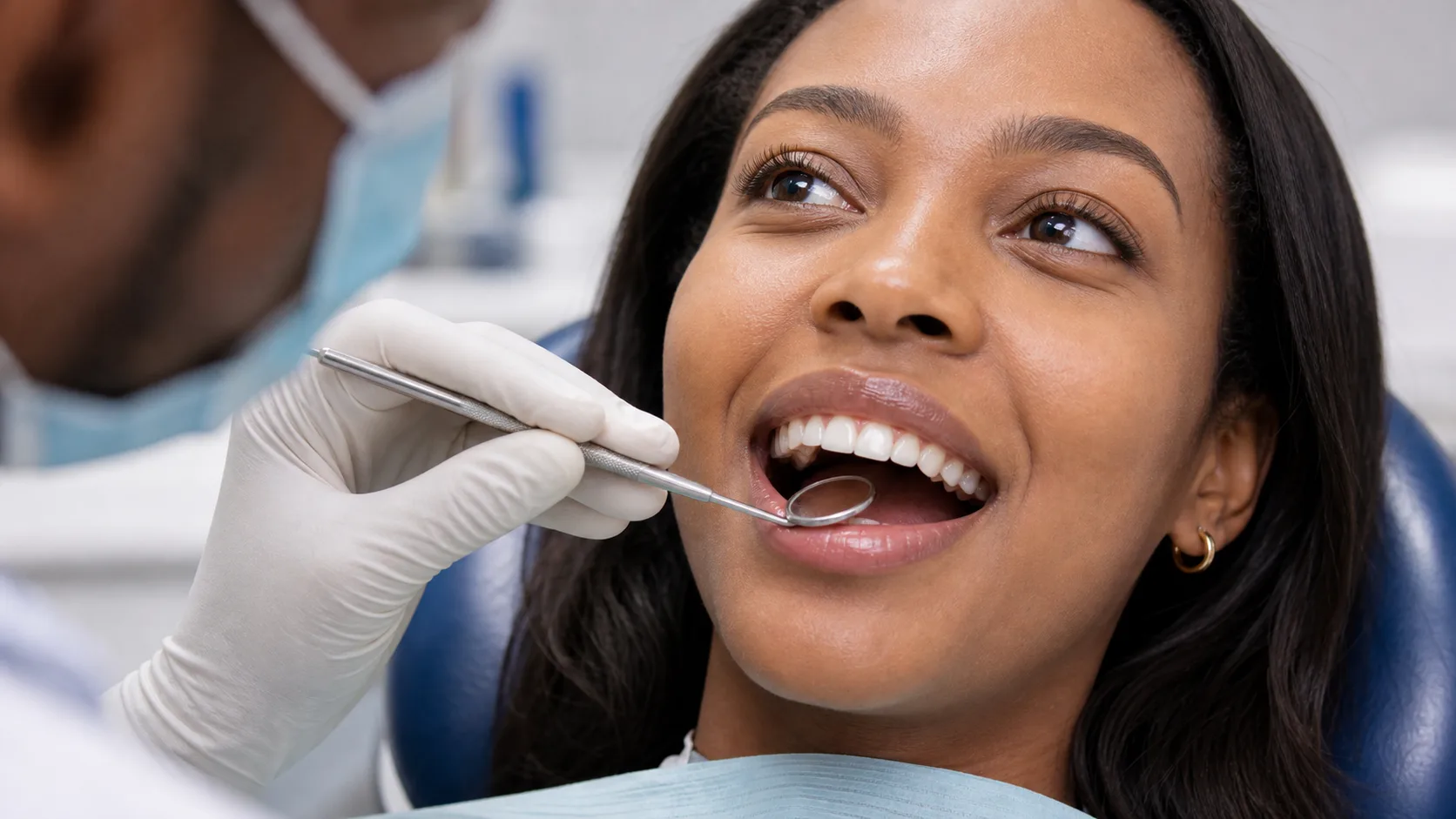
Fissure sealants are small treatments, but they require careful judgement and placement.
Smile On Dental assesses the shape, eruption stage, cleanliness, and decay risk of each tooth before recommending sealants. This avoids unnecessary treatment while protecting teeth that are genuinely vulnerable.
The takeaway is that sealants can be a practical way to protect back teeth, especially in growing children. They work best as one part of a broader prevention plan built around regular checks and daily hygiene. When used well, they make vulnerable chewing surfaces easier to maintain without changing the natural tooth shape. They also give parents a simple preventive option when a newly erupted molar is difficult for a child to reach well, especially during school years when routines can be inconsistent.
Our focus
Who It Helps
Treatment Journey
Usually a single preventive visit once suitability is confirmed.
You may come in because back teeth have deep grooves, food traps easily, or a child or teen needs added cavity prevention.
The dentist will ask when it started, what makes it better or worse, whether there is pain or sensitivity, and what you want the visit to help you solve.
What this first step covers
Before treatment starts, the dentist confirms what is actually going on.
The dentist checks whether the grooves are clean, dry, fully erupted, and suitable for sealant placement.
The dentist may then explain options such as Sealants for suitable back teeth, Fluoride prevention, Monitoring or filling treatment if decay is already present, depending on what the examination shows.
What may be checked
Some treatments are completed in one appointment, while others need a separate visit.
The tooth is cleaned, prepared, kept dry, and sealed with a protective coating that helps reduce food and plaque trapping in the grooves.
A second visit may be needed if the tooth cannot be kept dry, more teeth erupt later, or a sealant needs repair.
What you should know before leaving
The journey should end with you knowing how to protect the result.
Sealants are checked at future visits because they can wear, chip, or need repair as the child grows.
You are reminded that sealants help protect grooves, but brushing, fluoride toothpaste, and diet habits still matter.
Your home-care plan
Benefits
Suitability
Dental Hygiene & Prevention
Preventive care works best when it is matched to your current oral health, home-care routine, gum condition, and cavity risk.
Suitability
The dentist considers symptoms, oral health, bite, medical history, expectations, and maintenance before recommending fissure sealants.
Costs
Cost discussions are most useful after diagnosis because materials, complexity, visit count, and follow-up needs vary from patient to patient.
Appointment
Your dentist reviews your concern, oral health, and treatment goals before recommending next steps.
The team explains the likely process, timing, and care options in straightforward language.
Your treatment plan is shaped around comfort, function, appearance, and long-term oral health.
Costs & Aftercare
Before You Book
Mention whether you are booking for sealants, pain, appearance, function, prevention, or a second opinion.
At the Visit
Ask about diagnosis, options, number of visits, comfort, maintenance, and what could happen if treatment is delayed.
Aftercare
Your dentist will explain home care, review visits, and any symptoms that should be reported after treatment.
FAQs
The best starting point is a consultation. Your dentist will assess your teeth, gums, bite, symptoms, concerns, and smile goals before recommending a personalised treatment plan.
Yes. Use the Book an Appointment button to open the booking site and choose a convenient appointment time. You can also request a callback if you would prefer the practice team to contact you first.
Yes. You can request a callback if you prefer the practice team to contact you before booking. This can be helpful when you are unsure whether you need a routine visit, cosmetic consultation, orthodontic assessment, or urgent support.
Yes. Costs depend on the diagnosis, treatment complexity, materials, and number of visits required. Your dentist can explain the recommended next step before treatment begins.
Bring your identification, medical history, current medication details, previous dental information if available, and any questions you want to discuss with the dentist.
Book an assessment so the dentist can diagnose the cause before you choose a treatment. Pain or swelling may need urgent attention, X-rays, restorative care, or another clinical next step.
Related Treatments
Helpful Articles
Locations
City Treatment Pages
Clinical Leadership

Dr. Kholofelo Machaba-Selatole leads Smile On Dental & Aesthetic Studio with a warm, patient-focused approach to family, restorative, cosmetic, and orthodontic care.
60+ five-star patient reviews across Pretoria and Polokwane.
"Customer care is superb, very friendly front desk staff. I'm happy to have gained my confidence back."

Polokwane
"From reception right into the doctor's consultation room it was all smiley faces that welcomed us."

Polokwane
"The best dental service I have seen in Pretoria, cannot wait for my next appointment."

Pretoria
"Customer care is superb, very friendly front desk staff. I'm happy to have gained my confidence back."
Polokwane
"From reception right into the doctor's consultation room it was all smiley faces that welcomed us."
Polokwane
"The best dental service I have seen in Pretoria, cannot wait for my next appointment."
Pretoria
Book a Consultation