Quick Answer
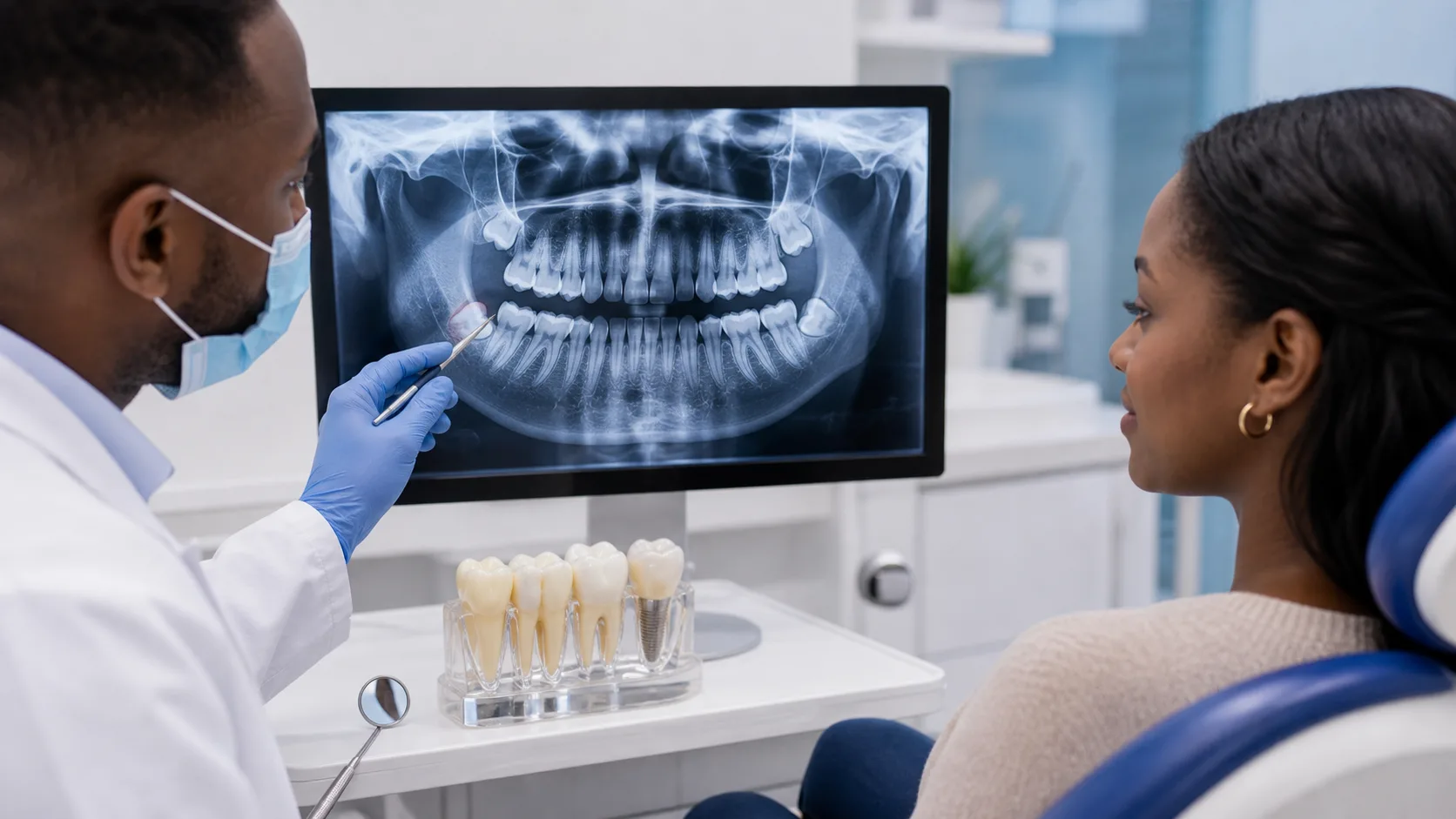
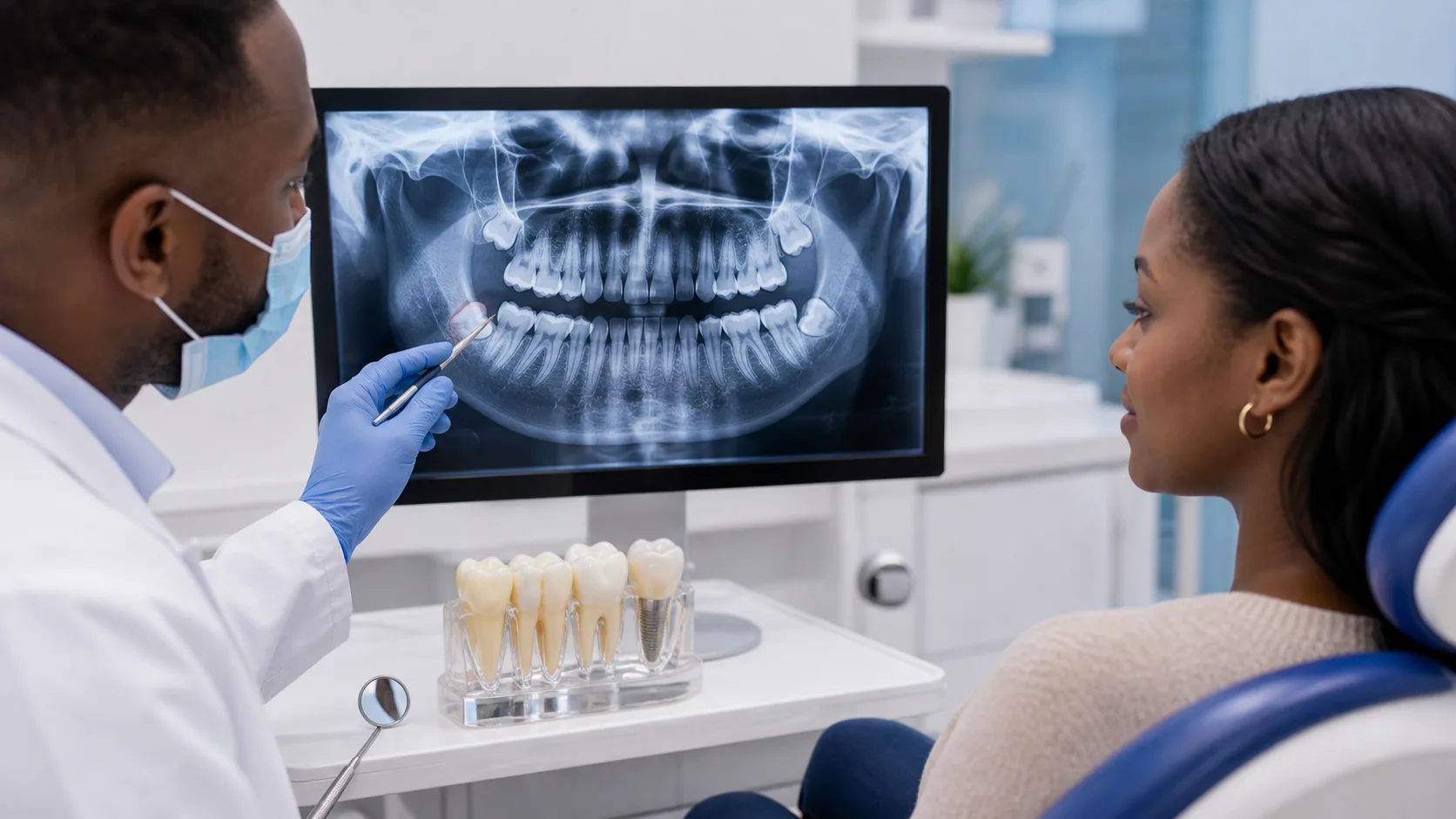
Not every wisdom tooth needs removal. A tooth that is healthy and not causing problems may be monitored, while recurrent infection, decay, damage to nearby structures or another diagnosed problem can change the recommendation. Symptoms, examination and imaging when needed should guide the decision. Being painless is reassuring but does not establish that the tooth is healthy.
- Impaction alone does not describe the whole clinical picture.
- Monitoring needs a reason and a follow-up plan.
- Ask about the risks of both removal and retention.
Separate the tooth’s position from its health
A wisdom tooth can be fully erupted, partly erupted or remain under gum or bone. Position affects access and the problems that may occur, but it is only one part of the decision. The dentist also considers the surrounding gum, the adjacent molar and any evidence of disease.
A tooth that has never hurt may still need evaluation if cleaning is difficult or an examination suggests a problem. Equally, the fact that a tooth is called impacted does not, by itself, explain why surgery is necessary. Ask what specific finding supports the recommendation in your case.
When monitoring may be appropriate
If the tooth and nearby tissues appear healthy and there is no identified problem requiring treatment, the dentist may recommend observation. Monitoring means including the tooth in ongoing reviews and explaining what symptoms or changes should prompt an earlier visit. It is different from ignoring the tooth indefinitely.
Ask whether you can keep the area clean and what is being checked at future appointments. Imaging should be considered according to clinical need rather than automatically repeated at every visit. The review interval may depend on access, previous symptoms and the wider state of your oral health.
What can make removal worth discussing
Recurrent inflammation around a partially erupted tooth, decay that cannot be managed appropriately, damage to a neighbouring tooth or another diagnosed abnormality can lead to a removal discussion. An episode of pain needs diagnosis because nearby teeth, gums or jaw structures can also be responsible.
The clinician should explain the problem being treated and the expected benefit. Ask whether an alternative exists, whether treatment is urgent and whether referral is needed. A recommendation should not be reduced to a blanket rule that everyone must remove wisdom teeth at a particular age.
| Situation | Discussion to have |
|---|---|
| Healthy tooth with no identified disease | Whether monitoring is appropriate |
| Repeated swelling around a partly erupted tooth | The cause and options for preventing recurrence |
| Decay affecting the wisdom tooth or neighbour | Whether predictable repair is possible |
| Complex position or nearby structures | Procedure risks and possible referral |
Understand the trade-offs of an operation
Removal has possible benefits and possible complications, including pain, swelling, bleeding, infection and dry socket. For some teeth, the relationship to nerves or other structures is particularly important. Your clinician should explain risks relevant to the position and procedure rather than provide only a generic consent form.
Ask how those risks compare with leaving the tooth and what uncertainty remains. If the decision is not urgent and you are unsure, a second opinion can be reasonable. Bring existing imaging where possible so another clinician can review useful records rather than assuming everything must be repeated.
Symptoms that should bring the review forward
Report recurring swelling, a bad taste, difficulty opening the mouth, pain when chewing or food trapping that cannot be managed. Facial swelling, fever with dental swelling or feeling systemically unwell needs prompt advice. Difficulty breathing or swallowing is an emergency requiring medical help.
Do not rely on repeated courses of leftover antibiotics or pain relief as a long-term strategy. They do not establish the cause or create a definitive plan. If an episode settles, keep the follow-up appointment so the dentist can discuss recurrence and the condition of the tooth.
5 questions that clarify a wisdom-tooth recommendation
Two people can have wisdom teeth that look similar in a photograph and still receive different recommendations. One may have recurring problems around a partly erupted tooth; another may have a tooth that is being monitored without symptoms or identified disease. The useful question is not whether everyone should keep or remove wisdom teeth. It is what the examination shows about your tooth, its surroundings and the consequences of each reasonable option.
Ask the dentist to connect the recommendation to specific findings. If removal is advised, understand the reason and the planned approach. If monitoring is advised, understand what that actually involves and when to return. Neither choice should be reduced to a promise that trouble will never occur. Your preferences, medical history and ability to attend follow-up also belong in the discussion, particularly if work, travel or another treatment affects when you could manage a procedure and recovery.
- Ask what problem has been identified. Distinguish a symptom you have reported from a finding seen on examination or an image, and ask how they relate.
- Discuss the alternatives to the proposed plan. If monitoring is reasonable, ask what will be reviewed; if it is not, ask why waiting would be unhelpful.
- Clarify the complexity of removal. Find out who would perform it, whether referral is needed and which individual risks should be considered before you consent.
- Explain your health and medication history. The team needs accurate information to plan safely, including medicines that may affect the procedure or the recovery advice.
- Agree the next appointment and escalation plan. Know how to contact the practice if symptoms change before treatment or during a period of monitoring.
Leave with a clear decision and review plan
Ask which wisdom tooth is involved, what evidence was found, what the alternatives are and how soon a decision is needed. If monitoring is chosen, record the review date and warning signs. If removal is chosen, ask about preparation, recovery and who to contact afterwards.
Will removal prevent all future crowding? That is not a reliable promise and should not be the sole explanation for treatment. Does no pain mean no problem? No. Can a monitored tooth later need removal? Yes, if its condition or the balance of risks changes.
A wisdom-tooth assessment at Smile On Dental can clarify whether observation or treatment is appropriate and whether more specialised care is needed. The goal is a decision based on the individual tooth, not an assumption that removal is always inevitable.
The tooth extractions page explains the broader care pathway. If removal is recommended, preparing your home before wisdom-tooth removal can help with practical arrangements. For active pain or swelling, emergency dental care may be the relevant starting point; a general article cannot establish how urgently your individual symptoms need assessment.
- Do not interpret the absence of pain as proof that a wisdom tooth has no problem; the recommendation should reflect an appropriate clinical assessment.
- Equally, do not assume that the word impacted automatically means every tooth needs the same treatment or the same timetable for removal.
- Request an explanation of any imaging proposed so you understand what question it is intended to answer in your particular situation.
- Mention previous episodes of swelling or difficulty opening your mouth, even if they settled before the current appointment and are easy to forget.
Internal Links
Related dental care
Sources
Useful information

Written by
Dr. Kholofelo Machaba-SelatoleChief Dentist & Practice Director
Dr. Kholofelo Machaba-Selatole leads Smile On Dental & Aesthetic Studio with a warm, patient-focused approach to family, restorative, cosmetic, and orthodontic care.
View Profile