
Quick Answer
Arrange a dental assessment before travel if tooth pain is recurring, even when it settles between episodes. Tell the practice your departure date, destination and symptoms. An examination can help identify whether treatment, monitoring or further investigation is needed. Do not rely on painkillers or leftover antibiotics as a travel plan, and allow time for any necessary follow-up where possible.
- Pain that comes and goes still deserves assessment.
- Share travel dates before treatment is planned.
- A pre-travel check cannot guarantee that no problem will occur.
Do not wait for the symptom to become constant
Intermittent discomfort may be easy to dismiss while daily life continues normally. Travel changes the consequences: familiar care may be unavailable, appointments may be difficult to arrange and a worsening problem can interrupt work or a holiday. The reason to book is to understand the cause, not to assume that every occasional twinge needs a major procedure.
Record what triggers the pain, how long it lasts and whether it affects sleep or eating. Mention a recent filling, broken restoration or injury. This history helps the dentist investigate the problem while there is still time to discuss options.
Give the practice the relevant travel details
State the departure date, expected time away and whether access to dental care may be limited. Mention planned activities or work commitments that could be affected by treatment or recovery. The clinician can then explain what is reasonable before departure and what may need follow-up.
Do not assume all care can be compressed into one visit. Diagnosis, treatment stages and review can require different timing. If you are leaving very soon, be clear about that from the start rather than revealing it after a multi-visit plan has been proposed.
An examination helps distinguish different situations
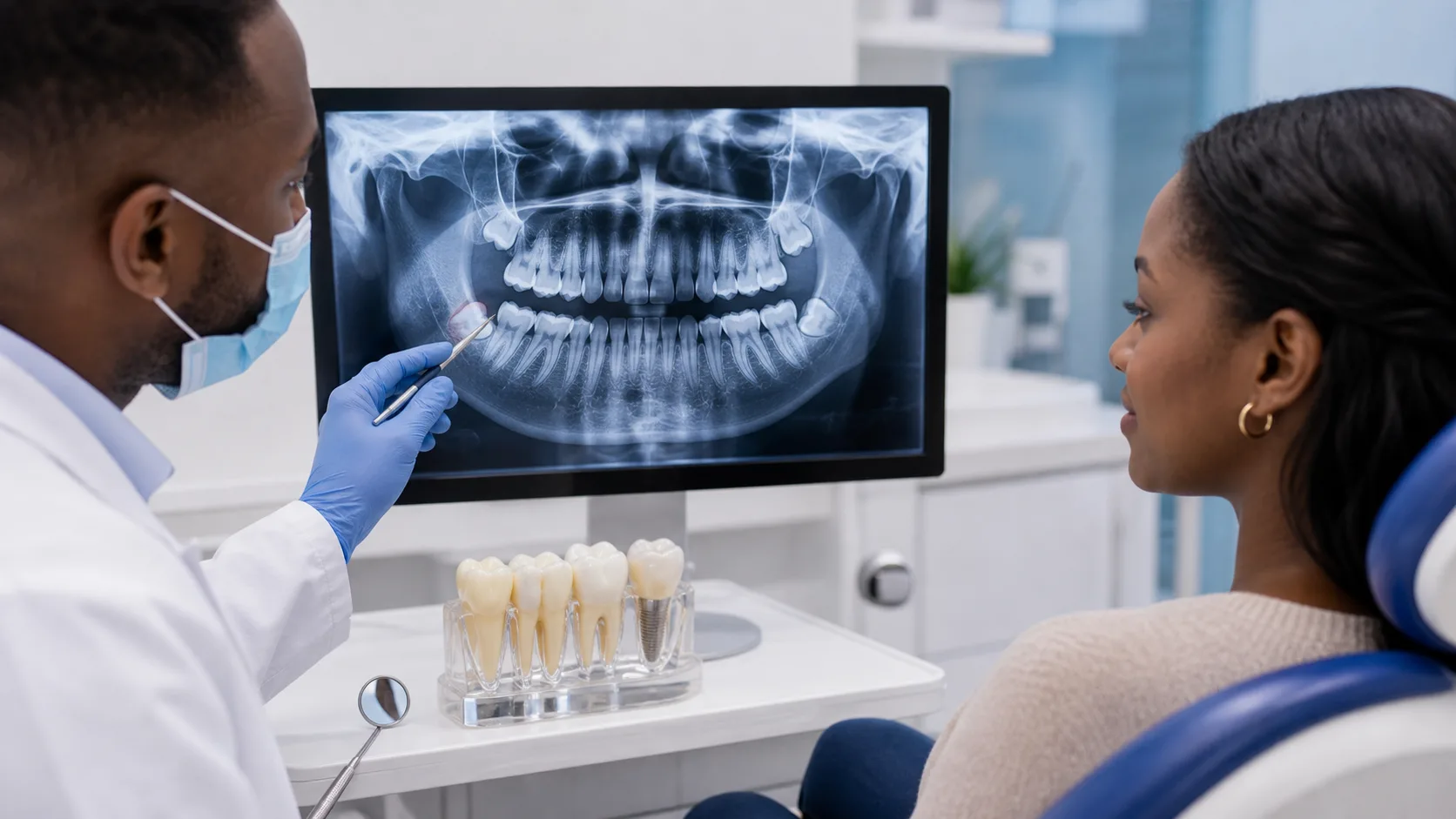
The dentist may identify decay, a restoration problem, gum inflammation, a crack or another cause. Some findings can be monitored, while others need treatment or further tests. An X-ray may be useful if it answers a clinical question; the travel deadline does not by itself determine which test or procedure is needed.
Ask what is known, what remains uncertain and what could happen if treatment is delayed. If temporary care is proposed, clarify its limits and the follow-up required. Temporary relief is not always definitive treatment.
| Information | Why it matters |
|---|---|
| Pain triggers and duration | Guides investigation |
| Departure and return dates | Shapes the available sequence |
| Remote or limited-care destination | Changes contingency planning |
| Recent dental work | May explain a new symptom |
| Medical history and medicines | Affects safe treatment planning |
Avoid creating a medicine-only contingency plan
Appropriate pain relief can help symptoms, but it does not establish or repair the cause. Do not take leftover antibiotics or obtain them as a substitute for assessment. Antibiotics are not indicated for every toothache and should be used only when prescribed for the relevant condition.
If medicines are prescribed, ask how to use them and what to do if symptoms change. Keep the prescription details available when travelling. Do not combine products without checking ingredients and suitability with a pharmacist or clinician.
Plan around treatment and review advice
If a procedure is needed, ask about recovery, follow-up and whether the travel timing affects the recommendation. Advice about flying, strenuous activity or being far from care can depend on the procedure and clinical situation. Avoid applying a universal internet waiting period to every treatment.
Get the aftercare contact and a summary of treatment where useful. Know how to find appropriate care at your destination, particularly if further visits are required. A treatment record can help another clinician understand what has been done without starting from an incomplete history.
5 arrangements to make if a tooth hurts before a trip
A tooth that hurts occasionally can be easy to postpone when travel preparations are busy. The practical problem is that access to your usual dentist may become more difficult once you leave. Tell the practice your departure date when requesting an assessment, but do not assume that the date determines which treatment is appropriate. The examination should establish the problem and a realistic plan, including whether any follow-up would fall while you are away.
Think about the whole journey rather than only the day of departure. A long flight, remote destination or packed work schedule can make it harder to obtain care, but those details do not justify prescribing treatment without assessment. Ask the dentist what can reasonably be completed, what might need review and what to do if symptoms change. A written summary can be useful if another clinician needs to see you during the trip, particularly when treatment has already begun.
- Describe symptoms when booking. Mention swelling, worsening pain, injury or difficulty eating so the practice can advise on urgency rather than treating the visit as a routine check.
- Share the travel dates and destination context. Explain when you leave and return and whether access to dental care may be difficult during the trip.
- Ask how treatment and follow-up fit together. Understand whether further visits may be needed and avoid assuming that the first appointment guarantees a completed course of care.
- Request clear instructions for changes in symptoms. Know when to contact the practice and when local urgent dental or medical services would be more appropriate while away.
- Keep relevant information accessible. Carry the treatment summary and medicine details you are given, and know how to contact your usual practice if another dentist needs context.
Know which changes need urgent help
Increasing pain, swelling, fever with dental swelling, difficulty opening the mouth or feeling unwell should prompt timely advice. Trouble breathing or swallowing requires emergency medical care. Do not board a journey while ignoring serious symptoms simply because arrangements are already paid for.
Can a check-up guarantee a trouble-free trip? No, but it can identify and address known concerns. Should a painless broken filling be checked before travel? It is sensible to discuss because symptoms alone do not establish stability. Can a toothache that suddenly stops be forgotten? Significant or recurring pain still deserves assessment.
A pre-travel consultation at Smile On Dental can help clarify the problem and the realistic next steps. Book with enough notice where possible and be explicit about the dates that shape your decision.
Toothache treatment begins with assessment of the cause, and tracking intermittent tooth pain can help you describe the history. Emergency dental care is relevant for urgent symptoms. If you are relocating rather than taking a short trip, moving city with dental treatment records explains how to organise continuity with a new practice.
- Do not rely on leftover antibiotics or a stronger painkiller plan as a substitute for finding out why the tooth is hurting before departure.
- Tell the clinician about planned activities or travel constraints that could affect the recovery instructions if a procedure is recommended before you leave.
- Ask your insurer or travel provider about dental cover directly; a dental practice cannot guarantee reimbursement or the availability of care at your destination.
- If the pain temporarily settles, still discuss the episode rather than assuming that the problem has resolved because the travel date is approaching.
Internal Links
Related dental care
Sources
Useful information

Written by
Dr. Kholofelo Machaba-SelatoleChief Dentist & Practice Director
Dr. Kholofelo Machaba-Selatole leads Smile On Dental & Aesthetic Studio with a warm, patient-focused approach to family, restorative, cosmetic, and orthodontic care.
View Profile