
Quick Answer
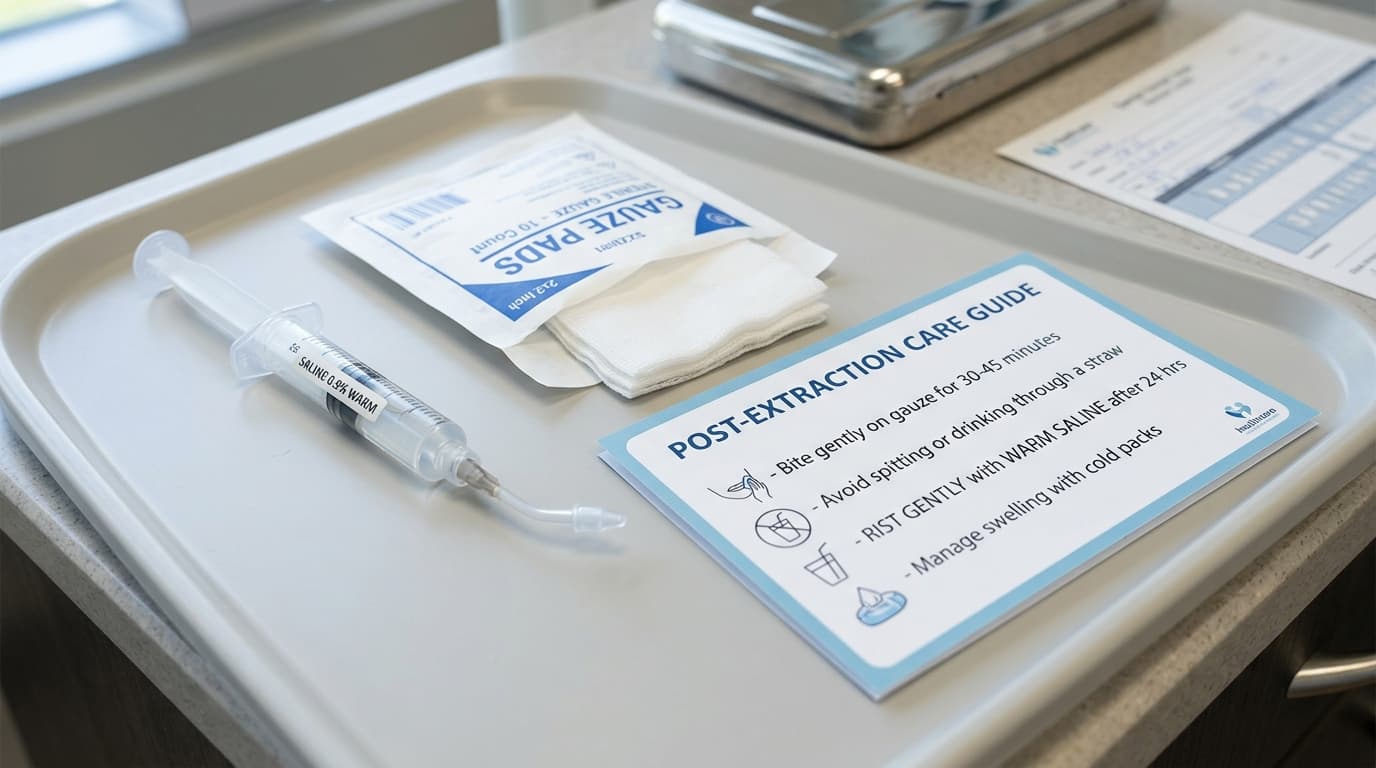
To control post-extraction bleeding, place a clean, slightly dampened gauze pad directly over the socket and bite down with firm, continuous pressure for 45 to 60 minutes without talking or spitting. If bleeding continues, bite firmly on a dampened black tea bag (the tannic acid constricts vessels). Normal pink-tinged saliva is expected; call your dentist if your mouth rapidly fills with dark red blood clots.
- A small amount of blood mixed with a large volume of saliva looks like heavy bleeding, but is usually harmless pink ooze.
- Firm, steady biting pressure directly on the socket is the most effective way to form a solid, stable blood clot.
- Spitting forcefully creates suction that pulls the clot out; always swallow normally or wipe excess saliva gently.
- Black tea contains natural tannic acid that constricts capillaries and promotes rapid clot formation.
Start with the full situation, not one isolated detail
Leaving the dental clinic with gauze in your mouth can feel slightly messy. It is completely normal for the extraction site to ooze small amounts of blood for the first 12 to 24 hours.
Because one drop of blood turns an entire mouthful of saliva bright red, patients often panic thinking they are losing dangerous amounts of blood. Knowing the difference between normal oozing and active hemorrhaging gives you peace of mind.
The useful question is not only whether controlling bleeding after a tooth extraction is common. It is whether the pattern, timing, location, and associated symptoms point to something that needs prevention, monitoring, repair, or urgent treatment. A dental assessment combines what you have noticed with the condition of the teeth, gums, bite, and existing dental work.
What may explain controlling bleeding after a tooth extraction
Several explanations can produce a similar experience. Appearance or symptoms at home can narrow the conversation, but they cannot reliably confirm the diagnosis. The dentist looks for a finding that explains the whole pattern rather than choosing treatment from one symptom.
Tell the dental team what changed, when it started, whether it is improving or recurring, and what makes it better or worse. That history helps the examination focus on the most relevant teeth and tissues while still checking for another source.
| Possible factor | Why it may matter |
|---|---|
| Normal post-surgical capillary oozing | Small micro-vessels weeping into saliva for the first 12 to 24 hours as the primary clot solidifies. |
| Clot disruption from spitting or rinsing | Spitting into the sink creating suction that dislodges the newly forming clot and restarts fresh bleeding. |
| Elevated blood pressure from physical exertion | Exercising, bending over, or heavy lifting raising blood pressure and blowing out the fragile clot. |
| Pharmacological anticoagulation effect | Aspirin, blood thinners, or anti-inflammatory drugs prolonging clotting times. |
What the dentist may check
The appointment begins with your symptoms, dental history, medicines, allergies, health conditions, and previous treatment. The clinical examination then tests the possibilities that fit controlling bleeding after a tooth extraction. An X-ray or another diagnostic step may be used only where it adds useful information.
No single test answers every dental question. Visual findings, gum measurements, bite response, sensitivity testing, imaging, and comparison with nearby teeth are interpreted together. If the source is uncertain, the safest plan may include review or referral before irreversible treatment.
| Check | What it helps establish |
|---|---|
| Bleeding rate and consistency test | Wiping the mouth clean and checking whether dark red blood pools in the socket within seconds or minutes. |
| Gauze placement and direct pressure check | Ensuring the gauze is folded into a thick pad placed directly on the wound rather than between teeth. |
| Blood pressure and heart rate check | Verifying that systemic hypertension is not driving ongoing post-surgical bleeding. |
| Surgical site and suture integrity check | Inspecting whether a soft-tissue tear or loose stitch requires an additional haemostatic suture. |
How the next step is chosen
Most post-extraction bleeding resolves completely within 2 to 4 hours of proper, uninterrupted gauze pressure. If your mouth rapidly fills with heavy blood clots despite tea bag compression, contact our emergency line.
The recommended option should match the diagnosis, the amount of healthy tooth and gum support, the urgency, your wider health, and whether the result can be maintained. Ask the dentist to distinguish treatment needed to control disease from elective improvements that can safely wait.
A complete plan should include any temporary stage, definitive procedure, final restoration, and review. If care is staged, confirm what protects the area between visits and which change means the next appointment should be brought forward.
| Possible next step | When it may enter the discussion |
|---|---|
| Firm Dampened Gauze Pressure (Primary Method) | Folding sterile gauze into a tight square, placing it directly over the socket, and biting firmly for 45-60 minutes. |
| Dampened Black Tea Bag Compression | Moistening an ordinary black tea bag, placing it over the socket, and biting firmly for 30 minutes to utilize natural tannic acid. |
| Head elevation and quiet rest | Sitting upright in a comfortable chair and propping your head up with extra pillows to lower cranial blood pressure. |
| In-office haemostatic sponge or resuturing | Returning to the clinic for placement of a gelatin sponge (Gelfoam) and surgical sutures if bleeding persists. |
Turn the diagnosis into a complete care plan
A useful plan for controlling bleeding after a tooth extraction should connect every recommended step to a finding from the examination. Ask the dentist to separate what controls active disease or immediate risk from what restores function, improves appearance, or prevents recurrence. That distinction makes it easier to understand why one step comes before another.
Confirm whether treatment can be completed in one appointment or requires a temporary stage, laboratory work, healing, specialist input, or a final restoration. If several visits are involved, ask what protects the tooth or gum between them, which activities or foods should be limited, and whom to contact if the temporary stage changes.
Long-term value also depends on maintenance. Discuss how the area will be cleaned, which review findings show that treatment is working, what can fail over time, and whether future repair is possible. Where cost affects timing, request a written sequence that identifies the urgent phase, the definitive phase, and any later elective or replacement decision.
Record the diagnosis and agreed sequence in language you understand. If more than one option is suitable, compare expected durability, maintenance, recovery, limitations, and the likely result of delaying each choice. A clear written plan also helps another clinician understand what has already been assessed if you need urgent care or continue treatment at a different practice.
What to do before the appointment
Never spit forcefully. If saliva builds up, swallow it or dab it gently with a tissue. Avoid hot showers, hot tea, exercise, and bending over for the first 24 hours.
Home care should protect the area without hiding a worsening problem. Avoid scraping, forcing tools, applying chemicals to teeth or gums, or using someone else’s prescription. Use only medicines that are safe for you and follow the label or advice from a qualified healthcare professional.
Keep the appointment even if the symptom settles. A changing symptom is still useful evidence, and temporary improvement does not prove that decay, inflammation, infection, a crack, or a gum problem has resolved.
- Ensure you have extra sterile gauze pads and ordinary black tea bags at home.
- Do not take aspirin for pain relief, as aspirin thins the blood and increases bleeding.
- Keep your head elevated above your heart when resting or sleeping.
- Have the dental clinic's after-hours contact number saved on your phone.
Questions that make the plan clearer
Good questions connect the proposed care to a specific finding. Ask what the dentist can confirm today, what remains uncertain, and what would change the recommendation. This is more useful than comparing procedure names without knowing whether they address the same diagnosis.
Also ask about the full sequence, likely review point, maintenance, alternatives that are clinically suitable, and the consequences of waiting. Where cost matters, request an estimate that covers the complete plan rather than only the first urgent or temporary stage.
- How long should I keep the first gauze pack in place after leaving the practice?
- What is the best way to tell the difference between normal pink saliva and true bleeding?
- Are there specific medications I should avoid that might thin my blood tonight?
- Who should I call if bleeding restarts during the middle of the night?
When to arrange faster care
Move the appointment forward when symptoms are worsening, affecting sleep or eating, or accompanied by swelling, pus, a bad taste, fever, trauma, uncontrolled bleeding, or increasing difficulty opening the mouth. Describe these changes when booking so that the practice can triage the situation.
Difficulty breathing, swallowing, or speaking, extensive mouth or neck swelling, swelling affecting an eye, severe facial trauma, confusion, or uncontrolled bleeding can require emergency medical help. Do not wait for an ordinary dental appointment when airway, vision, consciousness, or general health may be affected.
Without emergency signs, persistent or recurring controlling bleeding after a tooth extraction still deserves assessment. Early diagnosis usually gives the dentist more information and may preserve more conservative choices than waiting for a crisis.
- Your mouth fills with large, thick, dark red blood clots ('liver clots') every few minutes.
- Bleeding continues at a brisk, steady flow after two hours of continuous firm pressure.
- You feel dizzy, lightheaded, faint, or experience a racing heartbeat.
Internal Links
Related dental care
Sources
Useful information

Written by
Dr. Kholofelo Machaba-SelatoleChief Dentist & Practice Director
Dr. Kholofelo Machaba-Selatole leads Smile On Dental & Aesthetic Studio with a warm, patient-focused approach to family, restorative, cosmetic, and orthodontic care.
View Profile