Quick Answer
A fixed bridge needs cleaning around its supporting teeth and beneath the replacement tooth. A dentist or hygienist can demonstrate a suitable floss threader, bridge floss or interdental brush for your design. Persistent food trapping, bleeding, pain, a bad taste or movement should be checked. Do not force a tool into a tight space or try to remove a fixed bridge yourself.
- The replacement tooth still sits beside tissues that need cleaning.
- Choose cleaning tools for the actual bridge design.
- A sudden change in food trapping deserves review.
Understand which parts need attention
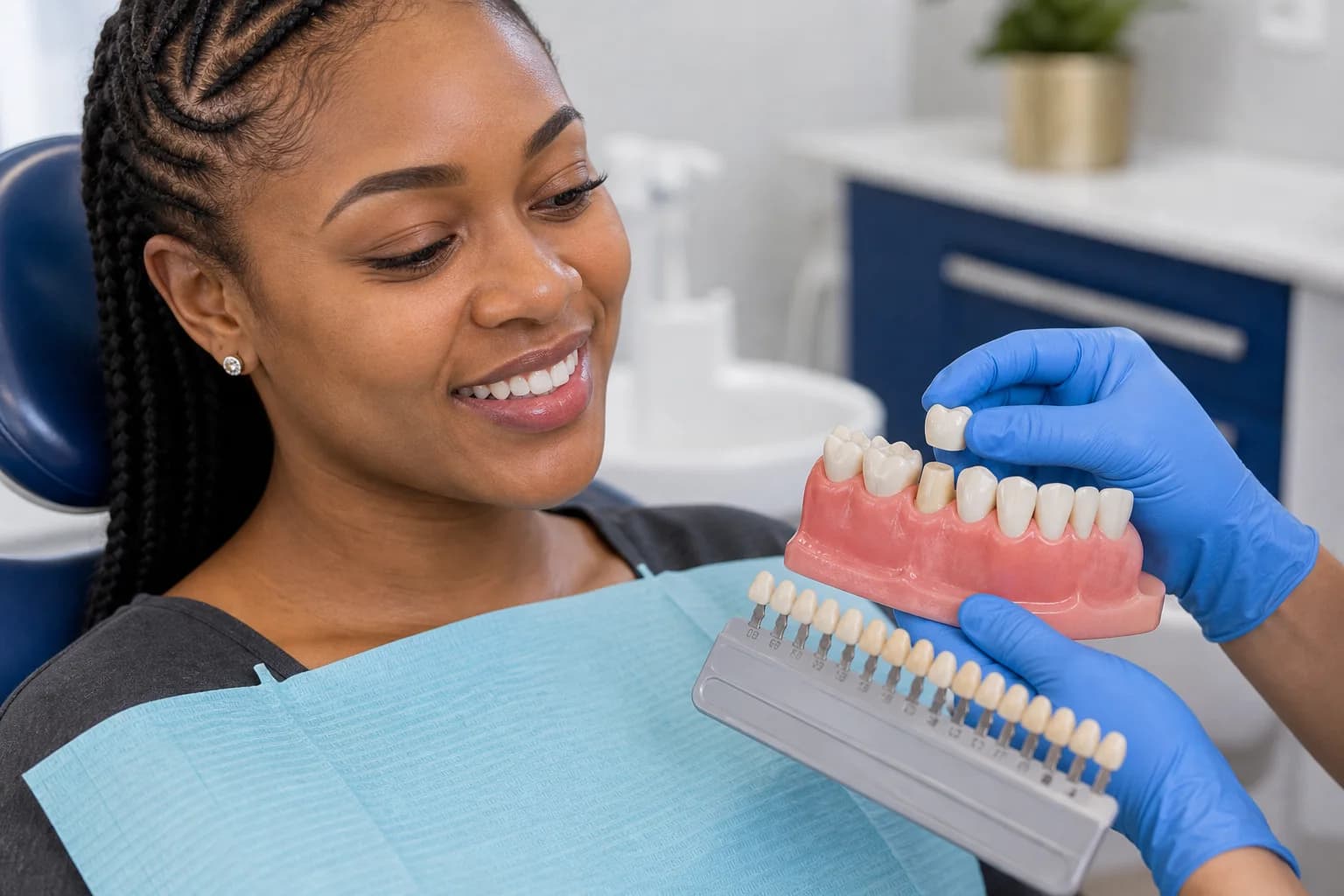
A conventional bridge often uses neighbouring teeth as supports and carries a replacement tooth over the gap. The underside of that replacement tooth and the gum nearby can collect plaque and food. Ordinary brushing of the visible front surface may miss this area entirely.
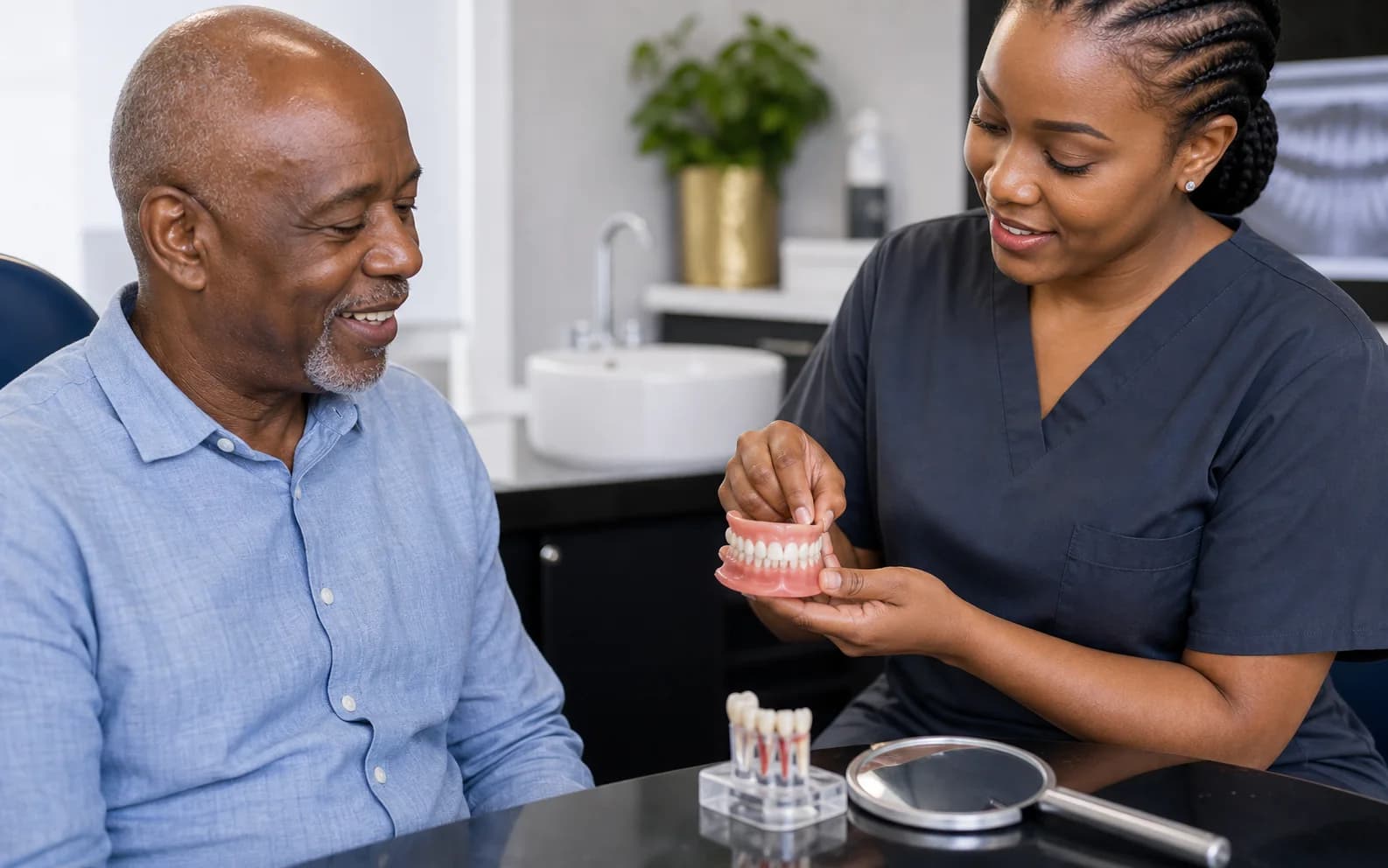
Designs differ, so ask the dentist to show you where cleaning is needed in your own mouth. A diagram or demonstration is more useful than assuming that a technique shown for another person’s bridge will fit yours. Implant-supported work also requires an individual maintenance discussion.
Use the right access tool rather than more force
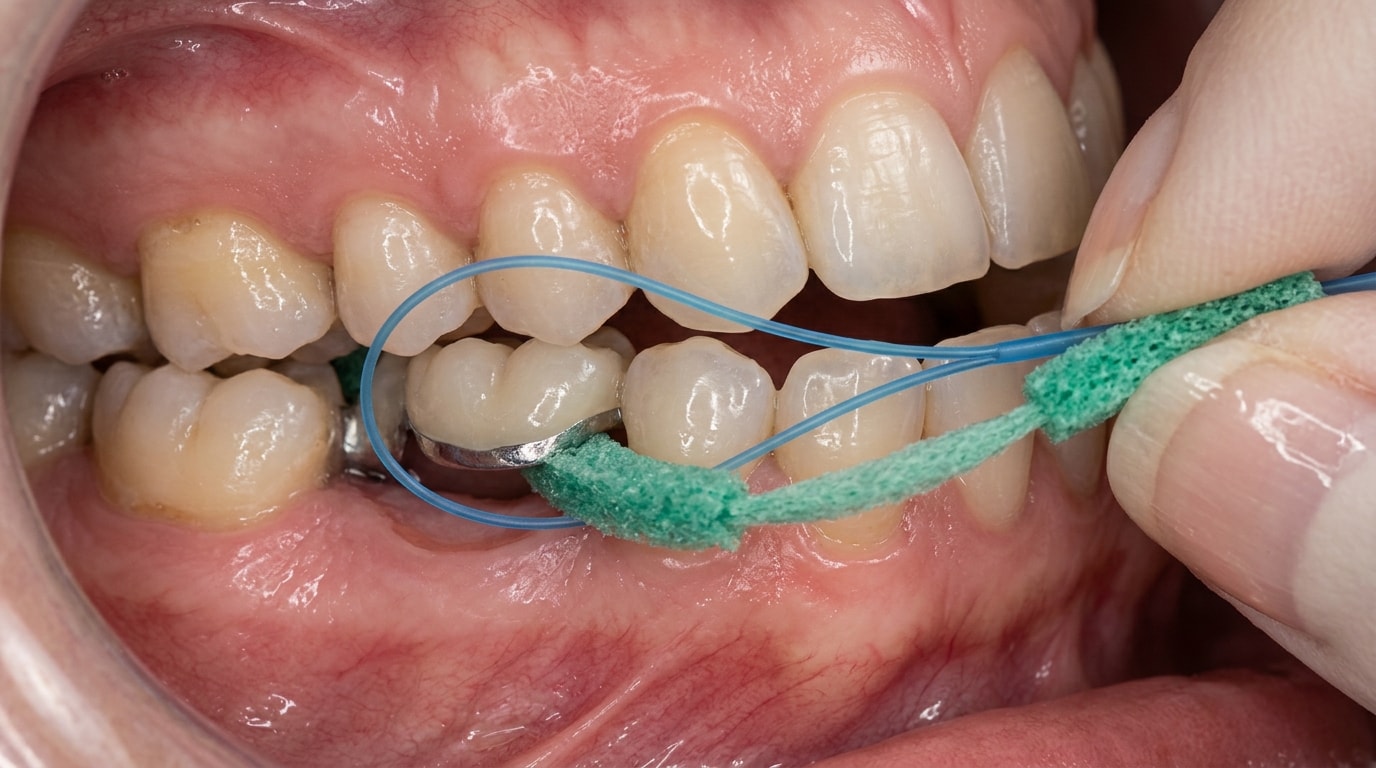
A floss threader can help guide suitable floss beneath a bridge when that method is appropriate. Interdental brushes may suit some spaces, but their size matters. A brush that is too large can be uncomfortable; one that is too small may not clean effectively. Ask for a demonstration and practise the movement.
Do not saw aggressively at the gum, force metal objects under the bridge or use a sharp toothpick to excavate food. If an area cannot be reached comfortably, tell the dental team. A cleaning challenge may call for a different tool, technique or assessment of the restoration.
Keep the supporting teeth in the prevention plan
The artificial replacement tooth cannot decay in the same way as a natural tooth, but the supporting teeth can still develop decay. Gum inflammation can also occur around the bridge. That is why maintenance is more than simply keeping the visible ceramic shiny.
Continue fluoride toothpaste and the cleaning routine recommended for the surrounding teeth. Ask where the restoration margins are and which areas tend to trap plaque. If dry mouth, limited dexterity or orthodontic appliances complicate cleaning, the routine may need adapting rather than becoming increasingly elaborate.
| Area | What to clarify at the visit |
|---|---|
| Under the replacement tooth | Which tool passes through safely |
| Around supporting teeth | How to clean the margins |
| Between nearby teeth | Appropriate interdental brush or floss technique |
| Areas that bleed or trap food | Whether inflammation or fit needs assessment |
When food trapping may indicate more than technique
Some food collection can occur even with a stable bridge, but a new or worsening pattern needs attention. Mention a changed bite, a rough edge, pain on chewing, recurring bad taste or a feeling that the bridge moves. These can have several causes and should not be diagnosed from smell or appearance alone.
A loose bridge needs prompt advice because the support or cement may be compromised. Do not pull it off, recement it with household products or continue chewing hard foods to test it. If it comes away, keep it safely and contact the practice for instructions.
What to do if the gums bleed during cleaning
Bleeding can reflect inflammation, an unsuitable tool or traumatic technique, among other causes. Avoid repeatedly injuring the same area, but do not abandon cleaning indefinitely. Arrange a review so the cause can be addressed and the technique checked.
If there is swelling, severe pain or a gum swelling that releases fluid, tell the practice when booking. Seek urgent help for spreading facial swelling or systemic illness, and emergency medical care for breathing or swallowing difficulty. A bridge does not prevent infection in the underlying or supporting structures.
5 points to check in your bridge-cleaning routine
Food collecting under a bridge can make you unsure whether you are cleaning badly or whether the bridge itself needs attention. The useful next step is to demonstrate what happens and how you currently clean. A dentist or hygienist can assess the bridge, the supporting teeth and the surrounding gums, then show an appropriate technique. Simply choosing a more forceful tool does not establish the cause and may make an already irritated area less comfortable.
A practical demonstration should end with you trying the method yourself. Watching someone thread a cleaning aid is different from managing the same angle in your own mouth at home. Ask for help with the area you cannot reach, and mention anything that repeatedly catches, shreds or feels painful. If the bridge is new, explain what has changed since it was fitted. If it is older, do not assume that a new gap or odour is an unavoidable part of ageing.
- Identify the troublesome part of the bridge. Explain whether food collects beneath the replacement tooth, near a supporting tooth or in a space beside the restoration.
- Show the products you already use. A photograph or the packaging can help the clinician assess whether the aid and size are appropriate for that location.
- Ask for a technique demonstration. Check the direction and amount of pressure, then practise with guidance rather than relying on a verbal description alone at home.
- Report changes in comfort or stability. Pain on biting, movement, swelling or persistent bleeding should be assessed instead of being treated as only a cleaning inconvenience.
- Agree when to review the area. If the new routine is difficult or symptoms continue, know when to return rather than repeatedly changing products without advice.
Make maintenance manageable over time
Ask the clinician to choose a small set of tools that you can use consistently. Have them watch you demonstrate the method so any difficulty can be corrected. Confirm how often the bridge and supporting teeth should be reviewed and whether professional cleaning is needed more frequently for your risk.
Can mouthwash replace cleaning under a bridge? No; it does not provide the same mechanical plaque removal. Is a water flosser always enough? Its role depends on the design and your needs, so ask for a personalised recommendation. Does persistent odour mean the bridge must be replaced? Not necessarily; the cause needs assessment.
Bring the cleaning products you currently use to a Smile On Dental appointment. The best outcome is a bridge that can be maintained comfortably, with any structural or gum problem identified rather than masked by stronger rinses.
The dental bridges guide explains the restoration itself, while oral hygiene and dental cleaning cover related maintenance support. If ongoing odour is part of the problem, bad breath treatment starts with assessment of the cause; stronger mouthwash should not be used to hide a bridge problem that needs attention.
- Avoid using sharp household objects to remove trapped food; they are not a substitute for an appropriately selected dental cleaning aid or an examination.
- Do not force floss or another aid through a point where it repeatedly catches; ask whether the technique or the restoration needs checking.
- Include the supporting teeth in the discussion, because cleaning the visible replacement tooth alone does not cover every part of bridge maintenance.
- Tell the team if limited hand movement or vision makes the suggested routine difficult so they can help you find a manageable approach.
Internal Links
Related dental care
Sources
Useful information

Written by
Dr. Kholofelo Machaba-SelatoleChief Dentist & Practice Director
Dr. Kholofelo Machaba-Selatole leads Smile On Dental & Aesthetic Studio with a warm, patient-focused approach to family, restorative, cosmetic, and orthodontic care.
View Profile