Quick Answer
Dentures are usually removed overnight unless your dentist has given specific instructions otherwise, such as during an initial period after treatment. Clean the denture and the mouth, then store the appliance according to its material and the clinician’s advice. Hot water, household bleach and unsuitable cleaners can damage some dentures. Persistent soreness or poor fit needs assessment.
- Confirm any exceptions for immediate or recently fitted dentures.
- Clean the mouth as well as the appliance.
- Storage and cleaners must suit the denture material.
Why an overnight break is commonly advised
A denture covers tissues that benefit from being cleaned and examined. Leaving it in continuously can make it harder to remove deposits and notice irritation. Overnight removal is commonly part of a routine that gives the supporting tissues a break and allows thorough appliance cleaning.
There can be individual exceptions, particularly after extractions when an immediate denture has been fitted. In that situation, follow the treating clinician’s instructions rather than removing it according to a general internet rule. Ask when the usual overnight routine should begin and what to do if reinsertion becomes difficult.
Clean over a protected surface
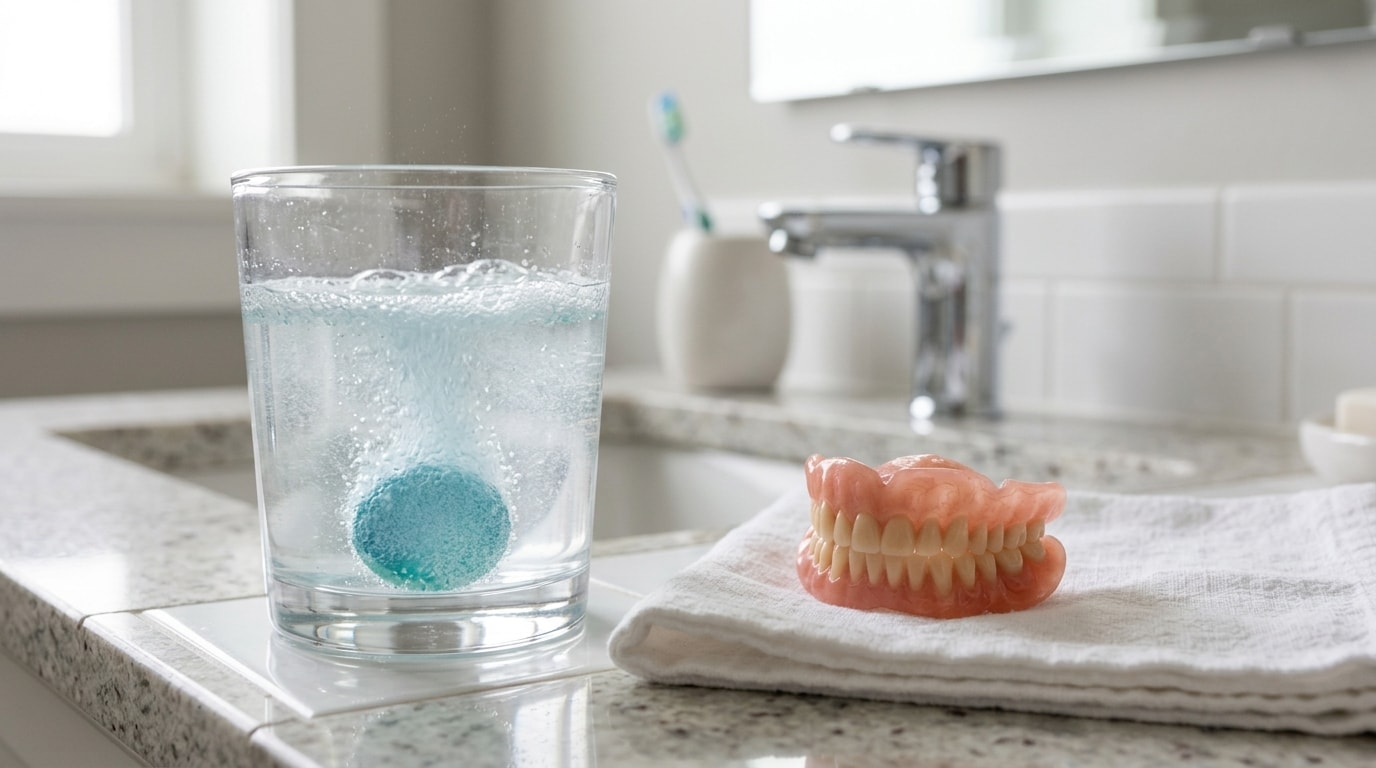
Dentures can break if dropped into a hard basin. Prepare a safe cleaning area, such as a basin containing water or a folded towel, and handle the appliance carefully. Use the brush and cleaner recommended for its material. A product suitable for one denture may be inappropriate for another.
Clean all surfaces, including the side against the gums, rather than only the visible teeth. Remove deposits gently and rinse as directed. Do not use boiling water to disinfect or reshape a denture. Heat can distort the fit, and an apparently small change can create pressure areas.
Match storage to the material
Ask whether your denture should be kept in water, a recommended solution or another specified condition overnight. Acrylic, metal-containing components and other materials can have different requirements. Follow the cleaner’s instructions for dilution, contact time and rinsing before the denture goes back into the mouth.
Do not assume that a stronger solution or a longer soak is safer. Some products can damage components or irritate tissues if residues remain. Keep cleaning tablets and solutions away from children and anyone who may mistake them for medicine or a drink.
| Routine step | Important check |
|---|---|
| Brushing | Use an appropriate brush and cleaner |
| Soaking | Confirm the product suits the material |
| Storage | Follow the denture-specific instructions |
| Rinsing | Remove cleaner residues as directed |
| Handling | Protect against dropping and heat damage |
The mouth still needs care without natural teeth
Gums, the tongue and other mouth tissues need gentle cleaning and regular examination. If natural teeth remain, brush them with fluoride toothpaste and clean between them as advised. A partial denture does not protect its supporting teeth from decay or gum problems.
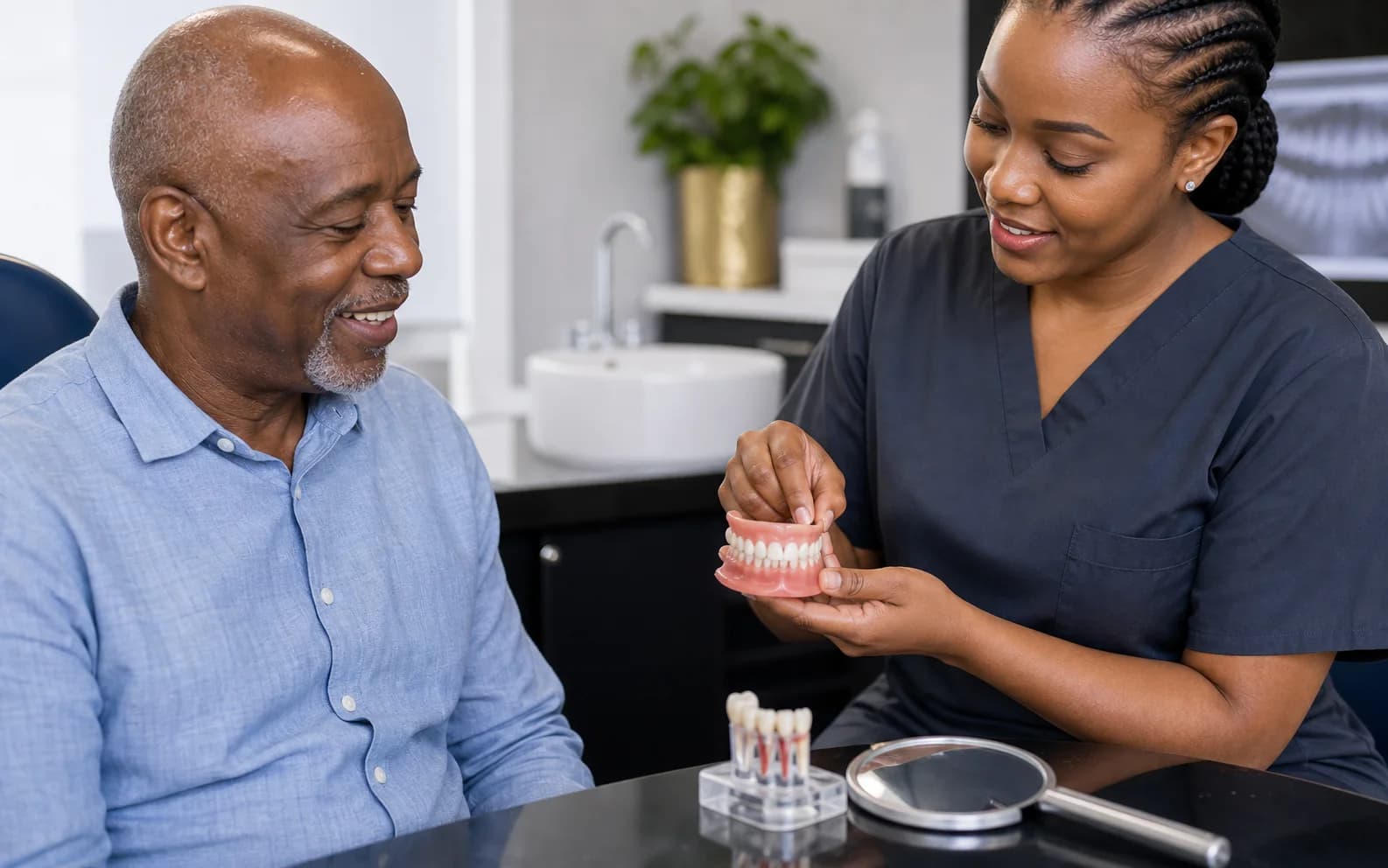
Tell the dentist about limited dexterity, poor eyesight or difficulty removing the appliance. The routine can often be adapted. A carer helping with denture care should understand how to remove, clean and store it safely without forcing clasps or components.
Soreness is a reason to review fit and tissue health
Redness, burning, ulcers or persistent sore spots should not simply be accepted as the price of wearing dentures. The cause may involve fit, hygiene, infection or another condition requiring examination. A lesion that does not heal needs professional assessment.
Do not grind down the denture, bend metal clasps or add an improvised liner to relieve discomfort. If the appliance suddenly becomes loose or painful, describe the change when booking. Ask the practice whether it should be worn before the appointment to help identify pressure areas, rather than enduring pain without guidance.
5 ways to make a denture-care routine easier to follow
A consistent routine is easier when the supplies and instructions are in one place. Denture wearers may receive advice when the appliance is fitted and then forget which cleaner, storage method or overnight arrangement applies to its materials. If you are uncertain, ask the dental team to go through the routine again. This is particularly important when you have a partial denture with metal components, a recently fitted appliance or specific instructions following dental treatment.
If you support a relative with denture care, involve them in the routine as much as possible. Ask which steps they can comfortably manage and where help is needed. A labelled container and written instructions can make care more consistent across family members or carers. However, practical organisation should not replace dental review when fit or comfort changes. Persistent sore areas, movement or difficulty eating deserve attention even when the denture looks clean and the daily routine has not changed.
- Confirm the instructions for your appliance. Ask which cleaning products and storage method are suitable, and keep any specific advice about recent treatment with the routine.
- Choose a predictable time for cleaning. Connect it with another daily habit so the task is less likely to be missed when the household is busy.
- Handle the denture over a protected surface. Arrange the cleaning area to reduce the chance of dropping it, particularly if grip or coordination is a concern.
- Include the rest of the mouth. Ask how to care for remaining teeth, gums and other oral tissues rather than treating the denture as the only item needing attention.
- Check comfort as well as cleanliness. Report ongoing irritation or a changing fit and take the appliance to reviews so the dentist can assess it properly.
Build a routine that can be repeated
Keep the storage container, brush and suitable cleaner together, and use a consistent sequence each evening. Label the container if needed and avoid leaving the denture wrapped in tissue, where it may be thrown away. During travel, take the proper container rather than improvising with hot water or an unsuitable disinfectant.
Can toothpaste be used on every denture? Some toothpastes are abrasive, so confirm the appropriate cleaner. Does soaking replace brushing? Deposits still need the cleaning method advised for the appliance. Should a full-denture wearer still see a dentist? Yes; the tissues, fit and function need review.
If your instructions are old or unclear, bring the denture and cleaner to the next appointment. A brief material-specific discussion can prevent damage and make overnight care more comfortable and reliable.
Our dentures service page explains assessment and ongoing care. If the appliance moves despite a consistent routine, adjustment, relining or replacement may need to be considered after examination. For people with remaining natural teeth, oral hygiene advice helps connect denture care with prevention for the rest of the mouth.
- Do not assume that a cleaning product suitable for natural teeth is appropriate for every denture material; follow the instructions given for your appliance.
- Keep the denture and cleaning products safely away from children and pets, particularly when the appliance is out of the mouth overnight.
- If instructions from packaging and your dental team seem inconsistent, ask for clarification rather than improvising with stronger solutions or longer soaking times.
- When someone else helps with care, make sure they know which denture belongs to you and how it should be handled and stored.
Internal Links
Related dental care
Sources
Useful information

Written by
Dr. Kholofelo Machaba-SelatoleChief Dentist & Practice Director
Dr. Kholofelo Machaba-Selatole leads Smile On Dental & Aesthetic Studio with a warm, patient-focused approach to family, restorative, cosmetic, and orthodontic care.
View Profile