
Quick Answer
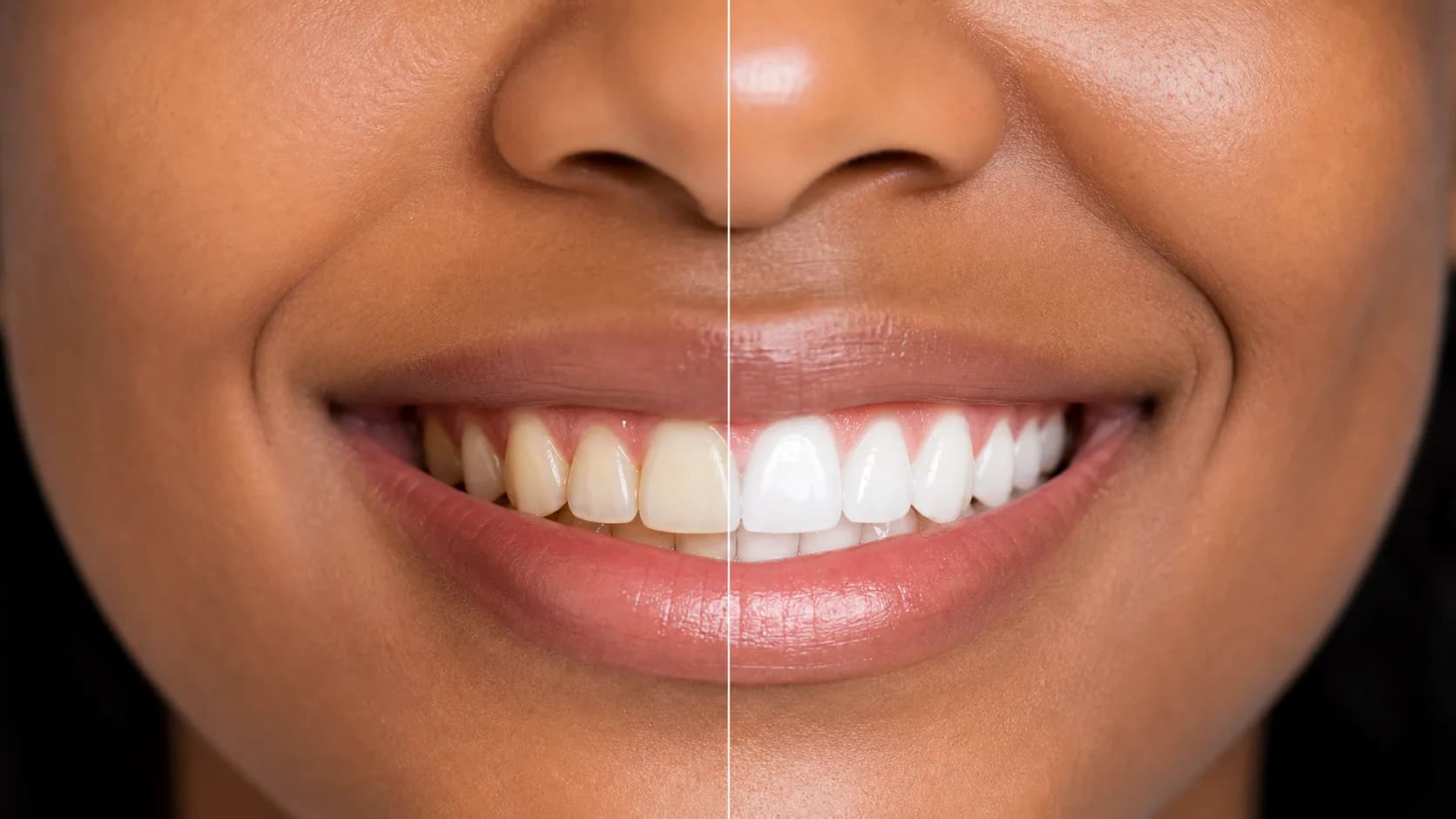
Uneven colour should be assessed before routine whitening. White patches, grey areas and one dark tooth can have different causes, including developmental changes, early decay, restorations or previous injury. Whitening may not address the cause and can leave contrast between areas. A dentist should identify what is happening and discuss whether observation, prevention or another treatment is more appropriate.
- A colour pattern is a clue, not a diagnosis.
- A history of injury matters even if the tooth is painless.
- Health and appearance may need separate treatment goals.
Describe the pattern and when it appeared
Tell the dentist whether the colour has always been present, appeared after braces, followed an injury or developed recently. Note whether one tooth or several teeth are involved. A gradual general change and a sudden single-tooth change need different lines of investigation.
Bring older photographs if they clearly show the teeth in ordinary lighting. They may help establish timing, but camera settings can alter colour. Do not rely on a filtered selfie to prove that a tooth has changed or to select a treatment target.
White patches are not all the same condition
White areas may reflect developmental differences or mineral changes in enamel, among other possibilities. Some need preventive attention, while others are mainly an appearance concern. The dentist assesses the surface and context to distinguish them. Colour alone cannot establish whether a lesion is active or stable.
Do not scrape, polish or acid-treat the patch at home. Attempts to make the surface uniform can damage enamel or delay appropriate care. If a mark appeared around a bracket during orthodontic treatment, mention the cleaning and dietary routine as well as the cosmetic concern.
A single dark tooth deserves its own assessment
One tooth may darken after an injury or previous treatment, but other causes are possible. The dentist may examine the tooth, test it and consider imaging where it answers a clinical question. Lack of pain does not rule out a problem within the tooth.
Tell the team about any old knock, even if it seemed minor at the time. Do not assume whitening all the teeth will make the single dark tooth match. A specific treatment may be discussed after diagnosis, and it may differ from ordinary external whitening.
| Pattern | History worth sharing |
|---|---|
| White patches present for years | Whether they were visible as teeth erupted |
| New chalky areas | Braces, cleaning difficulty or changing habits |
| One grey or dark tooth | Injury, root canal or other treatment |
| Dark margins near a restoration | Age of the restoration and any symptoms |
| General uneven shade | Previous whitening and product use |
Why whitening can leave an uneven result
Different areas can respond differently, and restorations do not whiten like natural teeth. A general course may lighten surrounding enamel without removing the original contrast. The outcome depends on the cause and the chosen method, so an assessment is more valuable than escalating to a stronger product.
Ask what whitening would change and what would remain. If another treatment is proposed, discuss whether it removes tooth structure, how long it may last and what maintenance it involves. A cosmetic improvement should be weighed against intervention, not presented as automatically necessary.
Put disease control before cosmetic blending
If the assessment identifies active decay, gum disease or an unhealthy restoration, that problem needs a plan. A surface that looks more uniform is not necessarily healthier. Conversely, a stable lesion can remain visible after its health risk has been addressed.
Ask the dentist to separate these goals clearly: what needs treatment for health, what can be monitored and what is optional for appearance. This makes consent and budgeting more meaningful and reduces the chance of agreeing to a broad cosmetic plan without understanding the reason for each step.
5 observations to bring to a colour-change assessment
A patient with small white patches may want the whole smile whitened so the marks blend in. Another may have one grey tooth and assume that stronger gel will make it match the others. These situations need individual assessment because a colour pattern does not reveal its cause on its own. The dentist should examine the teeth, ask about the history and explain whether further investigation or a different approach is appropriate before cosmetic treatment begins.
Older photographs can be helpful if they show when a change appeared, but they should not be treated as a precise shade measurement. Lighting, camera settings and filters can alter the appearance substantially. Tell the dentist what you have noticed in ordinary conditions and whether anything else changed at the same time. A lack of pain does not make the history irrelevant, and an appearance concern does not require you to decide on a cosmetic procedure before understanding the findings.
- Identify whether the colour is localised or general. Say if one tooth, several patches or the whole smile is involved, and point out the main concern.
- Describe when you first noticed it. Include whether the appearance has been stable for years or changed recently, without guessing at a cause you cannot confirm.
- Mention injuries and previous treatment. Even an old knock, orthodontic treatment or repair can be relevant to the assessment of a particular tooth or colour pattern.
- Explain previous whitening attempts. Name the products, how they were used and whether the patches or surrounding teeth changed differently during or after the course.
- Ask what the examination means for treatment. Clarify whether the priority is investigation, preventive care, monitoring or a cosmetic discussion after the teeth have been assessed.
Agree on the next decision rather than buying several products
Bring the names of whitening toothpastes, strips or gels already used. Explain any sensitivity or gum irritation. The clinician can then discuss whether to stop, wait, investigate further or plan a specific treatment. Avoid combining products while the diagnosis is uncertain.
Can all white spots be removed? No universal result can be promised. Does a grey tooth always need root canal treatment? No; it needs diagnosis. Can a photograph determine the right whitening method? It cannot replace examination of the tooth and supporting tissues.
A Smile On Dental assessment can clarify the cause and the available options. The useful starting point is understanding the colour pattern, not assuming every discolouration belongs in the same whitening programme.
A dental consultation is the starting point for investigating an unexplained change. Our article on white spots around braces addresses prevention during orthodontic care, while teeth whitening covers the broader cosmetic pathway. If an examination identifies a damaged tooth, broken tooth repair may be relevant to the treatment discussion rather than bleaching alone.
- Avoid adding extra gel to one dark tooth or repeatedly targeting a white patch without a diagnosis and a professionally agreed treatment plan.
- Tell the practice about pain, swelling, a broken tooth or a recent injury when booking, because those details can change the urgency of assessment.
- If marks developed around braces, bring that history into the discussion instead of assuming that they are ordinary stains that whitening will remove.
- Ask how the likely colour result will be evaluated and what limitations may remain, especially when neighbouring teeth or restorations have different starting shades.
Internal Links
Related dental care
Sources
Useful information
Written by
Dr. Kholofelo Machaba-SelatoleChief Dentist & Practice Director
Dr. Kholofelo Machaba-Selatole leads Smile On Dental & Aesthetic Studio with a warm, patient-focused approach to family, restorative, cosmetic, and orthodontic care.
View Profile