Quick Answer
Fissure sealants are thin protective coatings placed over suitable grooves on the chewing surfaces of teeth, usually back teeth. They create a barrier in areas that can be difficult to clean. A dentist checks the tooth and cavity risk before recommending them. Sealants need review and do not replace fluoride toothpaste or treat every type of decay.
- Deep grooves can be difficult to clean with a toothbrush.
- Sealants protect selected surfaces, not the whole mouth.
- A chipped or partly lost sealant may need repair.
Why back teeth are often the focus
Molars have ridges and grooves that help process food. Some grooves are narrow or deep enough to make cleaning difficult even when a child brushes regularly. Newly erupted permanent molars can also be easy to overlook because they appear behind the baby teeth rather than replacing a tooth at the front.
A sealant covers a suitable chewing surface so that food and plaque are less likely to collect inside vulnerable grooves. It does not coat every side of the tooth. Areas between teeth and near the gumline still need appropriate cleaning and ongoing assessment.
How suitability is assessed
The dentist examines the grooves and considers the child’s history of decay, brushing, diet and ability to keep the area clean. The tooth’s stage of eruption matters because the surface needs to be managed appropriately during placement. A tooth partly covered by gum may require a different approach or timing from one fully erupted.
Not every dark line is a cavity, and not every apparently clean groove is low risk. If decay is suspected, the dentist may need further assessment before deciding whether a preventive coating, monitoring or restorative treatment is suitable. Ask which tooth is being protected and what finding supports the recommendation.
What happens during placement
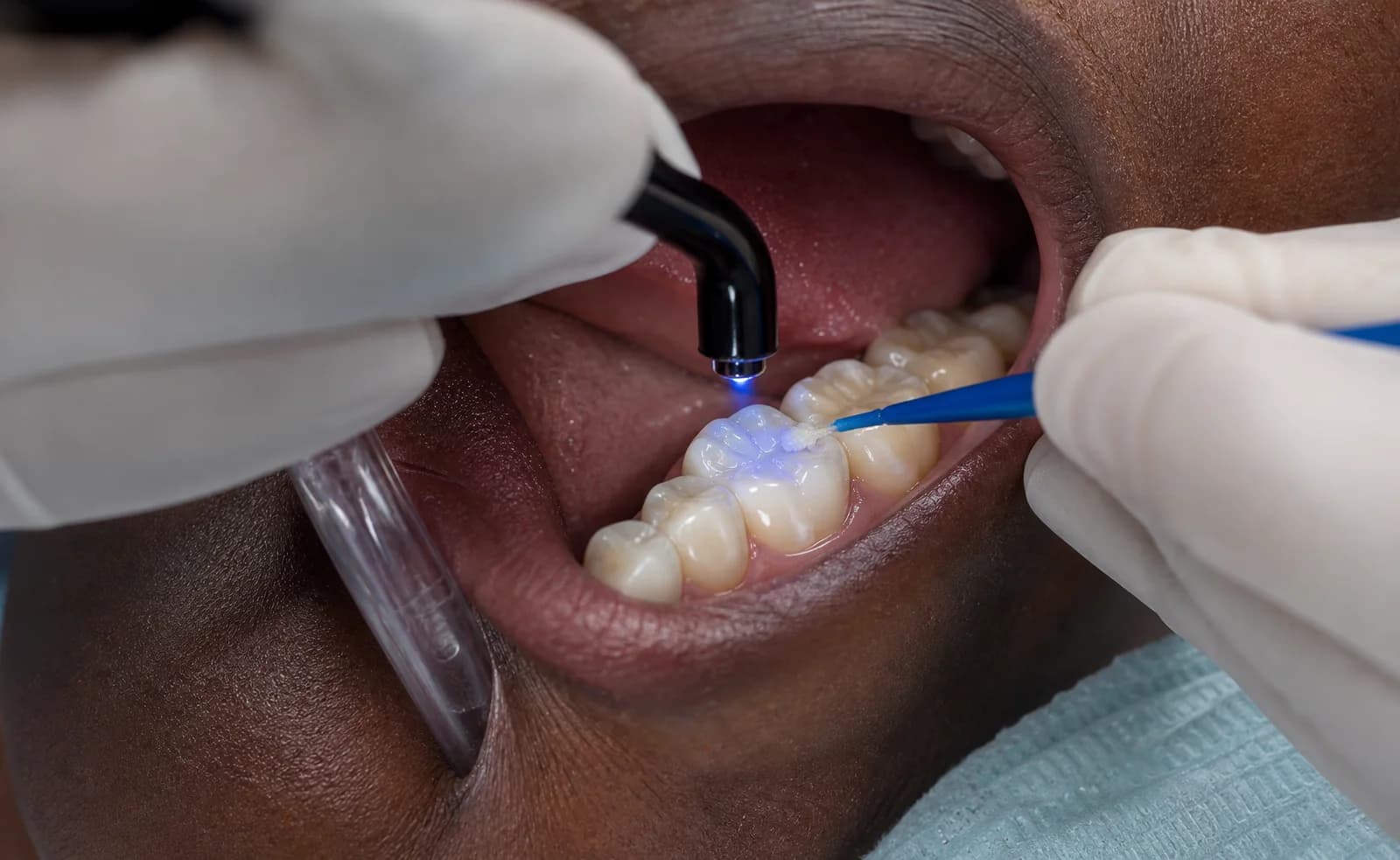
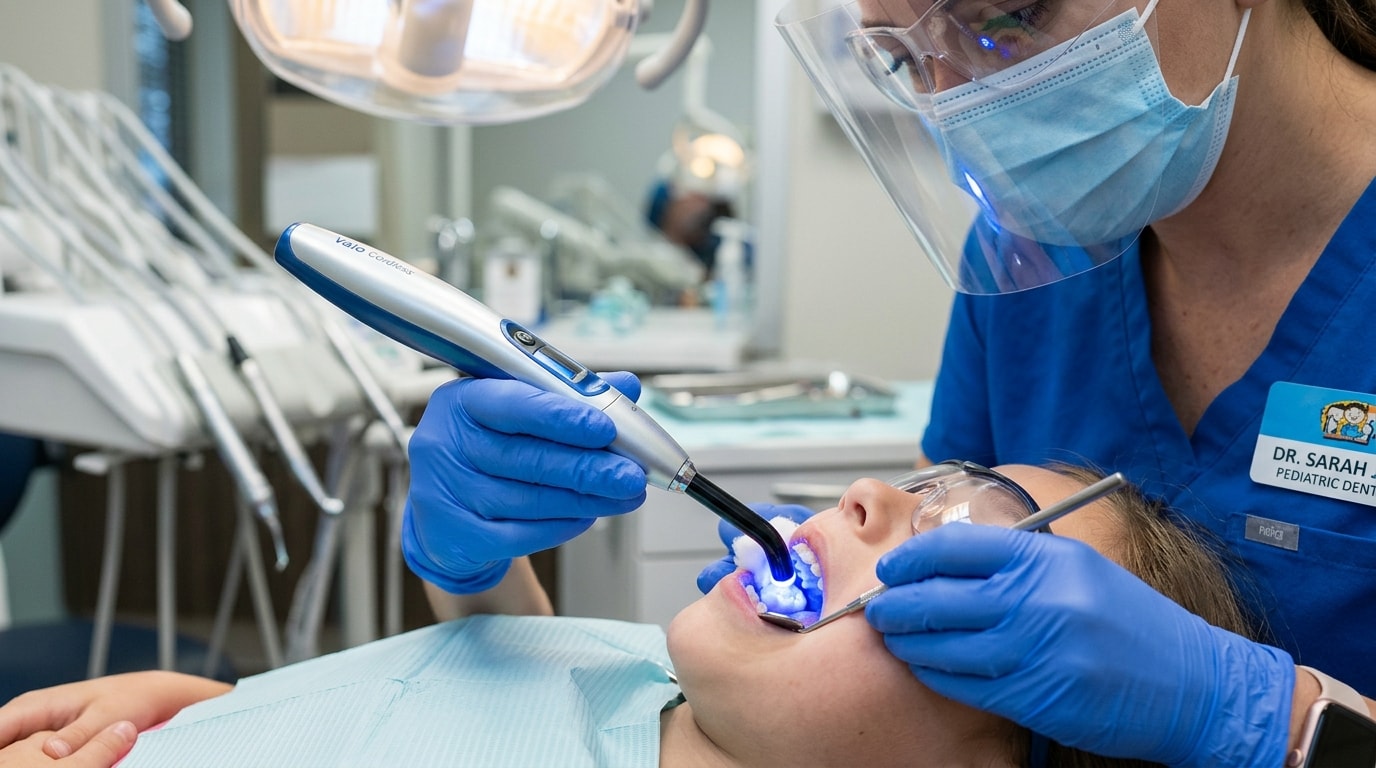
Placement commonly involves cleaning and preparing the tooth surface, keeping the area appropriately dry, applying the material and checking the result. Some materials use a curing light. The exact steps depend on the product and clinical situation. Ask the team to explain them in language your child can understand.
A preventive sealant usually involves less intervention than repairing an established cavity. However, do not promise a child that every dental procedure will be identical or completely sensation-free. Explain that the dentist will work on the back tooth and check how the teeth meet afterwards.
| Question | Why it matters |
|---|---|
| Which tooth needs protection? | Makes the recommendation specific |
| Is there already decay? | Distinguishes prevention from treatment |
| Is the tooth fully erupted? | Can influence timing and technique |
| How will the sealant be reviewed? | Checks retention and tooth health |
Sealants and fluoride protect in different ways
A sealant provides a physical barrier over a selected groove pattern. Fluoride toothpaste supports the tooth surface through regular daily use. A child may benefit from both because neither addresses every risk by itself. Professional fluoride may also be discussed where the overall risk justifies it.
Do not interpret a sealant as permission to relax brushing or increase sweet snacks. Its protection is limited to the area it covers, and even that protection depends on the material remaining intact. The rest of the tooth and mouth still experiences the effects of plaque and food or drink frequency.
What parents should watch for afterwards
Follow any specific aftercare from the practice. Once the child is home, mention a bite that feels persistently high, discomfort on chewing or a visible change in the coating. Do not try to file or smooth the material yourself. A brief adjustment may be needed, but discomfort can also have another cause that deserves checking.
Sealants can wear or become partly lost. A parent may not be able to judge their condition from a quick look, especially on back teeth. The dentist checks them at subsequent visits and decides whether they remain effective, need repair or require a different treatment.
5 points to clarify before a sealant appointment
A parent may hear that a newly erupted molar has deep grooves and wonder why it needs attention when it has never hurt. Another may assume every permanent tooth must receive the same coating immediately. A useful sealant discussion sits between those assumptions: the dentist identifies a particular surface, explains its risk and recommends an appropriate time to protect it.
The appointment should also fit the child’s ability to manage the procedure. Keeping a back tooth accessible can be more demanding for some children than others. Tell the team about gagging, previous distress or difficulty staying still, so the approach can be discussed in advance. Preparation is more helpful than promising an exact duration or saying that every child experiences the appointment in the same way.
- Identify the teeth being considered. Ask the dentist to show which grooves need protection and whether other molars are still erupting and will be reassessed later.
- Clarify whether the surface is healthy or has an early change. That distinction helps you understand whether the plan is prevention, monitoring or management of existing disease.
- Ask what the child will experience. A simple explanation of cleaning, preparation and checking the coating helps you prepare without making promises about sensations.
- Confirm the follow-up. Establish when the sealant will be inspected and whether you should call sooner for an uncomfortable bite or a change in the surface.
- Keep the home plan active. Agree who helps with brushing and how fluoride and food habits continue to protect the rest of the mouth after the coating is placed.
Planning the next prevention step
Ask when the next review should be and whether other teeth are still erupting. A child may not need every eligible surface treated on the same day. The plan should reflect the teeth present, risk and ability to cooperate, with a clear approach to future molars.
Are sealants only for children? Children and teenagers are common candidates, but selected adults may also benefit. Do sealants last forever? No; they require inspection and sometimes repair. Can you tell at home whether they are working? Appearance alone is not enough to assess the seal and underlying tooth.
If you are unsure whether a newly erupted back tooth needs protection, arrange a children’s dental assessment. Bring any previous dental records and ask how sealants fit alongside brushing support, fluoride and the child’s individual recall schedule.
The comparison of sealants and fillings explains why a preventive coating cannot replace every repair. Our article on sealant lifespan and maintenance describes later checks, while the fissure sealant treatment page outlines the service to discuss when booking an assessment for a child’s back teeth.
- Tooth identity: keep a record of the treated teeth, particularly when different molars are protected at different appointments.
- Cleaning access: ask how to brush a tooth that is still lower than its neighbours rather than assuming the sealant covers every vulnerable area.
- Comfort after placement: mention a persistent high feeling or difficulty chewing so the bite and tooth can be checked.
- Future eruption: ask which newly appearing teeth should prompt another assessment, instead of treating prevention as a one-time event.
Internal Links
Related dental care
Sources
Useful information

Written by
Dr. Kholofelo Machaba-SelatoleChief Dentist & Practice Director
Dr. Kholofelo Machaba-Selatole leads Smile On Dental & Aesthetic Studio with a warm, patient-focused approach to family, restorative, cosmetic, and orthodontic care.
View Profile