Quick Answer
A fissure sealant mainly protects a suitable groove from decay, while a filling restores tooth structure damaged by a cavity or another defect. Some early lesions may be managed preventively or with sealing and monitoring, but an established cavity can need repair. The decision depends on diagnosis, not simply choosing the cheaper or less invasive-sounding option.
- Prevention and restoring lost tooth structure are different jobs.
- A dark groove is not enough to diagnose a cavity at home.
- Both approaches still need follow-up and daily prevention.
Start with the condition of the tooth
A parent may hear two different recommendations for back teeth and wonder why one needs a sealant while another needs a filling. The answer is usually in the condition of the surface and the extent of disease. Teeth can look similar in a mirror while presenting quite different findings during examination.
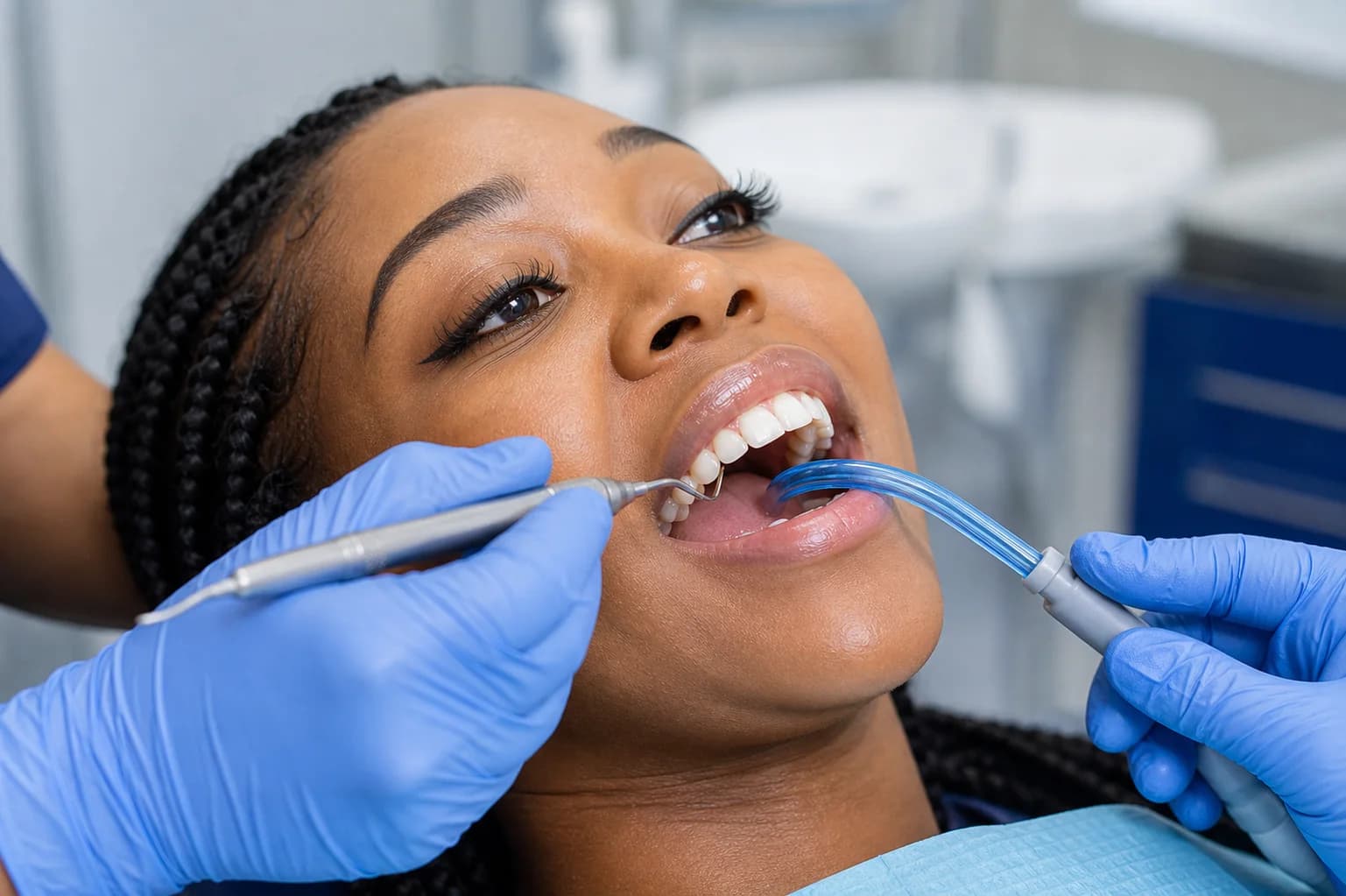
A sealant is commonly used to protect vulnerable pits and grooves. A filling is used when tooth structure needs restoration. The dentist should explain whether the target is a healthy high-risk groove, an early change, a physical cavity or an existing restoration that has failed. That diagnosis gives the recommendation its meaning.
What a sealant is designed to achieve
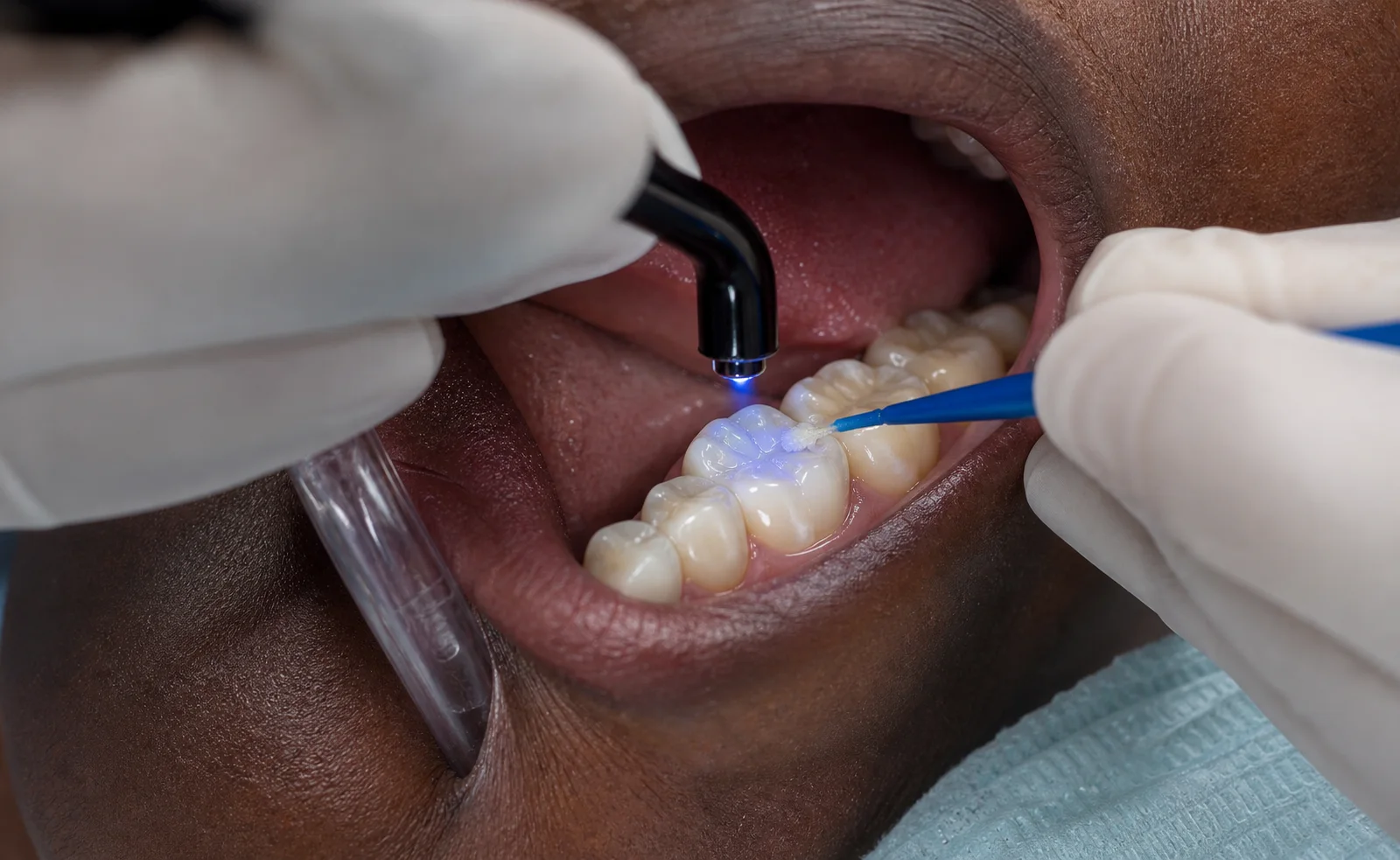
A sealant creates a barrier over a suitable chewing surface. The material helps keep plaque and food out of areas that are difficult to clean. It is not a general coating for every side of the tooth and does not remove the need to brush or manage sugar frequency.
Selected early lesions may be suitable for sealing under a defined monitoring plan. That does not mean all decay can safely be covered and ignored. Ask whether the dentist is preventing new decay or managing an existing early lesion, and how they will check that the plan is working.
What a filling is designed to achieve
When there is a hole or weakened structure requiring repair, a filling can restore the tooth’s shape and function. The approach depends on the size and location of the damage, the tooth’s remaining strength and the condition of its nerve. A deeper problem may require more than a straightforward filling.
A filling does not make the tooth immune to future decay. Its margins and neighbouring surfaces need cleaning and review. If the habits or health factors that caused the original problem continue, new damage can develop elsewhere or around the restoration.
| Feature | Sealant | Filling |
|---|---|---|
| Main purpose | Protect suitable grooves | Restore damaged or lost structure |
| Typical decision | Prevention or selected early-lesion management | Repair of a diagnosed defect |
| Follow-up | Check retention and surface health | Check restoration, tooth and symptoms |
| Home care | Still required | Still required |
Why price alone cannot select the treatment
It is reasonable to ask about fees and alternatives, but the least expensive label is not necessarily an appropriate treatment. A sealant cannot replace the structural work of a needed filling. Equally, a tooth suitable for prevention should not receive a filling merely because the patient assumes a larger procedure is more protective.
Ask the dentist to explain the smallest appropriate intervention, what monitoring would involve and the consequences of waiting. Fees should be confirmed for your case, including any examination or imaging needed. Avoid comparing quotes for procedures that address different diagnoses as if they were equivalent.
What symptoms add to the picture
Report pain with chewing, cold sensitivity that lingers, spontaneous pain, swelling or food repeatedly packing into the area. These details can influence what is investigated, but symptoms do not replace examination. A painless tooth may still need care, while sensitivity may have a cause other than decay.
If a sealant or filling has recently been placed and the bite feels wrong, contact the practice for advice. Do not assume that chewing pain must simply be endured until the tooth gets used to it. A high contact, a deeper tooth problem or another issue may need review.
5 questions to ask when the recommendation changes
Suppose a tooth was originally being considered for a sealant, but the dentist recommends a filling after examining it more closely. That change can sound alarming if you expected a purely preventive visit. Ask which new finding changed the decision. The explanation may concern the surface, the extent of damage or another feature that could not be established from a brief look beforehand.
The reverse conversation also matters. A patient expecting a filling may learn that an early area can be monitored with prevention. That is not necessarily a weaker plan, provided the dentist explains the diagnosis, the home-care requirements and the review. The right measure is whether the approach fits the tooth’s condition, rather than whether it sounds more substantial or involves more materials.
- Ask for the diagnosis in plain language. Distinguish a stained groove, an intact early lesion and a cavity with missing structure before comparing procedure names.
- Find out what supports that diagnosis. The dentist can explain the examination and any justified imaging without expecting you to interpret an image independently.
- Compare realistic alternatives. Ask whether monitoring is suitable, what would need to happen at home and what findings would make that option inappropriate.
- Check the proposed treatment’s limits. Understand which surface will be protected or repaired and whether symptoms suggest a deeper issue requiring further assessment.
- Agree on aftercare and review. Ask what should feel different, which problems should prompt a call and how the risk of new decay will be managed.
Questions before agreeing to the plan
Ask: Is there a physical cavity? How deep is the change? Is a preventive approach appropriate? What will be checked at review? If you are choosing between options, ask the dentist to describe the benefits and limitations of each in relation to this particular tooth.
Can a sealed tooth later need a filling? Yes, if decay or damage develops, or if the original situation changes. Can a filled tooth also need preventive care? Yes; the remaining tooth and neighbouring teeth still benefit from appropriate prevention. Does a sealant always mean the tooth was healthy? Not necessarily, because selected early lesions can sometimes be sealed as part of care.
Keep a record of which teeth were treated and follow the recommended review schedule. The useful distinction is not which material sounds more modern, but which treatment addresses the diagnosed problem while preserving as much healthy tooth as reasonably possible.
The dental fillings page explains restorative care, while the fissure sealants page describes preventive protection. For the longer-term picture, read how sealants are checked and repaired; understanding that maintenance helps make sense of follow-up advice after either type of appointment.
- Ask about purpose: protecting a groove and rebuilding a damaged tooth should not be presented as interchangeable purchases.
- Ask about timing: distinguish a planned prevention appointment from care that should happen sooner because symptoms or disease have changed.
- Ask about maintenance: both a coating and a restoration need checks, so include those visits when thinking about the overall plan.
- Ask about uncertainty: if further assessment is needed, establish how that information will influence the next decision rather than guessing at home.
Internal Links
Related dental care
Sources
Useful information

Written by
Dr. Kholofelo Machaba-SelatoleChief Dentist & Practice Director
Dr. Kholofelo Machaba-Selatole leads Smile On Dental & Aesthetic Studio with a warm, patient-focused approach to family, restorative, cosmetic, and orthodontic care.
View Profile