Quick Answer
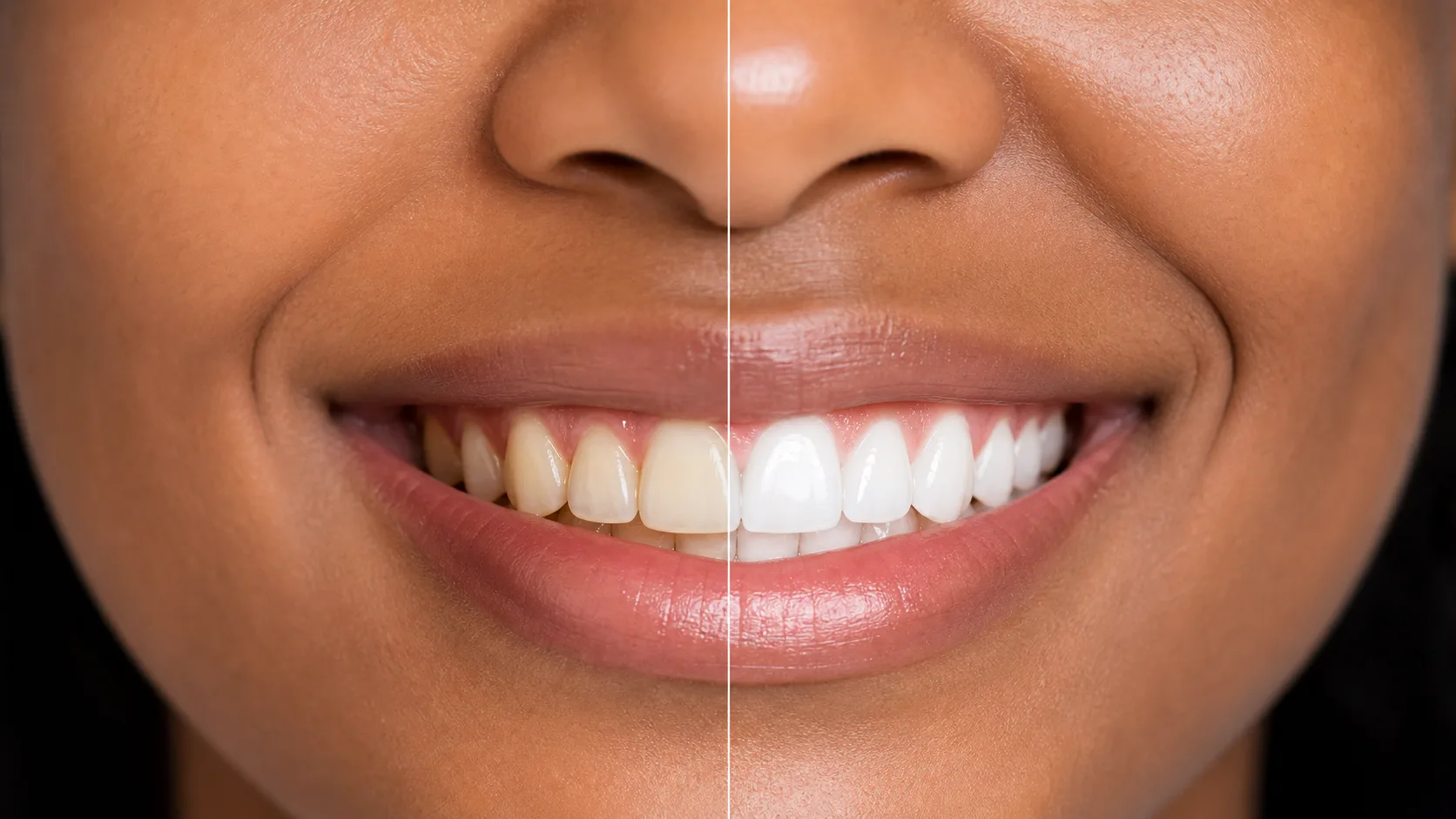
Whitening strips can lift minor surface stains on straight natural teeth, but they lack custom isolation—frequently causing chemical gum irritation, patchy results along the gumline, and sudden tooth sensitivity. Professional dental whitening uses custom-moulded barriers or high-potency supervised gels that protect gums, manage sensitivity in advance, and ensure tooth-coloured restorations match your final shade.
- Whitening strips use flat plastic films that cannot seal around crowded teeth, interdental nooks, or curved bite edges.
- Peroxide gels that leak onto gum tissue cause temporary chemical burns (blanching), redness, and localized stinging.
- Fillings, composite bonding, and ceramic crowns do not respond to whitening agents; bleaching surrounding enamel can make existing dental work look darker.
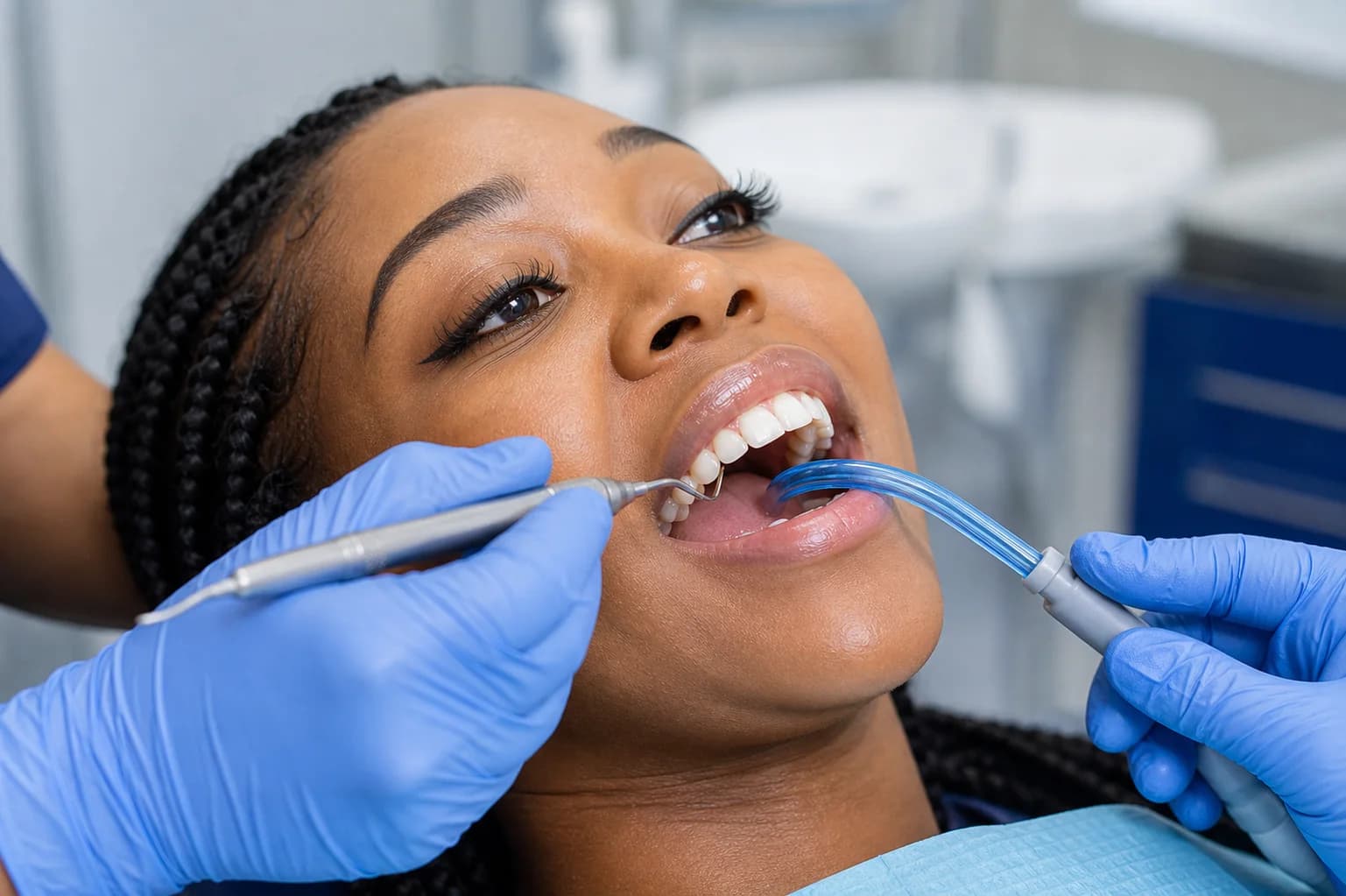
- Professional whitening starts with an oral health check to confirm whether sensitivity, recession, or undiagnosed cavities could cause severe pain during bleaching.
- Custom laboratory-fabricated whitening trays prevent saliva dilution and keep the active gel in steady contact with the tooth surface.
The Appeal and Everyday Frustrations of At-Home Whitening Strips
It is easy to understand why over-the-counter whitening strips are so widely purchased from pharmacies and online stores. They promise an affordable, low-barrier way to brighten your smile from home without booking a dental consultation. For someone with relatively straight teeth, healthy gums, and mild surface staining from rooibos tea, coffee, or red wine, a reputable box of strips may produce a subtle shade lift.
However, many patients visit our practice in Pretoria or Polokwane frustrated after attempting a full two-week course of store strips. Common complaints include strips slipping off whenever they speak or swallow, uneven yellow halos remaining near the gum margins, and sudden, sharp 'zingers' of sensitivity whenever they breathe in cold air.
The fundamental limitation is mechanical. Human teeth are not flat tiles; they are three-dimensional, curved structures with unique contours, contact points, and interproximal gaps. A flat strip made of flexible plastic cannot adapt to crowded teeth, rotated incisors, or deep biting surfaces without leaving significant untreated gaps or bunching up against delicate soft tissue.
- Flat plastic strips slide around as saliva pools in the lower mouth.
- Curved or overlapping teeth receive uneven peroxide exposure, leaving patchy edges.
- Saliva rapidly washes away non-viscous gels, diluting the active bleaching concentration.
- The rectangular shape forces peroxide directly against the delicate gumline.
The Chemistry: Why Gums Blanch and Teeth Experience 'Zingers'
Both whitening strips and professional dental treatments rely on peroxide-based active agents—primarily hydrogen peroxide or carbamide peroxide. These chemicals break down into oxygen free radicals that penetrate microscopic pores in the enamel prism layer, breaking the chemical bonds of chromogen molecules (stains) trapped deep in the underlying dentin layer.
The crucial difference lies in concentration, viscosity, and isolation. Over-the-counter strips are legally capped at low peroxide concentrations (typically 3% to 6% hydrogen peroxide equivalent) because there is no trained clinician present to protect your airway or soft tissues. Because the strip has no barrier seal, the active gel easily squeezes out onto your marginal gums, causing a phenomenon known as chemical blanching—where the gum tissue turns ghostly white and feels raw or inflamed for several days.
Furthermore, as peroxide penetrates the microscopic dentinal tubules leading toward the dental nerve, it can temporarily dehydrate the tooth pulp. Without a desensitizing protocol (such as clinical potassium nitrate or amorphous calcium phosphate application), this causes sudden, shooting nerve spasms commonly described as 'zingers.' In a dental chair, gums are meticulously shielded with a light-cured resin barrier, preventing soft-tissue contact entirely.
The Two-Tone Trap: Why Fillings, Bonding, and Crowns Stay Dark
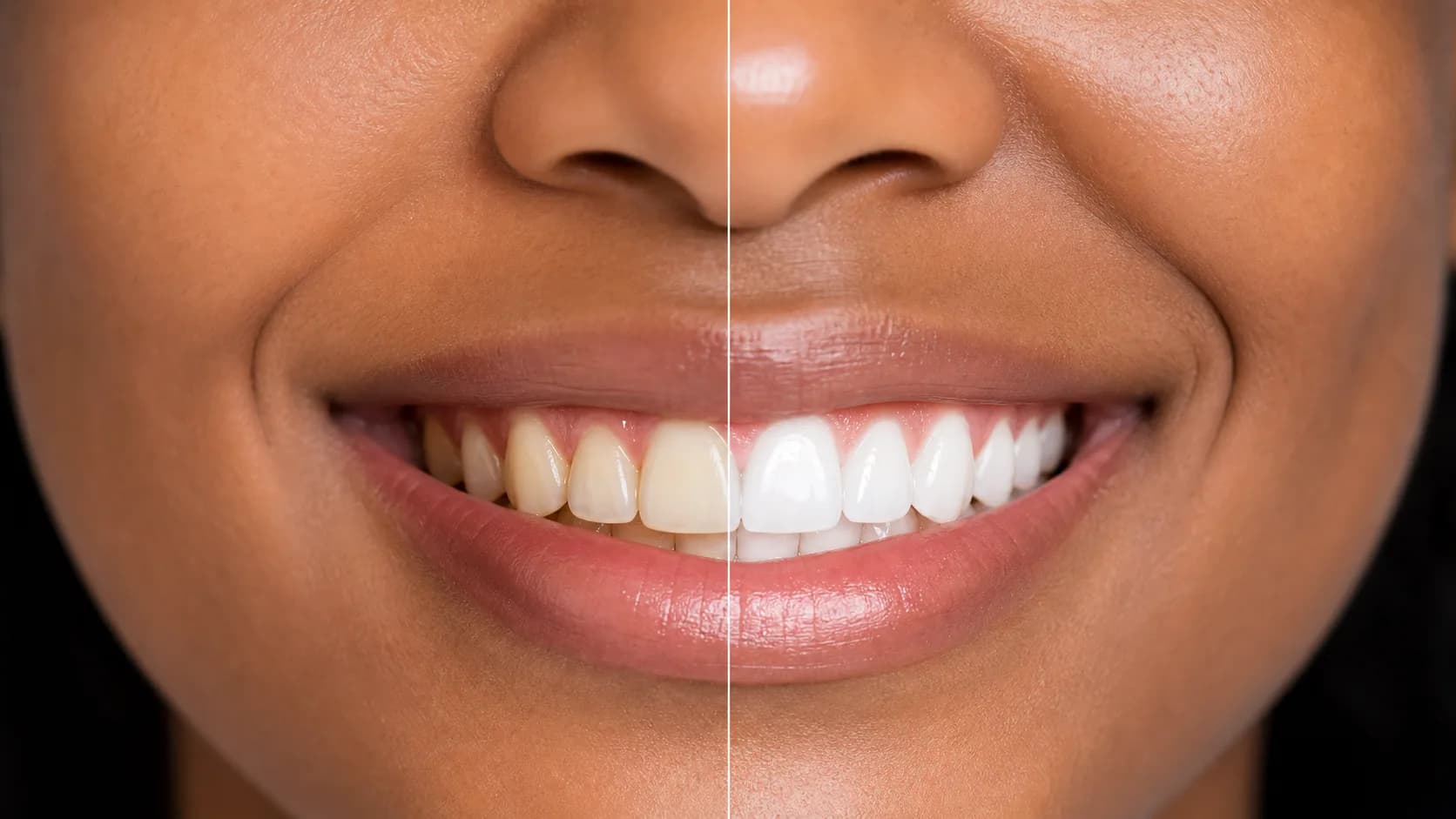
One of the most disappointing surprises for DIY whitening users is waking up to an uneven, mismatched smile. Many people forget that they have a small composite resin filling on a front tooth, cosmetic bonding to repair a chipped incisor, or a porcelain crown blended seamlessly to their original natural shade.
Peroxide bleaching agents only react with the organic crystalline structure of natural tooth enamel and dentin. They have zero chemical lightening effect on dental resin, glass ionomer, porcelain, or zirconia ceramics. When you apply whitening strips across your entire arch, your natural teeth brighten while your existing restorations remain exactly their old, darker shade.
This contrast can make previous dental work stand out conspicuously. A dentist plans your smile holistically: assessing existing restorations, calculating your potential natural shade improvement, and scheduling any necessary replacement of front fillings or bonding after your new tooth shade has stabilized.
- Step 1: Clinical assessment maps all existing restorations and natural enamel health.
- Step 2: Active decay, gum inflammation, and surface tartar are treated prior to whitening.
- Step 3: Professional bleaching brightens natural enamel to your target shade.
- Step 4: Tooth shade stabilizes over 10 to 14 days following treatment.
- Step 5: Visible front composite fillings or bonding are color-matched and replaced to achieve a uniform smile.
Comparison: Store Whitening Strips vs Professional Dental Whitening
When deciding between purchasing over-the-counter whitening kits and booking a professional dental procedure, comparing clinical capabilities, safety controls, and longevity provides realistic clarity.
| Feature | Store Whitening Strips | Professional Dentist Whitening |
|---|---|---|
| Active Bleaching Strength | 3% to 6% hydrogen peroxide (limited for safety) | 15% to 35% clinical carbamide or hydrogen peroxide |
| Gum Protection | None; flat plastic rests directly against gums | Light-cured liquid dam or custom scalloped trays isolate gums |
| Application Fit | Generic rectangular strips that fold or slide | Custom laboratory-thermoformed trays moulded to your exact teeth |
| Treatment Time | 14 to 30 consecutive days of daily wear | Single 60-minute in-chair visit or 7-10 day custom home kit |
| Sensitivity Prevention | Uncontrolled; depends on patient tolerance | Pre-treatment desensitizers, neutral pH gels, and fluoride protocols |
| Shade Predictability | 1 to 2 shades; high risk of patchy margins | Up to 5 to 8 shades lighter with uniform arch coverage |
| Pre-Treatment Oral Check | None; risks bleaching over active cavities or tartar | Full dental examination, tartar scale, and soft tissue check included |
What Makes a Dental Consultation Essential Before Bleaching
Applying bleaching agents to an unhealthy mouth is one of the quickest ways to trigger acute dental pain. If you have an undetected cavity, an exposed tooth root from gum recession, or cracked enamel, the peroxide gel can penetrate directly into the pulp chamber, causing severe, throbbing pulpitis that may require urgent root canal therapy.
Additionally, if your teeth have hard calculus (tartar) deposits along the gumline, whitening products cannot penetrate through the calcified mineral layer. The gel only bleaches the clean areas above the tartar, leaving pronounced yellow banding across your teeth once a dental hygienist eventually removes the build-up.
During a professional teeth whitening consultation at Smile On Dental, Dr. Kholofelo Machaba Selatole first verifies that your enamel is intact, your gums are healthy, and your teeth are free of calculus. We discuss your lifestyle habits, sensitivity history, and aesthetic goals to recommend either our in-chair power whitening or a precision custom-take-home system.
- Screening for microscopic enamel cracks, cavities, and defective margins.
- Measuring existing gum recession to shield exposed sensitive dentin.
- Professional ultrasonic scaling and polishing to remove surface plaque and extrinsic stains first.
- Personalized shade matching using clinical photographic standards.
How to Choose the Right Whitening Path for Your Smile
If you are on a strict budget, have completely straight teeth with no existing restorations, healthy gums, and only minor lifestyle staining, careful use of approved store strips may provide a modest boost. However, you should strictly avoid unregistered internet bleaching pens, abrasive charcoal powders that scrub away your protective enamel, or unregulated high-percentage gels from beauty salons without clinical dental oversight.
If you desire a noticeable, predictable transformation—or if you have crowded teeth, sensitive enamel, existing crowns or fillings, or stubborn intrinsic discoloration—professional dental whitening remains the gold standard in both patient safety and aesthetic outcome.
A bright, healthy smile starts with healthy fundamentals. Booking an oral hygiene cleaning and cosmetic evaluation ensures your whitening journey is comfortable, safe for your enamel, and tailored to give you lasting confidence.
Internal Links
Related dental care
Sources
Useful information
Written by
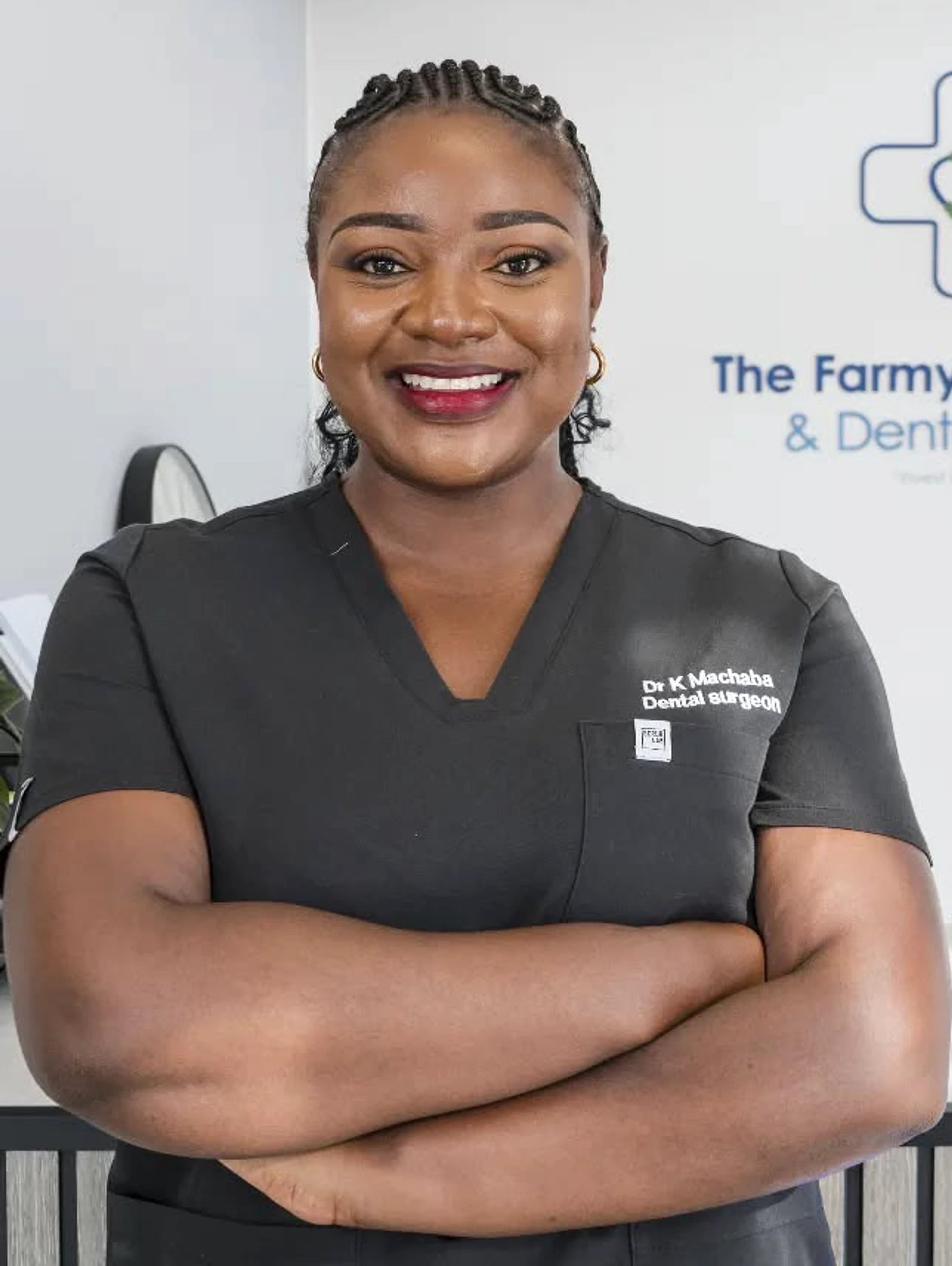
Dr. Kholofelo Machaba-SelatoleChief Dentist & Practice Director
Dr. Kholofelo Machaba-Selatole leads Smile On Dental & Aesthetic Studio with a warm, patient-focused approach to family, restorative, cosmetic, and orthodontic care.
View Profile