Quick Answer
Fissure sealants can protect suitable grooves for years, but their condition varies and they are not permanent without review. A dentist checks whether the coating remains intact and whether the tooth is healthy. A partially lost or worn sealant may need repair, replacement or a different treatment if decay is present. You cannot judge its effectiveness reliably from appearance alone at home.
- The condition of the seal matters more than a fixed expiry date.
- Repair can be appropriate before a whole sealant is lost.
- Brushing and dental reviews remain necessary.
Why there is no single expiry date
The lifespan of a sealant depends on the tooth, material, placement conditions and wear. A coating that remains intact in one child may need attention sooner in another. A fixed number of years is therefore a rough expectation at best, not a reason to skip inspection until that anniversary.
The useful question at a check-up is whether the sealant is still protecting the intended grooves and whether the tooth beneath and around it is healthy. That assessment is more meaningful than counting time from the original appointment.
What the dentist looks for
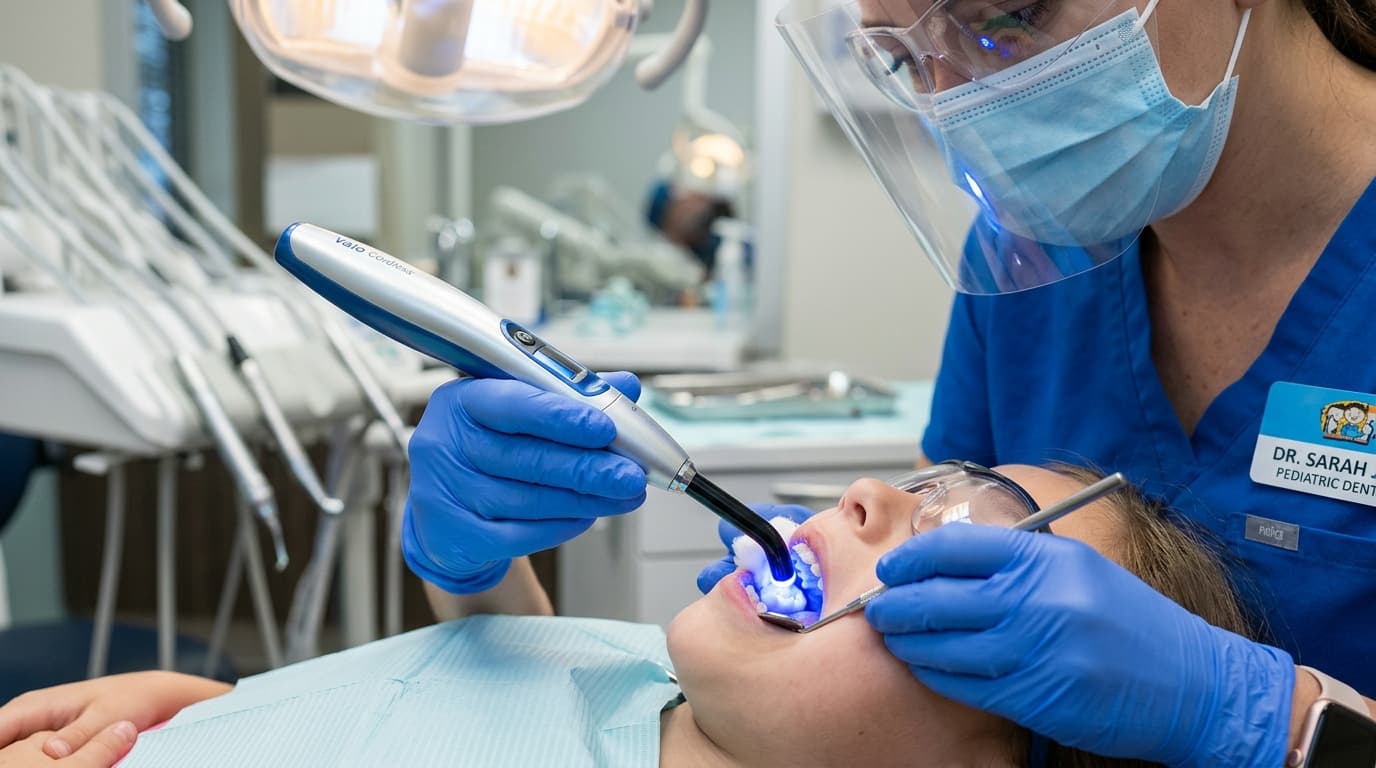
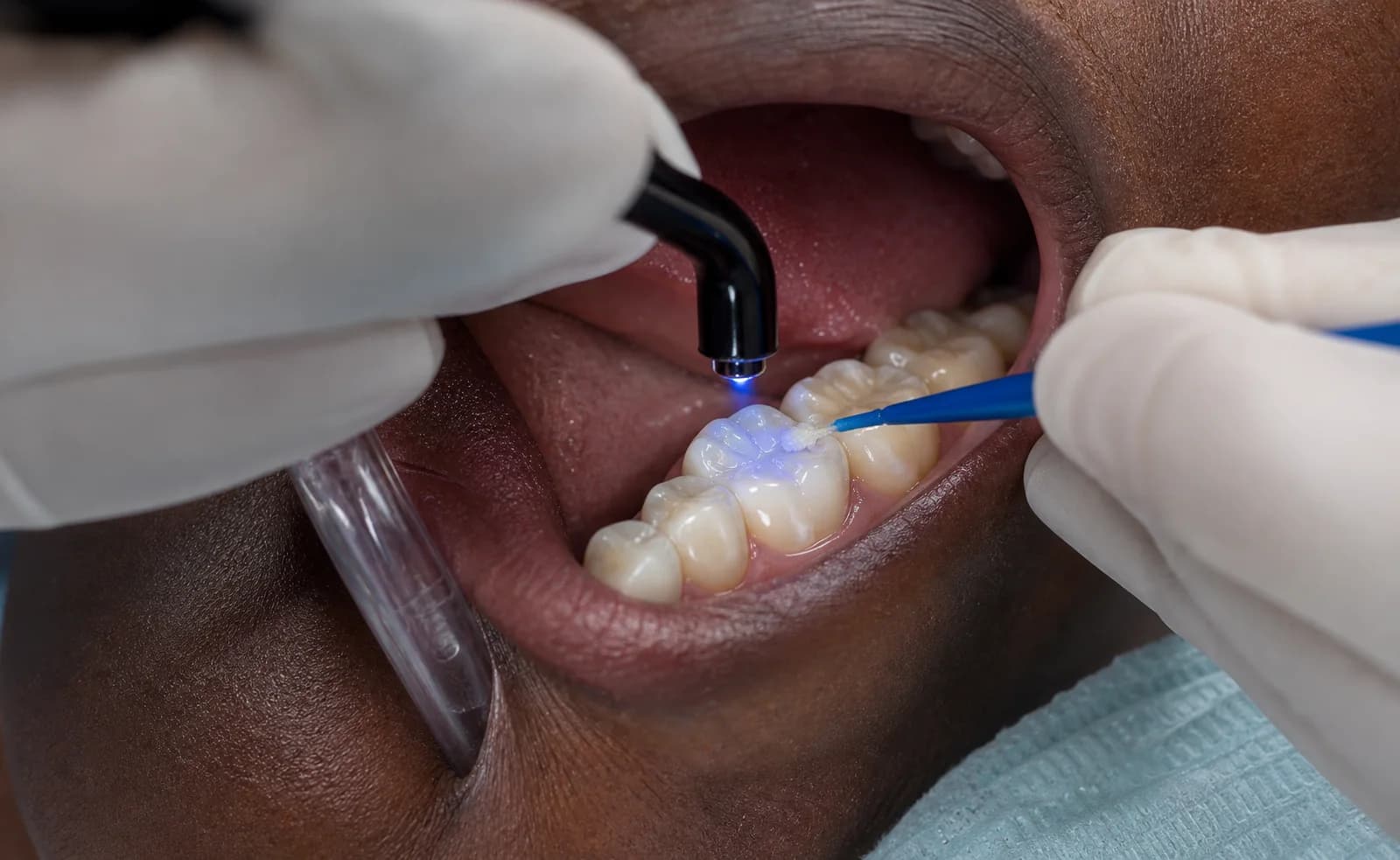
The clinician checks the coverage, retention and condition of the coating, along with any signs of decay or changes in the tooth. A sealant can be partly lost in a way that is difficult for a parent to see, especially on a back tooth. The surface may also collect stain without necessarily having a cavity.
Ask the dentist to explain whether the finding is harmless appearance, loss of protection or disease requiring treatment. Do not scrape at a dark line or try to peel the coating to see underneath. Home inspection cannot replace a clinical assessment.
Repair and replacement are not always the same decision
If a small area has lost coverage and the tooth remains suitable, adding or repairing sealant may be considered. More extensive loss or another problem may call for a different approach. The dentist should explain the condition being addressed and why the proposed option is appropriate.
If decay has developed, simply covering the area again may not be sufficient. Early lesions and physical cavities require different decisions. Ask whether the plan is preventive resealing, monitoring or restoring damaged tooth structure.
| Finding | Possible discussion |
|---|---|
| Intact coating and healthy tooth | Continue review and prevention |
| Partial loss of coverage | Whether repair is appropriate |
| Extensive wear or loss | Reassess the surface and protection needed |
| Suspected decay | Diagnose before choosing a new coating |
| Persistent bite discomfort | Check the tooth and contact rather than waiting |
What parents can notice between visits
Mention a new rough area, discomfort on chewing, sensitivity or a visible change after treatment. These symptoms do not prove a sealant has failed, but they are useful reasons to contact the practice. A tooth that suddenly hurts deserves assessment regardless of when the sealant was placed.
If a child reports that the bite feels high after placement, ask for advice rather than assuming it must wear down naturally. Do not file the material at home. A simple issue and a deeper tooth problem can both present as discomfort, so the cause matters.
Keep the prevention routine in place
A sealant mainly protects the surface it covers. It does not prevent every cavity between teeth or near the gumline. Continue age-appropriate fluoride brushing, adult help where needed and the dietary pattern discussed with the dentist.
Additional permanent molars may erupt after the first sealants are placed. Ask whether newly erupted teeth need assessment for protection, rather than assuming a completed course means no further sealant discussion is necessary. Risk and the set of teeth present change as a child grows.
5 questions to ask when a sealant is being reviewed
A sealant may have been placed so long ago that neither you nor your child remembers which teeth were treated. That is a good reason to ask at the next review, rather than trying to judge coverage from photographs. The dentist can examine the sealed surfaces and explain whether they remain satisfactory or need attention. The decision is based on the tooth and the material's condition, not simply on how many birthdays have passed since placement.
It is also useful to understand what a recommendation for repair means. A small area of lost sealant and a tooth with decay are not automatically managed in the same way. Ask the dentist to explain the finding and the purpose of the proposed treatment. This helps you keep prevention in perspective: a sealant is one part of protecting a tooth, while brushing, fluoride use, food habits and appropriate reviews remain relevant whether the material looks intact or has needed maintenance.
- Confirm which teeth have sealants. Ask the practice to identify them and note any newly erupted teeth that may need their own preventive assessment at review.
- Ask what the examination shows. Understand whether the material is intact, partly missing or associated with another concern rather than interpreting every change as the same problem.
- Clarify the proposed response. If repair, replacement or monitoring is advised, ask what that option is intended to achieve for the particular tooth being assessed.
- Discuss symptoms separately. Pain, sensitivity or food trapping should be described clearly instead of being assumed to result only from a worn or missing sealant.
- Confirm the ongoing prevention plan. Ask how home care and review timing fit the child's current risk, especially if new cavities have developed elsewhere in the mouth.
Questions at the next check-up
Which sealants remain intact? Does any area need repair? Is there evidence of decay or only stain? Are new back teeth ready for assessment? How often should this child’s teeth be reviewed? A clear record helps parents understand ongoing care without treating every maintenance recommendation as a new diagnosis.
Do sealants guarantee no cavities? No. Does a missing piece always mean a filling is needed? Not necessarily; the tooth’s condition determines the plan. Can a parent check retention by feeling with a sharp object? That should not be attempted.
A review at Smile On Dental can establish whether the sealants are still doing their intended job and how they fit with the child’s current prevention needs. Maintenance is part of keeping the original protection useful, not proof that prevention was pointless.
Fissure sealants on back teeth explains their preventive role, and sealants versus fillings distinguishes protection from repair. Our fissure sealants service page provides the broader care pathway. If a child continues to develop decay, the recurring-cavities prevention guide helps you discuss the overall routine rather than focusing only on one sealed tooth.
- Do not attempt to pick at a sealed surface to check whether the material is secure; the dentist can assess it without home testing.
- Mention treatment completed at another practice and bring records if available, while recognising that a current examination is still needed to assess the tooth.
- Avoid assuming that a sealant's presence means a tooth cannot develop decay or that it no longer needs thorough brushing and routine review.
- If a dentist recommends a filling, ask how the finding differs from a simple sealant repair so you understand the treatment rather than only its name.
Internal Links
Related dental care
Sources
Useful information

Written by
Dr. Kholofelo Machaba-SelatoleChief Dentist & Practice Director
Dr. Kholofelo Machaba-Selatole leads Smile On Dental & Aesthetic Studio with a warm, patient-focused approach to family, restorative, cosmetic, and orthodontic care.
View Profile