
Quick Answer
A visible hole is not required for severe toothache. Decay may be between teeth or under a filling, a crack may be difficult to see, the tissue inside a tooth may be inflamed, or pain may come from the gums, bite, jaw, or another nearby structure. The dentist may inspect the tooth, test temperature and biting response, check the gums and restorations, and use an X-ray where appropriate. Seek urgent dental care for severe uncontrolled pain, swelling, fever, pus or a bad taste, or difficulty opening your mouth; breathing or swallowing difficulty needs emergency medical help.
- The outer surface of a painful tooth may look normal while disease or damage is hidden.
- Pain location is not always reliable, so the dentist compares neighbouring teeth and surrounding tissues.
- Clinical tests and imaging answer different parts of the diagnosis.
- Do not wait for a visible cavity when pain is severe or worsening.
Why a painful tooth can look normal
Tooth enamel can hide what is happening between teeth, below a restoration, or inside the tooth. A cavity may begin where you cannot see it in a mirror. A filling can also cover part of the tooth while decay or a crack develops at an edge or underneath.
Cracks can be fine, incomplete, or positioned so that they only move under biting pressure. The tooth may appear intact at rest. Inflammation inside the tooth can also become painful before there is an obvious external change.
This is why severe pain should be assessed as a symptom rather than judged by appearance. A photograph can document swelling or a broken area, but it cannot test the tooth or show the full root and surrounding bone.
The pain pattern helps narrow the possibilities
Tell the dentist whether pain starts on its own or follows cold, heat, sweets, or biting. Note whether it disappears immediately or lingers, whether it wakes you, and whether you can identify one tooth. These details help determine which tests are most useful.
Pain on biting can direct attention to a crack, a high restoration, inflammation around the root, or the supporting tissues. Lingering temperature pain may point the dentist toward the tissue inside the tooth. Gum tenderness, bleeding, or food trapping can suggest a different path.
Jaw muscles, sinuses, and nearby teeth can refer pain. The dentist may compare several teeth and ask about congestion, grinding, recent dental treatment, or jaw tension. The purpose is not to guess from one symptom but to find a pattern that matches the examination.
| Symptom detail | What it helps the dentist investigate |
|---|---|
| Pain with cold or heat | The tooth's response and how long sensitivity lasts. |
| Pain on biting | Cracks, bite pressure, restorations, and tissues around the root. |
| Spontaneous throbbing | Inflammation, infection, and urgency. |
| Gum swelling or bad taste | A possible abscess, drainage point, or gum infection. |
| Pain across several teeth | Referred pain, grinding, sinus pressure, or a hard-to-locate tooth. |
What happens during the diagnostic examination
The dentist may look for decay, cracks, wear, loose restorations, gum pockets, swelling, or a change in colour. Gentle tapping, biting tests, temperature testing, and comparison with neighbouring teeth can provide information about how the tooth and surrounding tissues respond.
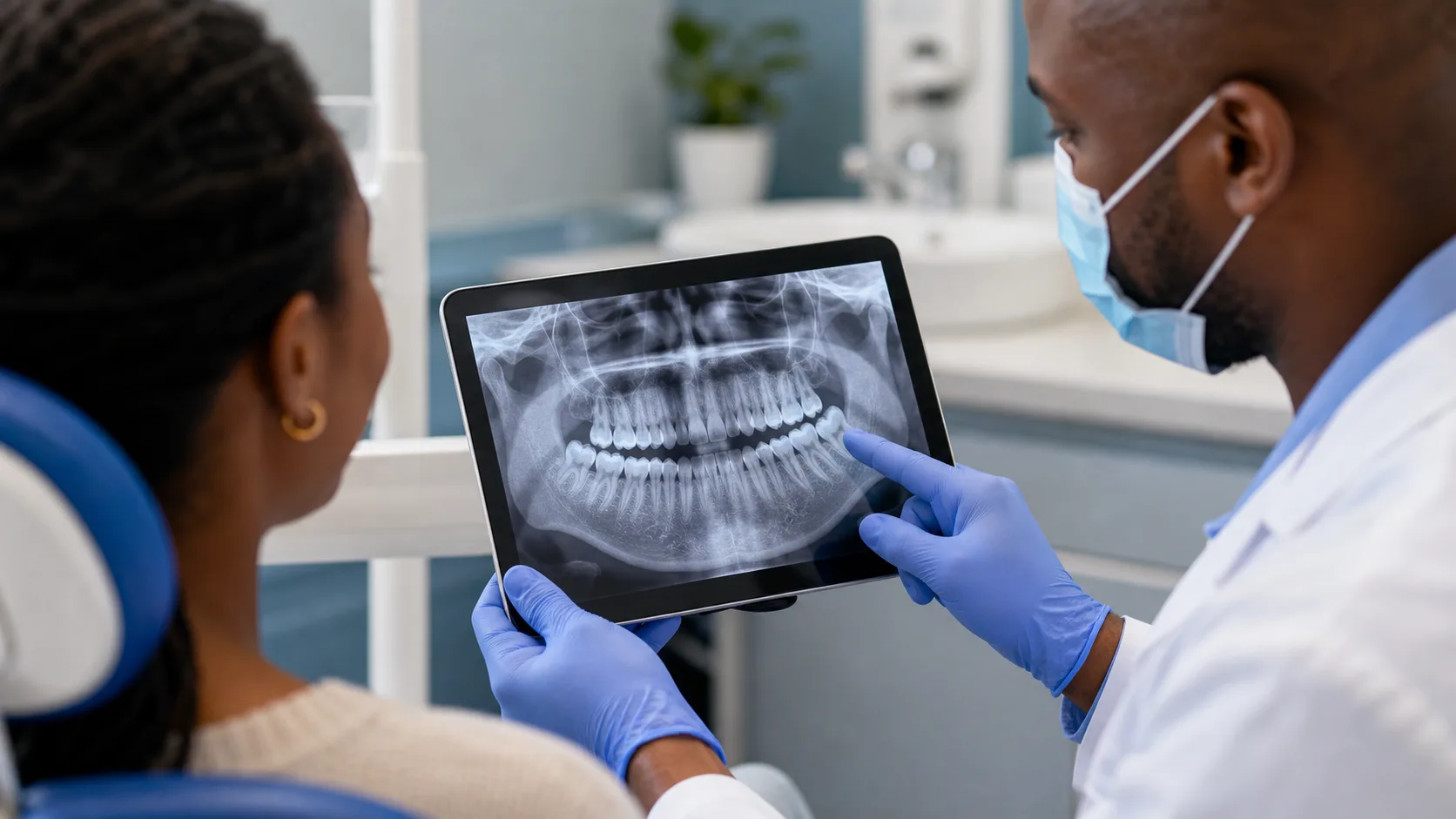
An X-ray may reveal decay between teeth, changes around the root, bone loss, or a restoration problem. Some cracks and early changes do not show clearly on every image, so the X-ray is interpreted together with symptoms and clinical tests.
The medical history matters too. Medicines, allergies, pregnancy, immune conditions, and previous procedures can influence diagnosis and treatment planning. Give the dentist accurate information before taking new medication or beginning treatment.
Treatment depends on what is causing the pain
A small area of decay may be repaired with a filling where suitable. A damaged or heavily restored tooth may need stronger protection. If the tissue inside the tooth is irreversibly affected, root canal treatment or extraction may be discussed after diagnosis.
A cracked restoration may be repaired or replaced, but a deeper fracture changes the options. Gum-related pain may need cleaning, gum treatment, or management of a food trap. Grinding or bite overload may need a different plan after tooth disease has been excluded.
The dentist should explain the goal of the proposed treatment, alternatives that may be appropriate, and what information still needs confirmation. Severe pain does not automatically mean extraction, and a normal-looking tooth does not automatically mean no treatment.
- Identify the tooth or non-dental source where possible.
- Assess whether pain, infection, or structural damage needs urgent action.
- Explain repair, root-canal, extraction, gum-care, or bite-related options.
- Stabilise the problem when definitive care needs another appointment.
- Plan review and final restoration where required.
Know the signs that need urgent escalation
Severe pain that cannot be managed, facial or jaw swelling, fever, pus, a bad taste, or worsening difficulty opening the mouth can indicate an urgent dental problem. Tell the practice about these symptoms when you call.
Difficulty breathing, swallowing, or speaking, swelling around the eye, or extensive mouth or neck swelling needs emergency medical attention. Do not wait for a routine dental booking when the airway or general condition may be affected.
Even without swelling, pain that disrupts sleep, prevents eating, or is rapidly worsening should be assessed promptly. Early diagnosis may preserve more treatment options and reduce the risk of an acute episode.
The first urgent visit may not complete every stage
An urgent appointment may need to prioritise diagnosis, pain control, drainage, or protection of a damaged tooth. Definitive treatment can require another visit when extra time, a laboratory-made restoration, healing, or referral is involved. Ask whether anything placed at the urgent visit is temporary.
A tooth opened for root canal treatment, protected with a temporary filling, or stabilised after a fracture still needs the planned next stage. Missing that stage can allow leakage, breakage, or recurrent symptoms. Improvement is encouraging, but it is not proof that the full treatment plan has been completed.
The practice should give you a clear follow-up interval and warning signs. Contact them sooner if a temporary filling is lost, the tooth fractures, swelling develops, or pain becomes more severe. Keep the area clean and follow any chewing instructions while the tooth is vulnerable.
Compare the suitable treatment options
Once the diagnosis is established, compare options by their clinical goal, number of stages, expected maintenance, and effect on the remaining tooth. Cost matters, but a quote is only meaningful when it refers to the same diagnosis and full course of care.
Ask whether the tooth is restorable, how much sound structure remains, and whether a crown or other final restoration may be needed after the immediate procedure. For extraction, ask about healing and whether replacing the missing tooth is recommended for function or stability.
If the dentist cannot yet confirm the source, monitoring or referral may be safer than irreversible treatment based on pain alone. A clear plan should state what evidence would trigger treatment and when reassessment will occur.
The practical comparison should include the full sequence, not only the procedure that stops pain today. Root canal treatment may preserve a suitable tooth but can involve multiple stages and a final restoration. Extraction removes the tooth and may create a later decision about replacement. Repairing a filling or adjusting a bite addresses different diagnoses and should not be presented as interchangeable. Your health, tooth position, supporting bone, remaining structure, and ability to maintain the result all influence which options are realistic. Ask the dentist to separate what is clinically recommended from what is elective, and request a written estimate for the complete care plan where possible.
| Question | Why it matters |
|---|---|
| What diagnosis are we treating? | Links the procedure to a confirmed clinical finding. |
| Can the tooth be predictably restored? | Clarifies whether repair or extraction is being considered and why. |
| Is today's treatment temporary or definitive? | Prevents an unfinished stage from being mistaken for completed care. |
| Will the tooth need a final crown or restoration? | Shows the likely full sequence rather than only the urgent step. |
| When is review needed? | Sets a point for checking symptoms, healing, and restoration stability. |
Manage the wait without masking the problem
Keep the area clean with gentle brushing and choose softer foods. Avoid extreme temperatures or chewing on the painful side if they trigger symptoms. Use only pain medicine that is suitable for you and follow the label or advice from a qualified healthcare professional.
Do not place aspirin, alcohol, bleach, or caustic home remedies against the tooth or gum. Do not take leftover antibiotics or someone else’s prescription. Antibiotics do not repair decay, seal a crack, or remove an infected tooth source.
Keep the appointment if the pain temporarily improves. A fluctuating symptom can still represent active disease. Bring a short record of triggers and duration so the dentist can investigate efficiently.
Internal Links
Related dental care
Sources
Useful information

Written by
Dr. Kholofelo Machaba-SelatoleChief Dentist & Practice Director
Dr. Kholofelo Machaba-Selatole leads Smile On Dental & Aesthetic Studio with a warm, patient-focused approach to family, restorative, cosmetic, and orthodontic care.
View Profile