Quick Answer
Facial swelling with tooth pain needs urgent dental assessment because it may be caused by a dental abscess or another infection that requires treatment. Contact a dental practice promptly and describe where the swelling is, how quickly it developed, whether you have fever or a bad taste, and whether you can open your mouth normally. Seek emergency medical help immediately if you have difficulty breathing, swallowing, or speaking, swelling near the eye or neck, extensive mouth swelling, confusion, or rapidly worsening general illness.
- Facial swelling changes a toothache from a routine symptom to an urgent assessment need.
- Breathing, swallowing, speech, eye, neck, or extensive swelling signs require emergency medical escalation.
- Antibiotics may be part of care in selected cases but do not replace treatment of the dental source.
- Do not squeeze, pierce, heat, or attempt to drain a swelling yourself.
Why facial swelling needs prompt attention
A dental abscess is a collection of pus caused by infection in or around a tooth or gum. Swelling can remain local, but infection can also spread into surrounding facial spaces. The visible size alone does not show the complete risk.
Tooth decay, a damaged tooth, gum disease, or an impacted tooth can contribute to infection. The pain may be intense, but some swellings are more noticeable than painful. A bad taste, pus, fever, tender glands, difficulty chewing, or reduced mouth opening adds important context.
An abscess does not reliably resolve without dental treatment. Temporary improvement or drainage does not prove that the source has been removed. Contact a dental practice and describe the swelling rather than waiting for a routine check-up slot.
Check for emergency warning signs first
Before focusing on the tooth, check breathing, swallowing, speech, vision, and the extent of swelling. Difficulty with any of these functions can indicate that the problem has moved beyond a routine dental emergency.
Swelling around an eye, sudden vision changes, extensive swelling inside the mouth, neck swelling, confusion, or severe general illness needs emergency medical evaluation. Do not drive yourself if you are seriously unwell.
If none of these signs are present, the situation may still require urgent dental care. Call promptly, explain that facial swelling is present, and follow the triage instructions you receive.
| What is happening | Next action |
|---|---|
| Breathing, swallowing, or speech difficulty | Seek emergency medical help immediately. |
| Eye swelling, vision change, neck swelling, or extensive mouth swelling | Seek emergency medical help immediately. |
| Facial swelling with tooth pain, fever, pus, or bad taste | Request urgent dental assessment and describe every symptom. |
| Small gum boil without general illness | Arrange prompt dental assessment; do not squeeze or pierce it. |
What to tell the dental practice
Say where the swelling started, whether it is growing, and how long it has been present. Mention fever, chills, a bad taste, pus, difficulty opening the mouth, and whether the swelling reaches the jaw, eye, or neck. Explain whether pain medicine is controlling the pain.
Provide your medical conditions, allergies, medicines, pregnancy status where relevant, and any recent dental treatment. These details affect safe care. If you are immunocompromised or receiving major medical treatment, say so during triage.
A photograph can document change, but do not delay care to monitor the swelling for another day. Rapid progression is itself important information.
- Exact location and when swelling began
- Whether it is spreading or changing rapidly
- Pain level and ability to eat or drink
- Fever, pus, bad taste, or tender glands
- Mouth opening, swallowing, breathing, speech, and vision
- Medicines, allergies, and relevant health conditions
What the dentist may do at the urgent visit
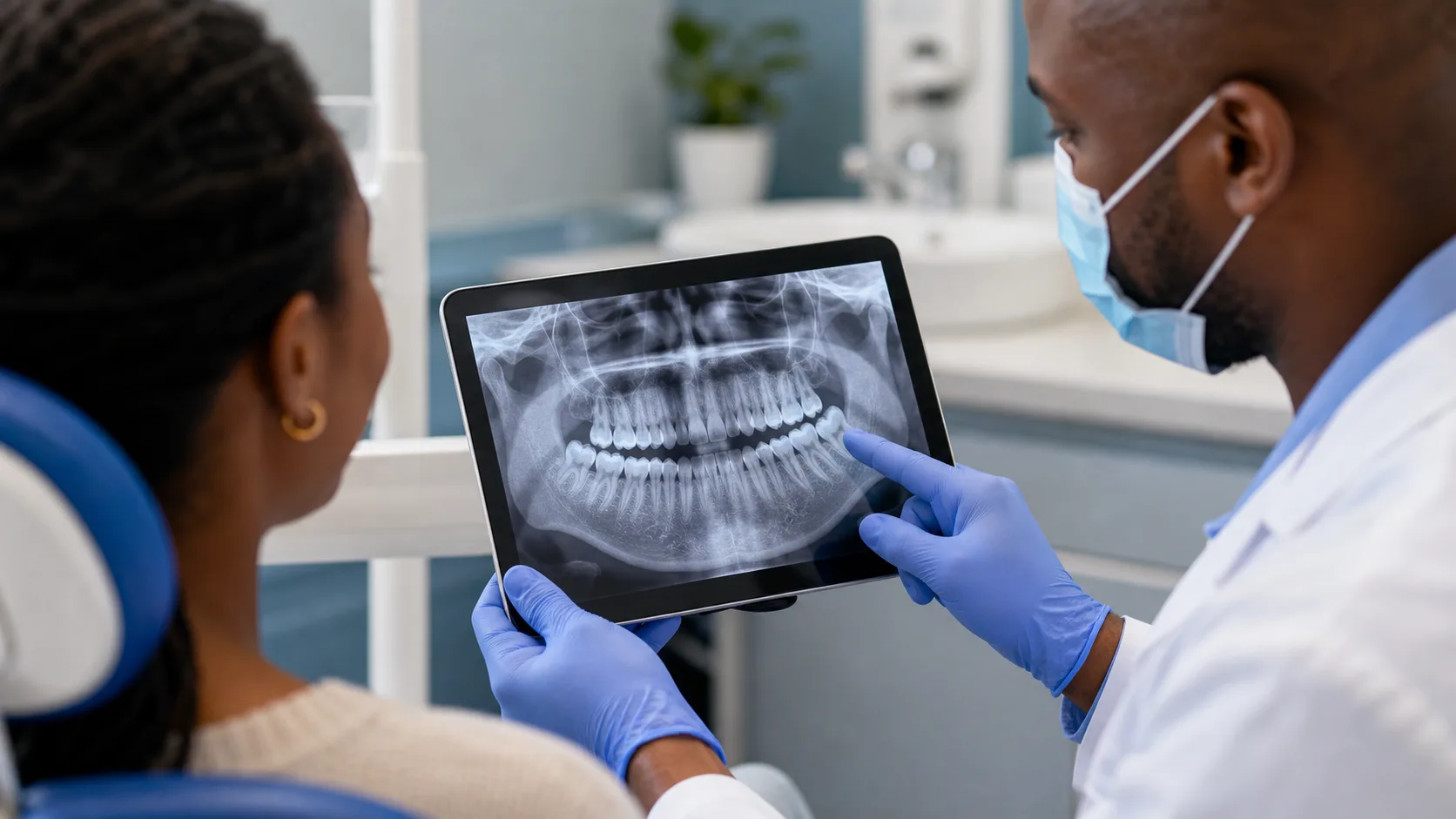
The dentist will assess the swelling, tooth, gums, and general symptoms. An X-ray may help identify the source and the condition of the tooth and surrounding bone. The first appointment may focus on drainage, stabilisation, pain management, or planning definitive treatment.
If the source is inside a tooth, root canal treatment or extraction may be discussed depending on whether the tooth can be restored. Gum or wisdom-tooth infections require their own treatment paths. Some cases need referral or emergency medical management.
Local anaesthetic, the procedure, medication, and follow-up depend on the individual assessment. The dentist should explain what is being done to control the current episode and what treatment is still needed to remove or manage the source.
Why antibiotics alone may not solve the problem
Antibiotics may be prescribed in selected infections, particularly when there are signs of spread or systemic involvement. They are not a mechanical repair. They do not remove decayed tooth tissue, seal a crack, complete root canal treatment, or extract a tooth that cannot be saved.
Symptoms can improve while the dental source remains. If definitive treatment or review has been advised, keep that appointment even if swelling reduces. Repeated short courses without source control can delay the necessary dental decision.
Take prescribed medication exactly as directed and discuss allergies, side effects, and other medicines with the prescriber. Do not use leftover antibiotics or share medication.
What happens after the swelling begins to improve
Improvement is an important response, but it is also the point at which unfinished treatment can be overlooked. If the urgent visit drained the area, opened a tooth, placed a temporary restoration, or prescribed medication, confirm which definitive step is still required and when it should happen.
Root canal treatment may be used to remove infection from inside a restorable tooth, after which the tooth may need a durable final restoration. Extraction may be advised when the tooth cannot be predictably restored. Gum-related or wisdom-tooth infections follow different pathways, and some people need specialist or hospital care.
Keep review appointments even when your face looks normal again. The dentist may check that swelling has settled, mouth opening has improved, drainage has stopped, and the planned tooth treatment has controlled the source. A new swelling, fever, worsening pain, or renewed bad taste should be reported promptly.
Ask for the plan in stages: what was done today, what remains temporary, what the next procedure is, and what recovery signs are expected. This prevents temporary symptom relief from being mistaken for completion.
Reducing the risk of another urgent episode
Not every dental infection can be predicted, but early attention to decay, broken fillings, gum disease, and impacted teeth can reduce avoidable delays. Regular examinations allow the dentist to monitor areas that are difficult to see or that have previously caused symptoms.
Daily prevention still matters after emergency care. Brush twice daily with fluoride toothpaste, clean between teeth, and follow any cleaning instructions around crowns, bridges, implants, braces, or partially erupted wisdom teeth. If dry mouth or limited dexterity makes this difficult, ask for a plan that fits your circumstances.
Complete restorations and replacement fillings within the recommended time. A temporary seal is designed for a limited stage of care, and a cracked or heavily weakened tooth may need protection before normal chewing resumes. Report a lost temporary restoration instead of waiting for the next scheduled visit.
If cost or appointment availability makes the full plan difficult, tell the practice early. Ask which step controls the current risk, which parts can safely be staged, and what symptoms change the timing. A documented sequence is safer than abandoning care once the swelling subsides.
People who have had repeated abscesses should ask whether the episodes come from the same tooth, several untreated teeth, gum pockets, wisdom-tooth areas, or another source. That distinction changes prevention. It may lead to a phased treatment plan that addresses active infection first, then stabilises other high-risk teeth, improves plaque control, and sets review intervals. Keep a record of previous antibiotics, procedures, allergies, and reactions so that the next clinician can see what was temporary and what was definitive. New swelling after completed care still needs reassessment; it should not be assumed to be the same problem without examination. If a new area becomes tender, starts draining, or changes your ability to open your mouth, contact the practice promptly and repeat the emergency-warning-sign check.
- Complete the treatment that addresses the source.
- Keep the recommended review appointment.
- Maintain gentle brushing and interdental cleaning.
- Repair broken or temporary restorations on schedule.
- Report returning swelling or general illness promptly.
What not to do at home
Do not squeeze, pierce, or attempt to drain a gum or facial swelling. Do not apply very hot compresses, caustic substances, or aspirin directly to the gum. These actions can injure tissues or complicate assessment.
While arranging care, choose soft foods, avoid extreme temperatures if they trigger pain, and use a soft toothbrush. Use only pain medicine that is safe for you and within the recommended dose.
Do not lie down and wait if swelling is spreading or new breathing, swallowing, speech, eye, or neck symptoms appear. Escalate immediately. Dental infections are treated most safely when the urgency is recognised early and the source is addressed.
Internal Links
Related dental care
Sources
Useful information

Written by
Dr. Kholofelo Machaba-SelatoleChief Dentist & Practice Director
Dr. Kholofelo Machaba-Selatole leads Smile On Dental & Aesthetic Studio with a warm, patient-focused approach to family, restorative, cosmetic, and orthodontic care.
View Profile