Quick Answer
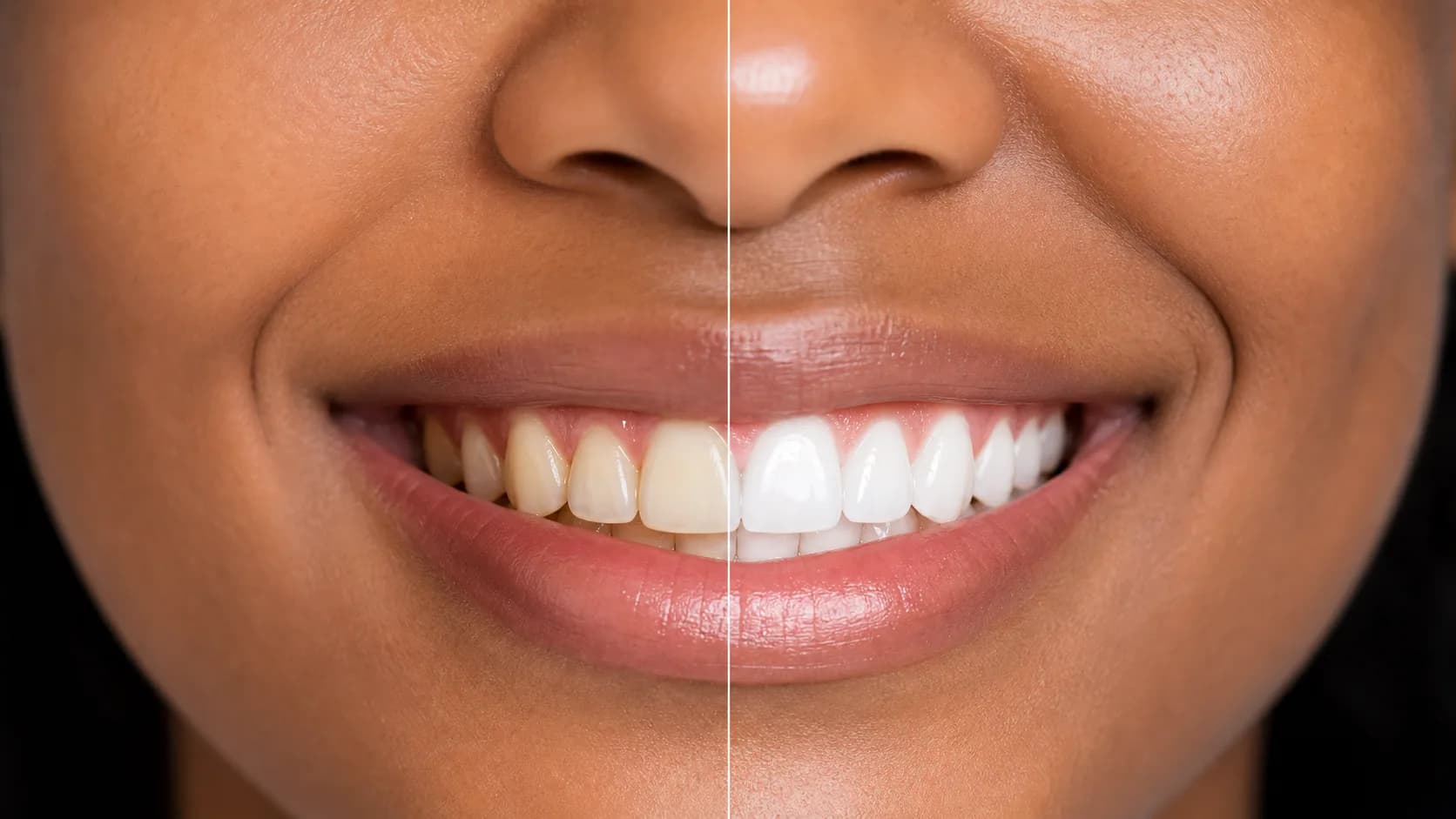
Tooth whitening does not predictably change the intrinsic shade of fillings, crowns, veneers or implant crowns. Natural teeth may lighten while those restorations remain their existing colour, creating a mismatch. Surface stain on a restoration is a separate issue. A dentist should map the visible dental work and discuss the likely appearance before whitening begins.
- Restorations and natural teeth do not respond in the same way.
- A colour mismatch does not automatically require replacement.
- Decide on the sequence before committing to cosmetic work.
Why existing dental work changes the conversation
A smile may contain several materials: natural enamel, tooth-coloured fillings, ceramic crowns and bonding. They can look similar initially but respond differently to whitening products. If the surrounding teeth lighten, an older front restoration may appear darker even though nothing has happened to the restoration itself.
This is especially relevant for visible fillings between front teeth or a single crown near the centre of the smile. A patient who focuses only on the natural tooth shade may be surprised by the contrast afterwards. Tell the dentist about all previous cosmetic and restorative work, including treatment performed elsewhere.
Surface stain is different from the material’s shade
A restoration can collect external stain or plaque, and professional cleaning or polishing may improve its surface appearance when appropriate. That is not the same as bleaching the material to a new internal shade. Increasing whitening strength or wear time is not a reliable way to make a crown match.
Ask whether a dark area is surface stain, an ageing material, a shadow from the tooth underneath or a sign of a problem at the margin. A restoration that looks darker may need assessment for health reasons before any cosmetic decision. Colour alone cannot determine whether it is sound.
Map what is visible before selecting a target shade
The dentist can identify which teeth and restorations show during a normal smile and conversation. A large back filling may have little effect on the cosmetic plan, while a small front repair may be noticeable. Photographs and a shade record can make the discussion more concrete.
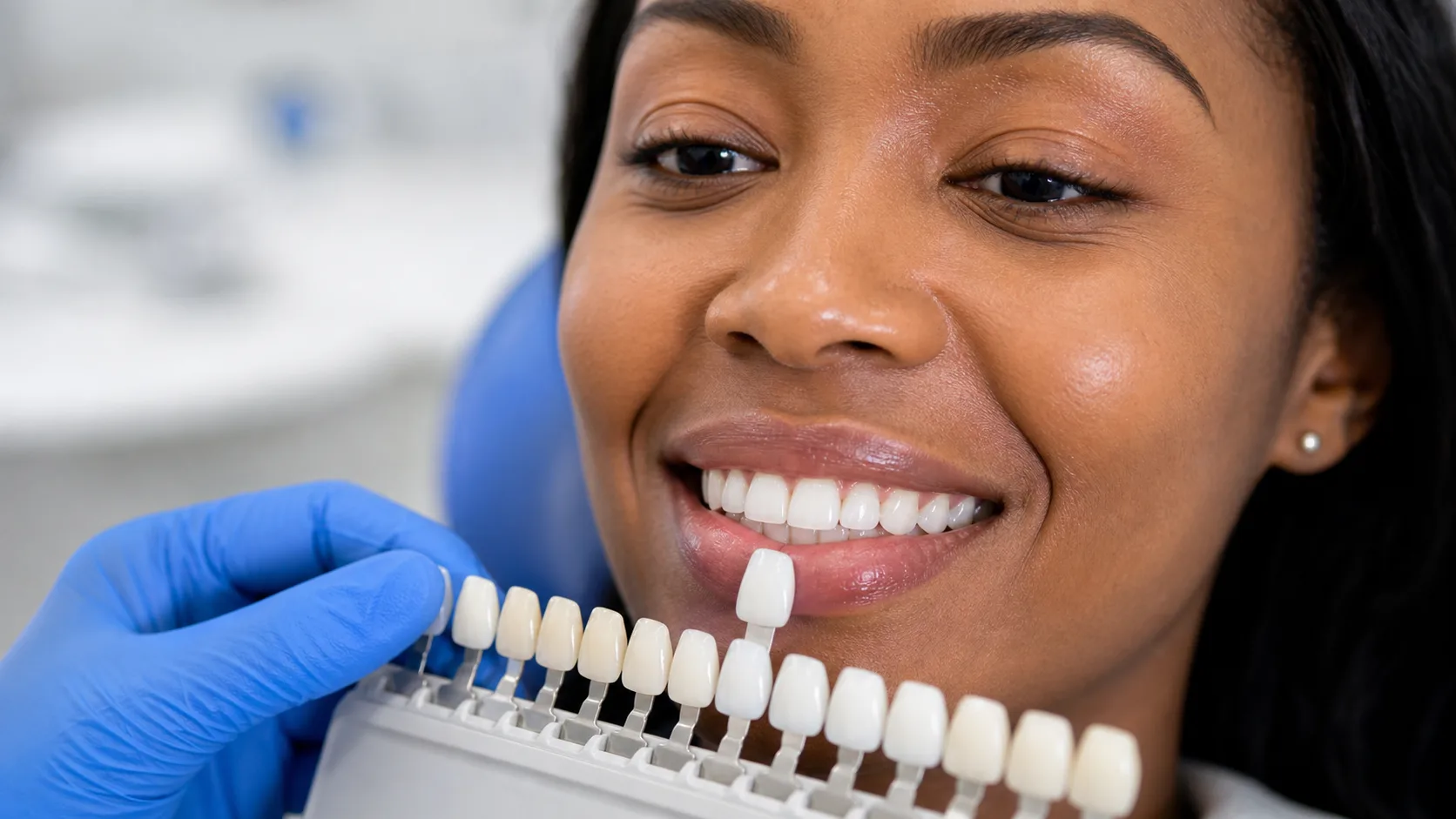
Discuss a realistic target rather than assuming the brightest shade is best. The desired result should account for existing materials, natural variation and the amount of intervention you are willing to consider. A shade guide is a planning aid, not a guarantee of the exact outcome.
| Surface | Typical planning issue |
|---|---|
| Natural tooth | May lighten, with an individual response |
| Composite filling or bonding | Existing material shade may remain |
| Ceramic crown or veneer | Does not whiten like natural enamel |
| Surface stain | May need a separate cleaning or polishing assessment |
Why whitening may come before new shade-matched work
If whitening and a new visible restoration are both appropriate, their order matters. Completing a restoration to the current shade and then whitening the neighbouring teeth can create an avoidable mismatch. The dentist may plan whitening first, allow the colour and clinical conditions to stabilise, and then select the restorative shade.
The interval and exact sequence depend on the products, tooth condition and treatment proposed. Do not book separate procedures independently and assume they can be combined in any order. Necessary treatment for decay or a failing restoration may need to happen before elective whitening.
Replacement should be a considered decision
A healthy restoration does not automatically need replacement because it looks slightly different after whitening. Options may include accepting a modest contrast, adjusting expectations, appropriate surface treatment or replacement where justified. Replacing dental work can involve cost, removal of material and future maintenance.
Ask what benefit replacement would provide and what healthy tooth structure could be affected. Avoid a plan that turns one cosmetic preference into a series of procedures without explaining the trade-offs. If several front restorations are involved, request a coordinated plan rather than treating each tooth in isolation.
5 questions to ask before whitening a restored smile
Imagine that your front teeth include one crown and several small white fillings. You want a brighter overall smile, but bleaching the natural teeth could make the existing work stand out more clearly. That does not mean whitening is automatically unsuitable. It means the plan should account for every visible material, including restorations you no longer notice because they currently blend in. A useful consultation considers the whole smile rather than a shade change in isolation.
Bring the decision back to what bothers you and how much treatment you would consider. Some patients are comfortable with a modest improvement even if an older restoration does not match perfectly. Others would only proceed if a coordinated restorative plan is practical. The dentist should explain the possible sequence and costs before you commit. Replacing sound dental work simply to chase a lighter colour is a separate decision with its own consequences, not an automatic finishing step that should be assumed.
- List the dental work you know about. Include crowns, veneers, bonding and fillings, and tell the dentist if you are unsure which front teeth were restored.
- Point out what shows when you speak and smile. A colour difference matters differently when it is prominent, partly hidden or visible only in a close-up photograph.
- Ask what can realistically change. Separate surface staining, the shade of natural teeth and the colour of restorative materials before comparing whitening options or expected results.
- Discuss the treatment order. If restorative work is also planned, ask how the dentist will coordinate whitening, reassessment and shade selection for the final restorations.
- Request an itemised plan. Clarify which steps are necessary for health, which are optional cosmetic choices and which costs depend on reassessing the colour afterwards.
Questions to ask before buying or starting whitening
Which of my visible teeth have restorations? What will and will not change colour? Could cleaning alone address some stain? If a mismatch develops, what are the options? Are any restorations unhealthy and in need of treatment regardless of whitening? These questions establish the scope before money and time are committed.
Can whitening gel lighten an implant crown? It does not whiten the crown like a natural tooth. Will a veneer definitely look too dark afterwards? Not necessarily; the degree of contrast depends on the starting shades and whitening response. Can repeated bleaching force a match? It may increase irritation without changing the restorative material as intended.
Book a whitening suitability assessment and bring any records of previous front-tooth work. A well-sequenced plan aims for a result you understand, with dental health and maintenance considered alongside appearance.
The teeth whitening service page explains the general treatment, and our guide to whitening before bonding, veneers or crowns explores the order of care. For an existing restoration that needs attention, dental crowns and veneer treatment have separate assessment requirements; whitening should not be used to disguise a problem that needs examination.
- Do not apply extra gel to a crown or veneer in an attempt to make it catch up with neighbouring natural teeth.
- Mention sensitivity, rough edges or food trapping around an older restoration so a cosmetic discussion does not overlook a separate dental problem.
- Use ordinary lighting when discussing your goal; a filtered photograph or bright screen can make a shade target misleading and difficult to compare.
- Keep your treatment history available if another practice placed the restorations, especially when you know the materials or have previous clinical records.
Internal Links
Related dental care
Sources
Useful information
Written by
Dr. Kholofelo Machaba-SelatoleChief Dentist & Practice Director
Dr. Kholofelo Machaba-Selatole leads Smile On Dental & Aesthetic Studio with a warm, patient-focused approach to family, restorative, cosmetic, and orthodontic care.
View Profile